Unmasking ADHD A Practical Guide to Authentic Living
Discover how to unmask ADHD and reduce burnout by shedding internalized shame. Learn trauma informed steps to reclaim authenticity and find safer support.
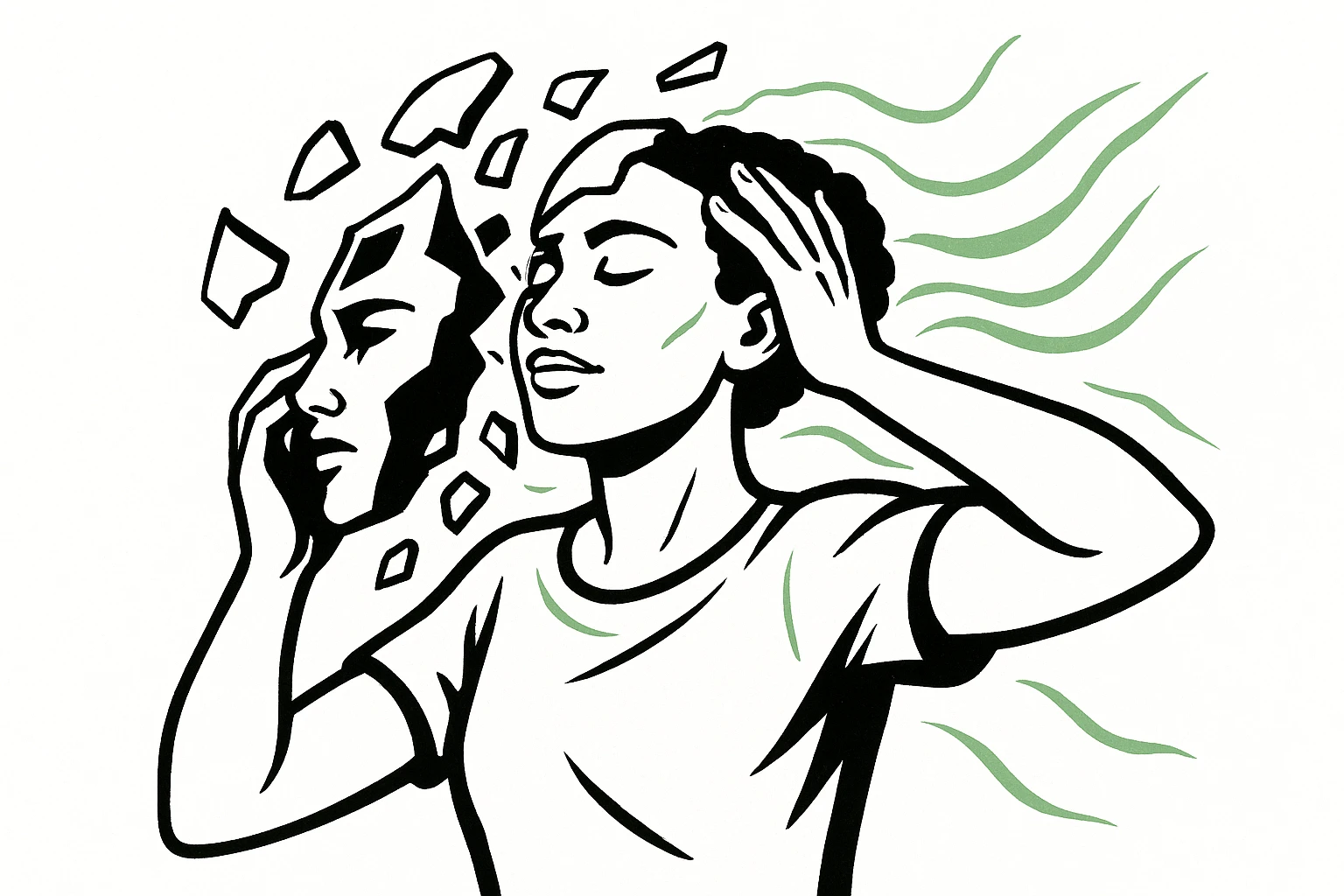
You know that feeling, right? That constant low hum of effort, the invisible script you follow in every social interaction, the energy drain of pretending to be "normal." For many of us with ADHD, this isn't just a fleeting experience; it's the daily reality of masking. You might be here because you’re tired of the performance, or perhaps you're just starting to realize that the exhaustion you feel isn't just ADHD, but something deeper, more insidious: the cost of hiding who you truly are.
Choosing to unmask isn't a simple decision. It’s an evaluation of your comfort, your mental health, and your desire for authenticity. It means weighing the perceived safety of camouflage against the profound personal cost of a life lived disconnected from yourself. This guide isn't about rushing you to shed your protective layers, but about helping you understand them, their origins, and the gentle, deliberate steps you can take toward a more authentic existence. We'll explore why we mask, what it costs us, and how to begin dismantling the internalized judgments that keep us performing.
ADHD masking is an adaptive strategy, often unconscious, where individuals with ADHD suppress or hide their neurodivergent traits to conform to neurotypical expectations. Think of it as impression management or camouflaging (Verywell Mind, 2022). It's understandable; we've all learned from a young age that certain behaviors are rewarded and others penalized. For someone with ADHD, this often means actively suppressing impulsivity, fidgeting, or hyperfocus, and forcing eye contact, organization, or sustained attention.
This performance isn’t universal; it varies based on individual experiences and ADHD presentation. For those with predominantly inattentive ADHD, masking might look like meticulous over-preparation to avoid missing details, or forcing themselves to appear calm and collected even as their mind races. For those with hyperactive/impulsive traits, it could mean consciously stifling movement, interrupting less, or internalizing restlessness to appear "still" (ADDA, 2022).
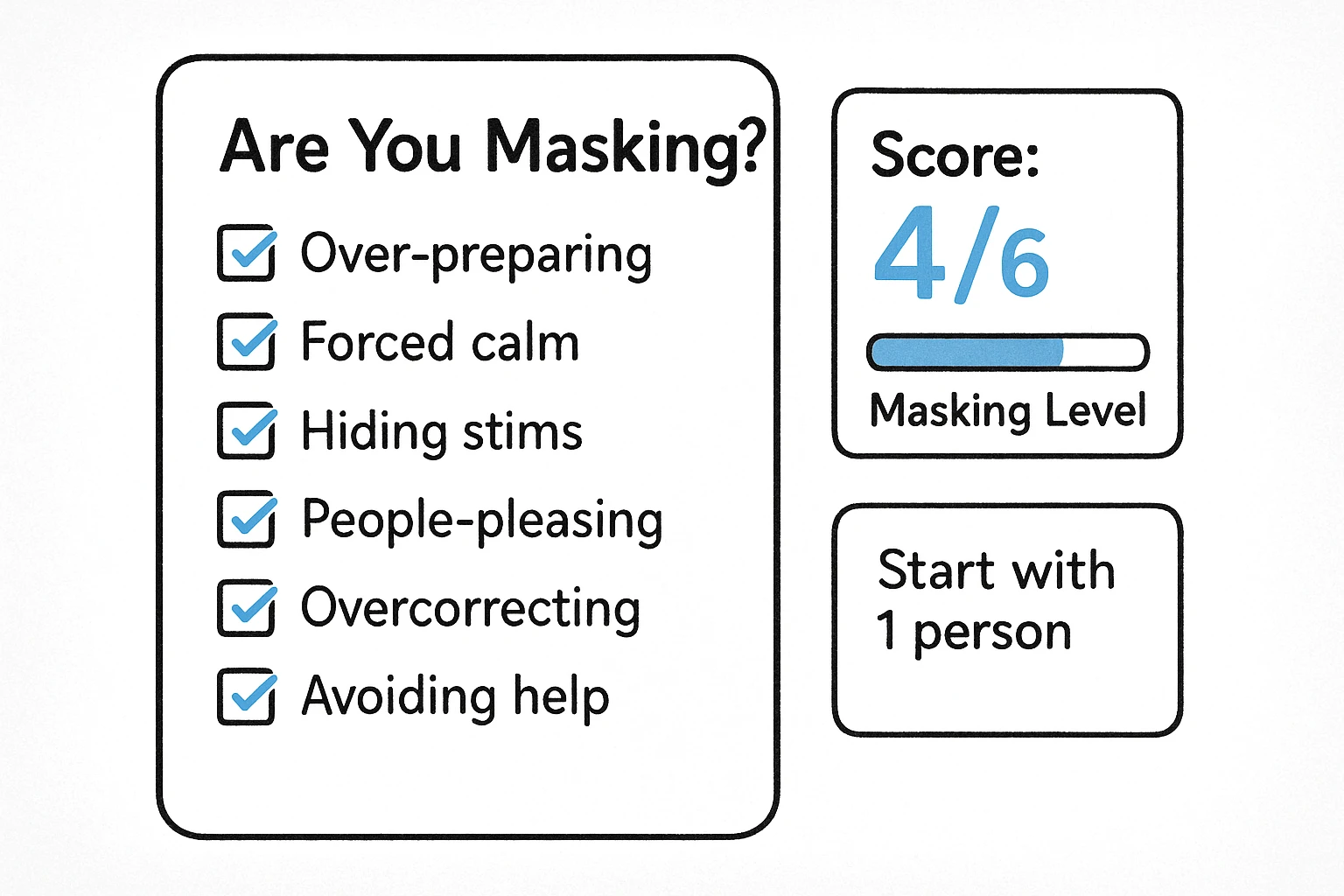
You might be wondering if this applies to you. Masking isn't always overt; it can be subtle, woven into the fabric of your daily life. Consider these common masking behaviors:
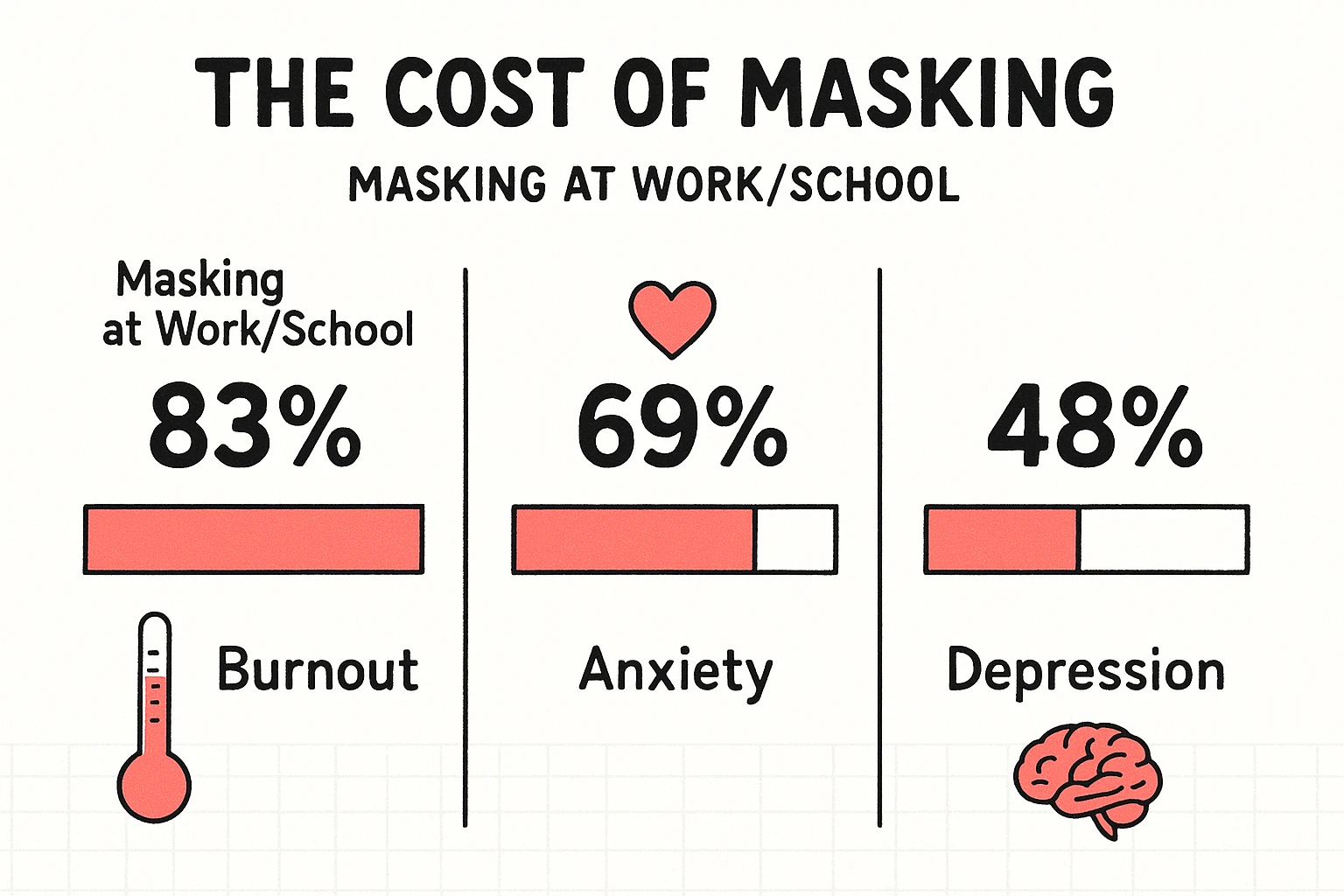
A significant majority – approximately 69% of individuals with ADHD – report frequently engaging in masking behaviors. This number climbs even higher in demanding social and professional settings, with 83% masking in school or work environments, compared to 57% among family and a mere 21% among peers with the same diagnosis. This stark difference highlights the immense pressure societal expectations place on us.
Understanding your own patterns is the first step toward change. This isn't a formal diagnosis, but a reflection tool.
If you relate to many of these, you’re likely experiencing the costs of masking. But acknowledging it is a powerful start.
The energy expended on masking isn't neutral; it comes with profound psychological and emotional costs. You're not just losing energy; you're often sacrificing your well-being.
The sustained effort required to maintain a neurotypical facade acts as a constant stressor on your system. This chronic stress can manifest as profound burnout, leaving you feeling emotionally drained, exhausted, and cynical. It's not just "tiredness"; it's an incapacitating mental and physical depletion (Psychology Today, 2024).
This relentless internal performance also fuels anxiety. You're constantly anticipating judgment, worrying about "slipping up," or fearing exposure. This vigilance can lead to generalized anxiety disorder, social anxiety, and even panic attacks. Living in constant fear of being "found out" creates an environment ripe for depression, as masking often leads to feelings of isolation, hopelessness, and a heavy sense of not being good enough (Perplexity AI Overview, 2023).
The mental health costs are substantial, often delaying diagnosis and worsening existing conditions.
The data is clear: masking is a heavy burden, contributing significantly to conditions like social anxiety, self-criticism, depression, and low self-esteem.
Why do we mask so intensely? Beyond individual fears, there's a larger societal force at play: ableism. This is the discrimination and social prejudice against people with disabilities based on the belief that typical abilities are superior. For those with ADHD, this often translates to internalized ableism – where you adopt society's negative views of ADHD, believing that your neurotype is inherently flawed or "wrong."
Internalized ableism manifests as that relentless inner critic, telling you you're lazy, disorganized, or not trying hard enough. It's the voice that says you "should" be able to do things in a neurotypical way, leading to immense guilt and self-criticism when you struggle. Society's narratives, often perpetuated through media and common stereotypes, reinforce the idea that ADHD is a deficit to be overcome, rather than a different way of experiencing the world.
Challenging this inner critic is crucial. It involves:
Unmasking isn't about suddenly revealing everything; it’s a gradual, conscious process. It’s a journey toward authenticity, paced by your comfort and built on self-compassion.
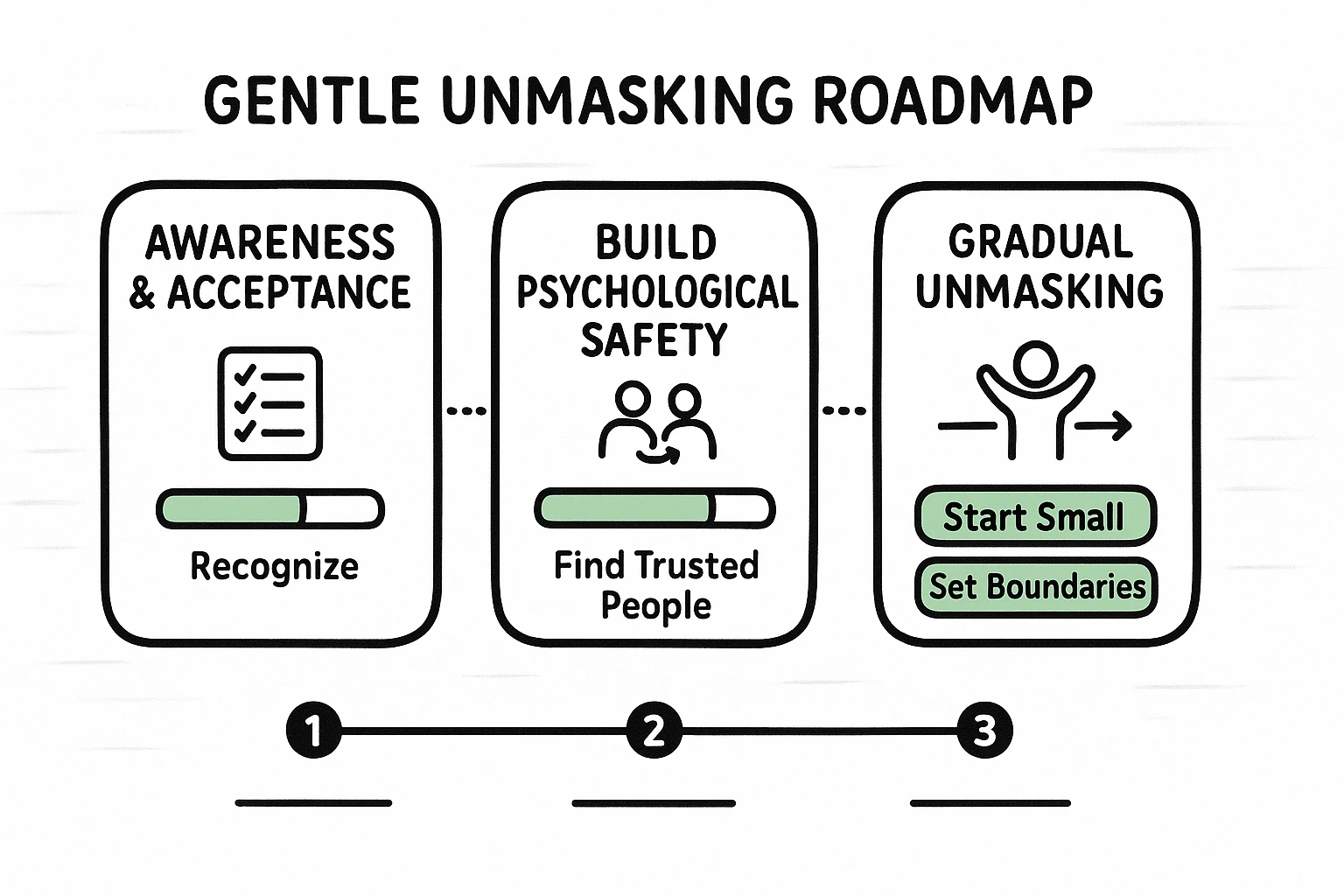
You can't truly unmask in an environment where you feel unsafe or consistently judged.
This is not a sprint; it's a marathon of small, deliberate steps.
For more structured behavioral strategies, also consider reading about effective ADHD coping mechanisms beyond masking.
The ultimate goal of unmasking is to reclaim your authentic self and embrace your neurodivergent identity. This means shifting away from a deficit-based view of ADHD and recognizing its unique strengths (Perplexity AI Overview, 2023; Understood.org). Many with ADHD possess incredible creativity, the ability to hyperfocus on passionate interests, rapid problem-solving skills, and remarkable resilience gained from navigating a neurotypical world.

Building psychological safety is paramount. With peers, the need to mask significantly decreases, underlining the power of understanding and acceptance.
It's vital to acknowledge that for many with ADHD, the urge to mask and the depth of internalized shame are profoundly influenced by past trauma (Psych Blossom, 2023; Neurodivergent Insights, 2023; Child Development Clinic, 2023). ADHD symptoms and trauma responses share a significant overlap—difficulty concentrating, emotional dysregulation, impulsivity, and sleep problems can stem from both. Trauma can exacerbate ADHD symptoms, intensifying the need to mask as a survival mechanism.
Unmasking, particularly if you have a history of trauma, must be approached with extra care and support. A trauma-informed approach recognizes that your masking might be a protective strategy your brain developed to keep you safe. Dismantling it requires addressing those underlying wounds. If this resonates with you, seeking support from a neurodiversity-affirming, trauma-informed therapist is highly recommended. For deeper understanding, explore our article on the intersection of ADHD, trauma, and resilience.
The journey of unmasking ADHD is a brave one. It’s about more than just managing symptoms; it’s about reclaiming your self-worth, dismantling societal "shoulds," and embracing the beautifully chaotic, endlessly fascinating, mildly exhausting "mental internet" that is uniquely yours.
You are not broken; you are different. And in that difference lies incredible strength and perspective. As you gently peel back the layers of masking and shed internalized shame, you open the door to a life lived with greater authenticity, deeper connection, and a profound sense of self-acceptance. Your unique brain is valuable, and the world deserves to see the real, unmasked you.
ADHD masking is when individuals with ADHD consciously or unconsciously suppress or hide their neurodivergent traits to fit into neurotypical societal expectations. They attempt to appear "normal" to avoid judgment, stigma, or negative consequences. This is often driven by a desire for acceptance and a historical pattern of being criticized or misunderstood for their natural ADHD behaviors.
While masking can offer temporary social or professional advantages, prolonged or extensive masking often leads to significant negative consequences. Approximately 69% of individuals with ADHD report frequently masking, and this is strongly linked to burnout, anxiety, depression, imposter syndrome, and a distorted sense of self. It's crucial to evaluate whether your masking is serving you or depleting you.
Masking is often a direct response to internalized ableism, which is when individuals with ADHD internalize society's negative perceptions about their neurotype. This leads to self-criticism, believing their ADHD traits are flaws that need to be hidden (Perplexity AI Overview, 2023). The shame of not conforming to neurotypical ideals fuels the masking behavior.
Yes, women with ADHD are often more likely to mask their symptoms, which can lead to delayed diagnoses and greater emotional burdens, including emotional dysregulation and low self-esteem. This is partly due to differing societal expectations for gender and how ADHD symptoms are traditionally recognized.
The primary costs include chronic burnout, increased anxiety and depression, a persistent sense of imposter syndrome, low self-esteem, intense emotional pain from Rejection Sensitivity Dysphoria (RSD), and a fragmented or distorted sense of self.
Begin gently and gradually. Focus on awareness (identifying your masking triggers) and acceptance (seeing ADHD as a difference, not a deficit). Then, build psychological safety by identifying trusted individuals or groups where you can be more authentic. Start with small, deliberate steps in safe environments, such as allowing a subtle stim or sharing a minor ADHD trait without apology. Self-compassion is key in this process (Psychology Today, 2024).
Trauma and ADHD often overlap. Trauma responses can mimic ADHD symptoms, intensifying the need to mask as a coping or survival mechanism (Psych Blossom, 2023; Neurodivergent Insights, 2023). If you have a history of trauma, approaching unmasking with the support of a trauma-informed therapist is highly recommended to address underlying emotional wounds.
Community is vital. Seek therapy from neurodiversity-affirming professionals, connect with online or local ADHD support groups (like those offered by ADDA), and confide in trusted friends or family members. Being around other neurodivergent individuals significantly reduces the need to mask.
Unmasking doesn't make your ADHD "worse"; it makes your experience of ADHD more authentic. Initially, it might feel uncomfortable or even scary as you shed old coping mechanisms. However, in the long run, it reduces the mental and emotional burden of masking, leading to greater self-acceptance, reduced anxiety, and a more sustainable way of living with your ADHD (Tiimo App, 2023).
Traditional ADHD management often focuses on strategies to "fix" or "compensate" for challenges within a neurotypical framework. Our approach embraces the neurodiversity paradigm, viewing ADHD as a natural cognitive variation. We focus on understanding the emotional and psychological toll of suppressing your authentic self, promoting self-acceptance, and advocating for environments that accommodate neurodivergent needs rather than demanding conformity.