ADHD Professional Development Guide for Lifelong Growth
Discover ADHD-friendly tactics to harness hyperfocus, speed skill acquisition, and showcase wins for career growth. Learn how to build a practical plan.
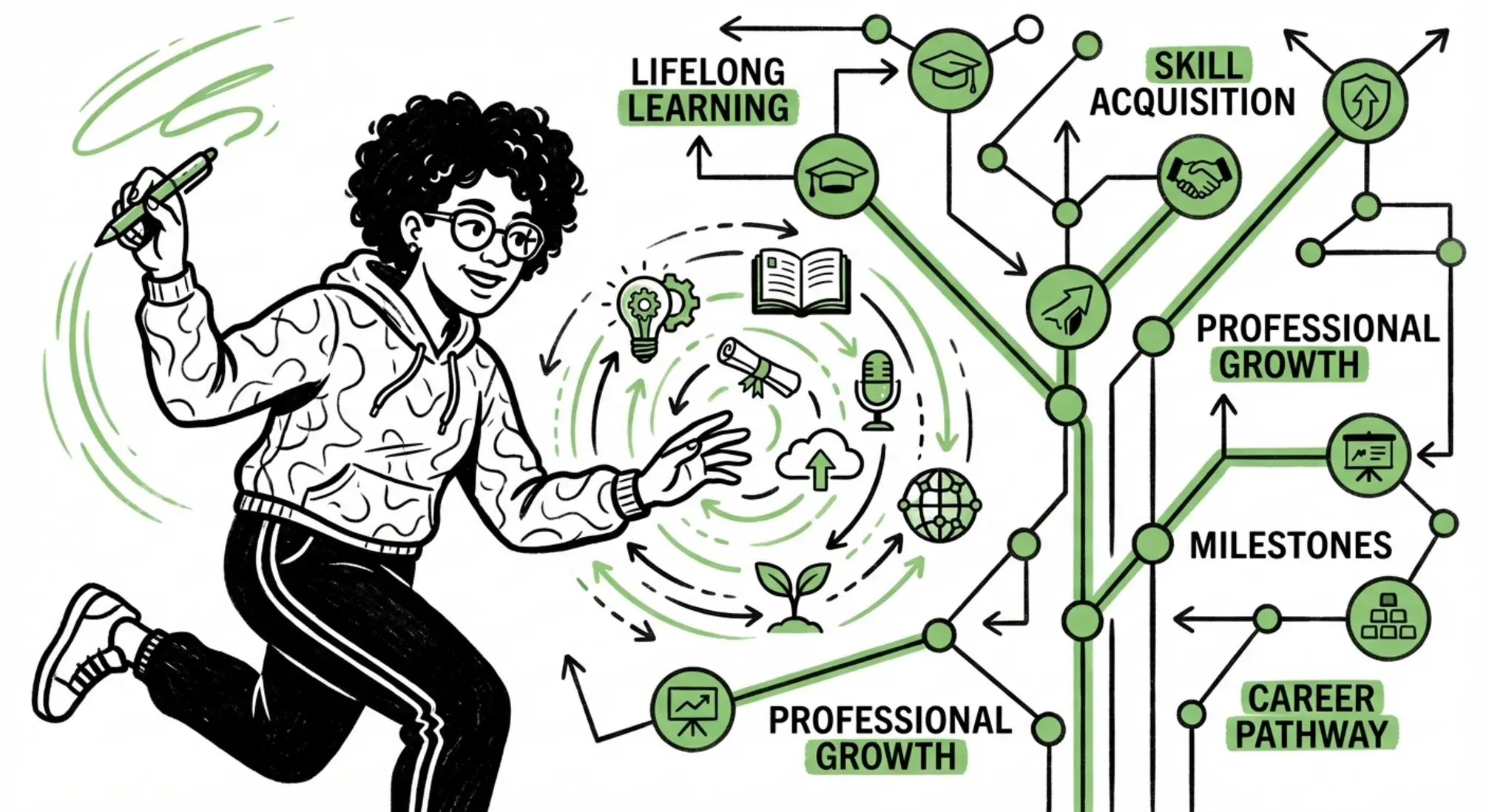
For professionals with ADHD, the journey of career development often feels less like a straight ascent and more like navigating a brilliantly complex, sometimes turbulent, mental internet. You know the unique spark your ADHD brings—the rapid connections, the bursts of intense focus, the creative surge. Yet, you also navigate the frustrations: the executive function hurdles, the challenge of maintaining interest, the sheer overwhelm of traditional learning paths.
If you're evaluating how to transform these dynamics into a powerful advantage for lifelong learning, skill acquisition, and career advancement, you're in the right place. This isn't about simply coping; it's about strategically leveraging your neurodivergent mind to thrive.
The professional world is waking up to the inherent value of neurodiversity. While ADHD can present challenges in areas like attention control and working memory (NCBI PMC, 2002), it also brings incredible strengths. An estimated 404 million adults worldwide live with ADHD (Jill Johnson Coaching, 2025), and a significant portion—over half—are diagnosed later in adulthood (CHADD, 2024). This growing awareness means a shift is needed from deficit-focused strategies to those that harness inherent strengths.
Traditional professional development often clashes with the ADHD brain. Long, linear courses, passive lectures, and rigid documentation processes can quickly lead to disengagement. But what if we told you that your "scattered" interests can fuel a diverse skill set, your "hyperfocus" can accelerate mastery, and your need for novelty can drive continuous, innovative learning? This guide dives deep into practical, neurodivergent-friendly strategies designed to bridge the gap between understanding ADHD's impact and achieving robust professional growth.
Hyperfocus, often described as an intense, sustained concentration on a task or interest, is a hallmark of the ADHD experience. While it can lead to neglecting other responsibilities, when intentionally directed, it becomes an unparalleled tool for deep learning and accelerated skill acquisition (ADDA, ADDitude Mag, Cleveland Clinic). Our research shows that content on "how to hyperfocus" is highly sought after, indicating a clear desire among professionals to leverage this strength. The key is not to eliminate it, but to learn how to trigger and direct it.
Imagine channeling that intense mental energy into mastering a new programming language, diving deep into market research, or perfecting a complex presentation. This isn't just about "blasting through tasks"; it's about achieving a state of flow where learning is rapid and retention is high.
Here’s a blueprint for intentionally triggering and directing hyperfocus:
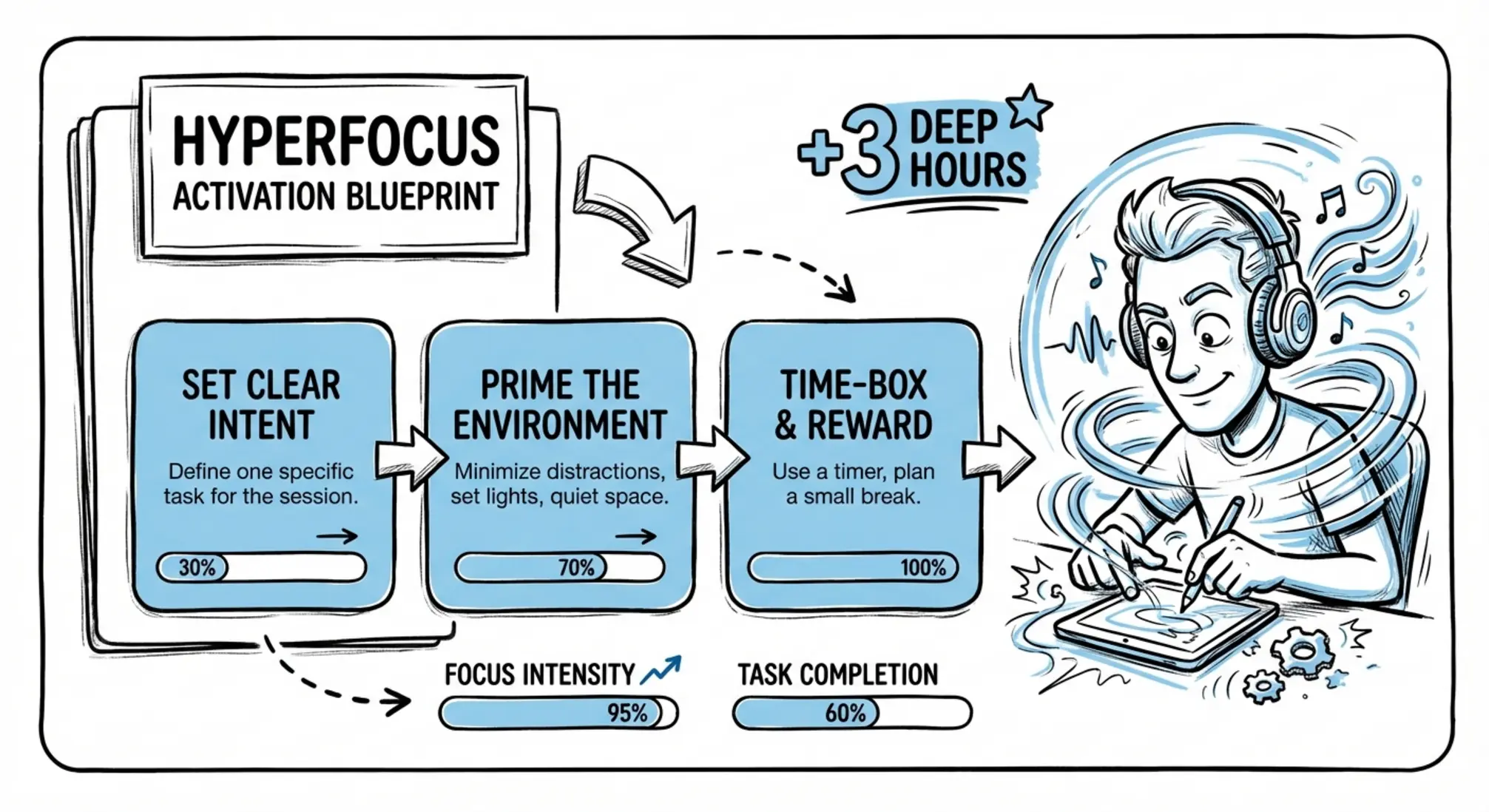
Your Hyperfocus Activation Checklist & Intentionality Planner:
By integrating these steps, you move beyond merely experiencing hyperfocus to actively directing it, transforming a potential "rabbit hole" into a highly productive "deep hours" work session.
High-stakes certifications and exams are often daunting for individuals with ADHD due to the demands on executive functions, sustained attention, and memory recall. However, generic study tips often fall short. What you need are strategies tailored to your unique cognitive style, turning challenges into manageable steps.
The conventional path of endless reading and rote memorization is a recipe for disengagement and burnout. Instead, consider these ADHD-optimized approaches:

Your Certification Study Planner & Accountability Tracker for ADHD:
By creating a structured yet flexible plan that acknowledges your ADHD, you transform the intimidating prospect of certification into a series of achievable, even enjoyable, steps.
In today's rapidly evolving professional landscape, lifelong learning isn't optional—it's essential. For the ADHD brain, "lifelong" can feel like a marathon of changing interests, but it can also be a superpower for diverse skill development. The challenge is often sustaining engagement and connecting disparate learning tangents.
One of the most persistent invisible challenges for ADHD professionals is documenting accomplishments. Executive function challenges can make recalling past projects, quantifying impact, or even simply maintaining a coherent record difficult. This leads to undervaluation in performance reviews, interviews, and career advancement discussions. Yet, your unique strengths—creativity, resilience, problem-solving under pressure—deserve to be highlighted.
It's time to build systems that work with your ADHD, not against it.
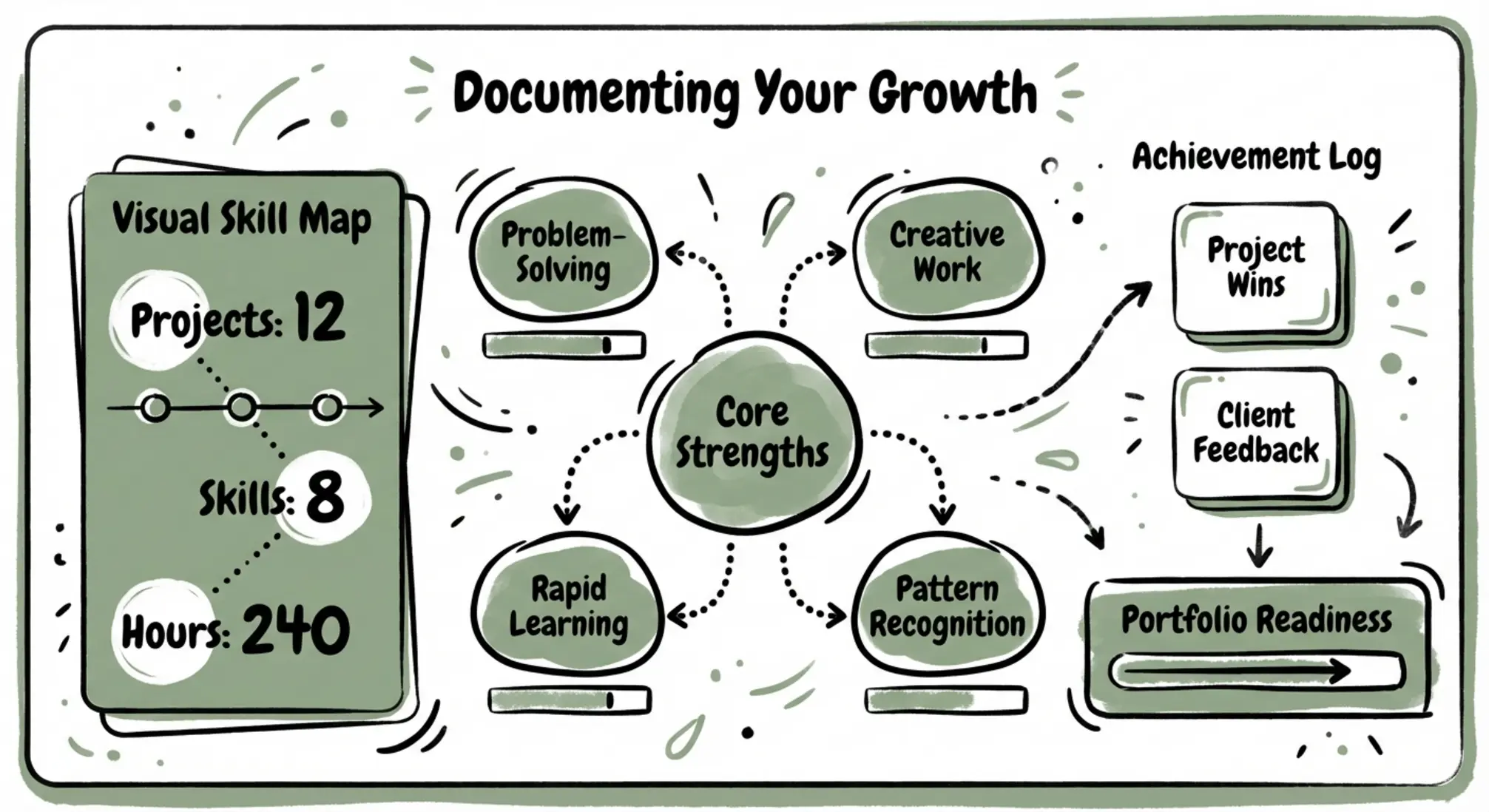
Your ADHD Strengths Portfolio Builder & Achievement Log:
This proactive approach not only builds a compelling case for your career growth but also reinforces your self-worth and confidence.
Mentors and coaches can be invaluable allies in professional development for individuals with ADHD. They offer guidance, accountability, and a different perspective. However, the dynamics of a mentorship or coaching relationship can present its own challenges for someone with ADHD – from showing up consistently to integrating feedback.
Navigating these relationships effectively means being proactive about your needs:
Mentorship is a two-way street. By actively optimizing your approach, you ensure these valuable relationships truly accelerate your growth.
Online learning platforms offer unparalleled flexibility, which can be a huge benefit for ADHD professionals (UMGC, 2023). You can learn at your own pace, choose topics aligned with your hyperfixations, and access courses from anywhere. However, the same freedom can also lead to distraction, procrastination, and incomplete courses. Around 87% of US adults with ADHD experience career struggles (Jill Johnson Coaching, 2025), and poor completion rates in online learning contribute to this.
Here’s how to turn online learning into a consistent success:
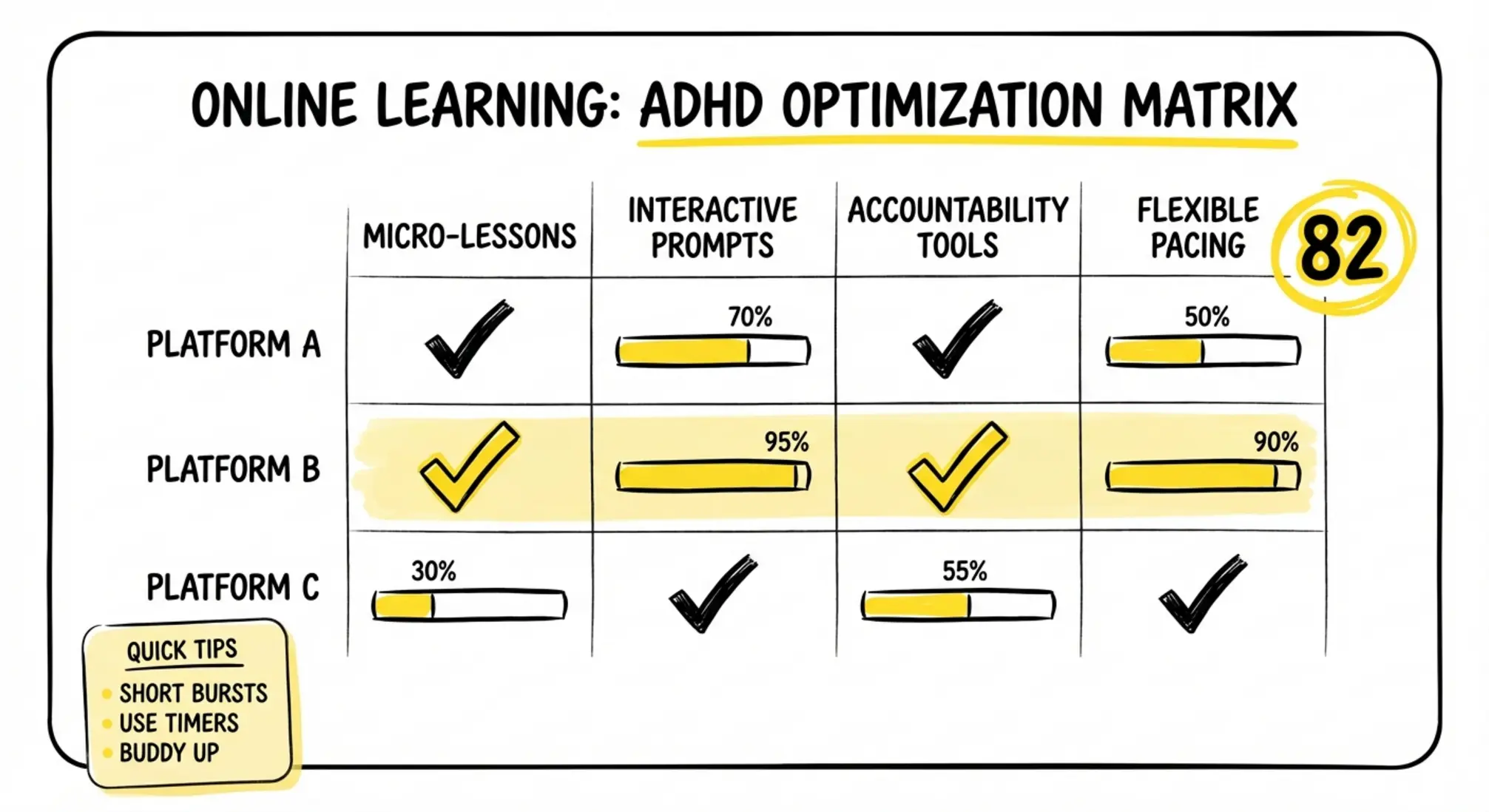
By strategically choosing platforms and actively employing these techniques, you'll not only complete more online courses but genuinely integrate what you learn into your professional practice.
The journey of professional development with ADHD is indeed a "beautifully chaotic, endlessly fascinating, mildly exhausting mental internet." But with the right strategies, it becomes a powerful engine for innovation, deep learning, and career growth. You've navigated what others perceive as obstacles, harnessing your unique cognitive style. This isn't about fitting into a neurotypical mold; it's about optimizing your natural brilliance.
By intentionally directing hyperfocus, adopting ADHD-friendly certification strategies, fostering continuous skill acquisition through interest-driven learning, diligently documenting your achievements, and optimizing mentorship, you are not just managing ADHD—you are actively leveraging it.
Ready to take the next step in your professional journey? Explore our ongoing resources for deeper dives into these topics and join a community that celebrates the ADHD advantage.
A1: While hyperfocus can lead to incredible productivity and deep learning when directed, it can also lead to neglecting other important tasks or burning out. The key, as discussed, is intentionality and timeboxing. By setting clear goals and boundaries for your hyperfocus sessions, you harness its power without falling into unproductive rabbit holes.
A2: Task initiation can be a significant hurdle for ADHD. The strategies outlined here emphasize breaking down large tasks into smaller, "dopamine-friendly" chunks. Also, consider an [ADHD coach] who can provide personalized accountability and help you identify specific barriers and tailored strategies. Consistent starting is often more important than "perfect" starting.
A3: Focus on the outcomes of your ADHD traits, not just the traits themselves. Instead of saying "I have ADHD," try: "My ability to connect disparate ideas often leads to innovative solutions," or "I thrive in high-pressure situations by intensely focusing on critical tasks until completion." Use the "Documenting & Showcasing Your ADHD Strengths & Achievements" section to build your narrative and specific examples. Many organizations are now actively seeking out neurodivergent talent, recognizing the value it brings (Hiring Lab, 2025; AVIXA, 2025).
A4: Individuals with ADHD often excel in dynamic, fast-paced roles that offer novelty, challenge, and opportunities for creative problem-solving. Fields like technology, entrepreneurship, arts, crisis management, and certain scientific research areas frequently attract and benefit from ADHD traits. However, passion and interest are often the biggest predictors of success, as they fuel engagement and hyperfocus. Choosing a career path that resonates with your interests is crucial (ADDitude Mag).
A5: Absolutely. Many strategies are free and focus on mindset and organizational techniques. Leverage free online resources, articles, and communities that discuss ADHD-friendly learning. The core principles of breaking down tasks, active engagement, and self-awareness apply whether you're using free platforms or paid services. For example, YouTube offers a wealth of micro-learning content, and many public libraries provide access to sites like LinkedIn Learning.
A6: Rejection Sensitivity Dysphoria (RSD) is a real and impactful experience for many with ADHD. When seeking mentorship or feedback, it's helpful to: