Positive ADHD Identity Guide for Self Acceptance Action Plan
Learn steps to shift from shame to a proud ADHD identity using reframing, brief self-compassion, and community support to build self-acceptance. Find out how.
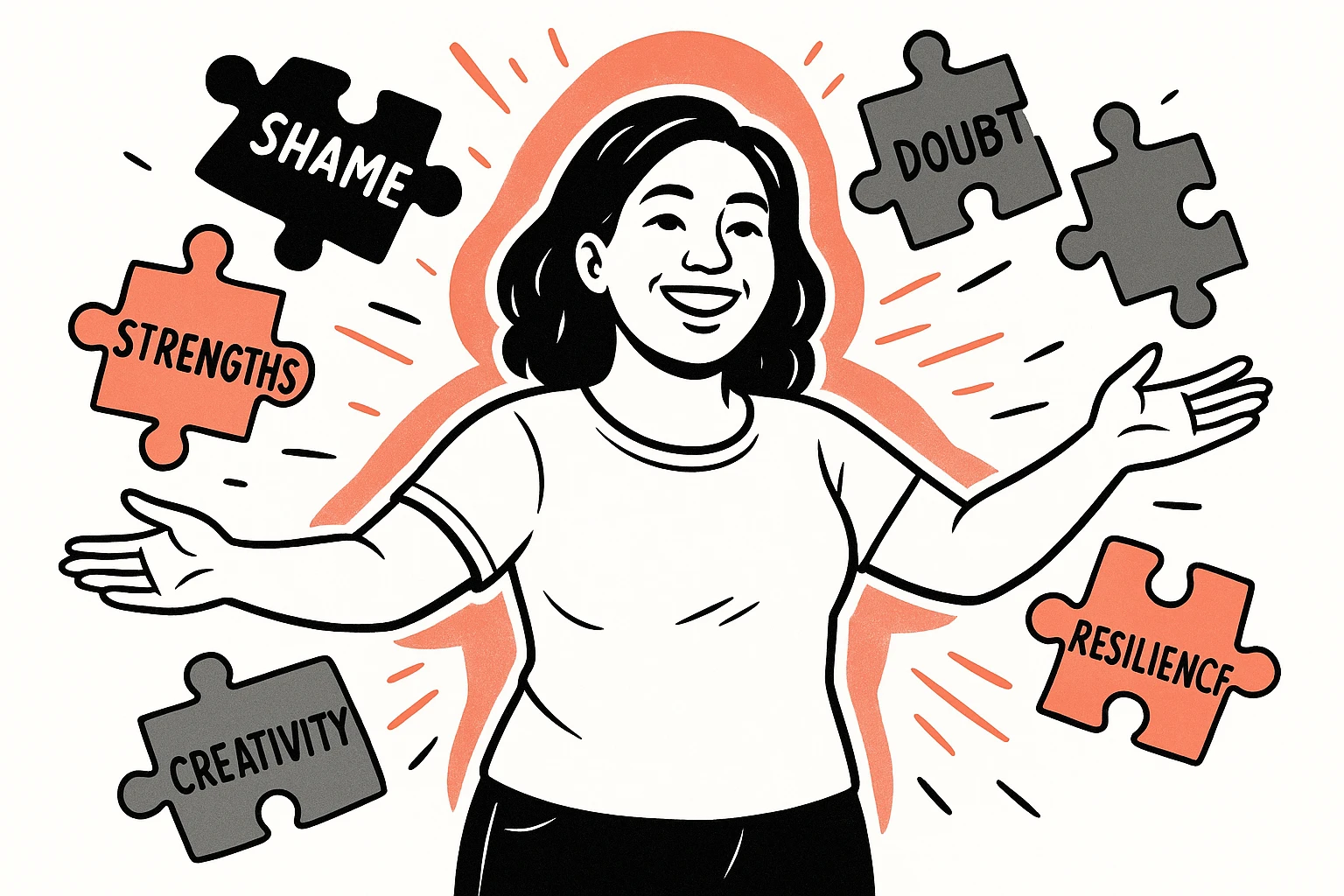
When you're navigating the complexities of an ADHD diagnosis, the journey often starts with a search for answers—for explanations of why your brain seems to work differently. But as you move beyond understanding symptoms, you find yourself at a critical juncture: how do you integrate ADHD into who you are, especially when society often paints it as a deficit? This isn’t just about coping; it’s about claiming a positive, proud ADHD identity.
This middle-of-the-funnel piece is designed for you—the individual actively evaluating how to move from a place of potential shame and self-doubt toward genuine self-acceptance and even pride in your neurodivergent self. You’re looking for more than just information; you're seeking a framework to reshape your internal narrative and confidently navigate your world.
It's a common story: you receive an ADHD diagnosis, and a wave of emotions follows. Relief, yes, but often also grief, anger, and a deep-seated shame. For years, you might have internalized labels like "lazy," "unfocused," or "disorganized," not realizing these were symptoms, not character flaws. This internalized criticism profoundly impacts your self-perception, leaving you searching for strategies to mend your identity.
Many individuals with ADHD report significantly lower levels of self-compassion and higher perceived criticism compared to their neurotypical peers. This isn’t merely an inconvenience; it contributes directly to poorer mental health outcomes, including anxiety, depression, and increased stress (Beaton et al., 2020; Beaton et al., 2022). So, how do we shift from viewing ADHD through a lens of deficit to embracing it as an integral, valuable part of who you are? By actively cultivating neurodivergent pride. It’s a journey from the quiet struggle of self-doubt to the empowered affirmation of your unique mental landscape.
The path to self-acceptance is often blocked by deeply ingrained patterns of shame and self-criticism. For individuals with ADHD, these aren't just personal failings; they're often echoes of societal misunderstanding and unmet expectations.
Imagine constantly being told you're not trying hard enough, that you just need to "focus." These external judgments, stereotypes of laziness or lack of motivation, don't just disappear. They seep into your internal dialogue, shaping your self-perception and leading to internalized shame and low self-esteem (Simply Psychology, 2024). When the world doesn't understand the unique wiring of your brain, it's easy to believe that something is inherently "wrong" with you.
ADHD isn't just about attention; it's also about emotional regulation. Traits like intense emotional sensitivity and Rejection Sensitive Dysphoria (RSD), which is an extreme sensitivity to perceived criticism or rejection, amplify feelings of inadequacy. This makes you particularly vulnerable to external judgments and fuels the intense desire to "mask" your true self to fit in, leading to exhaustion and a fractured sense of identity (Simply Psychology, 2024).
This constant struggle can precipitate an identity crisis. When ADHD is perceived as entirely defining one's identity—a phenomenon called "engulfment"—it predicts a lower health-related quality of life even more strongly than symptom severity alone (Stern & Lamash, 2025). It’s the difference between saying "I have ADHD" and "I am ADHD," where the latter can feel all-consuming and negative, preventing you from seeing the broader, multi-faceted person you are.
Acceptance isn't passive resignation; it's an active, empowering choice. For individuals with ADHD, it means looking at your unique brain and saying, "This is me, and that's okay."
Psychologist Kristin Neff defines self-compassion through three interconnected elements: self-kindness, common humanity, and mindfulness. Applied to ADHD, this looks like:
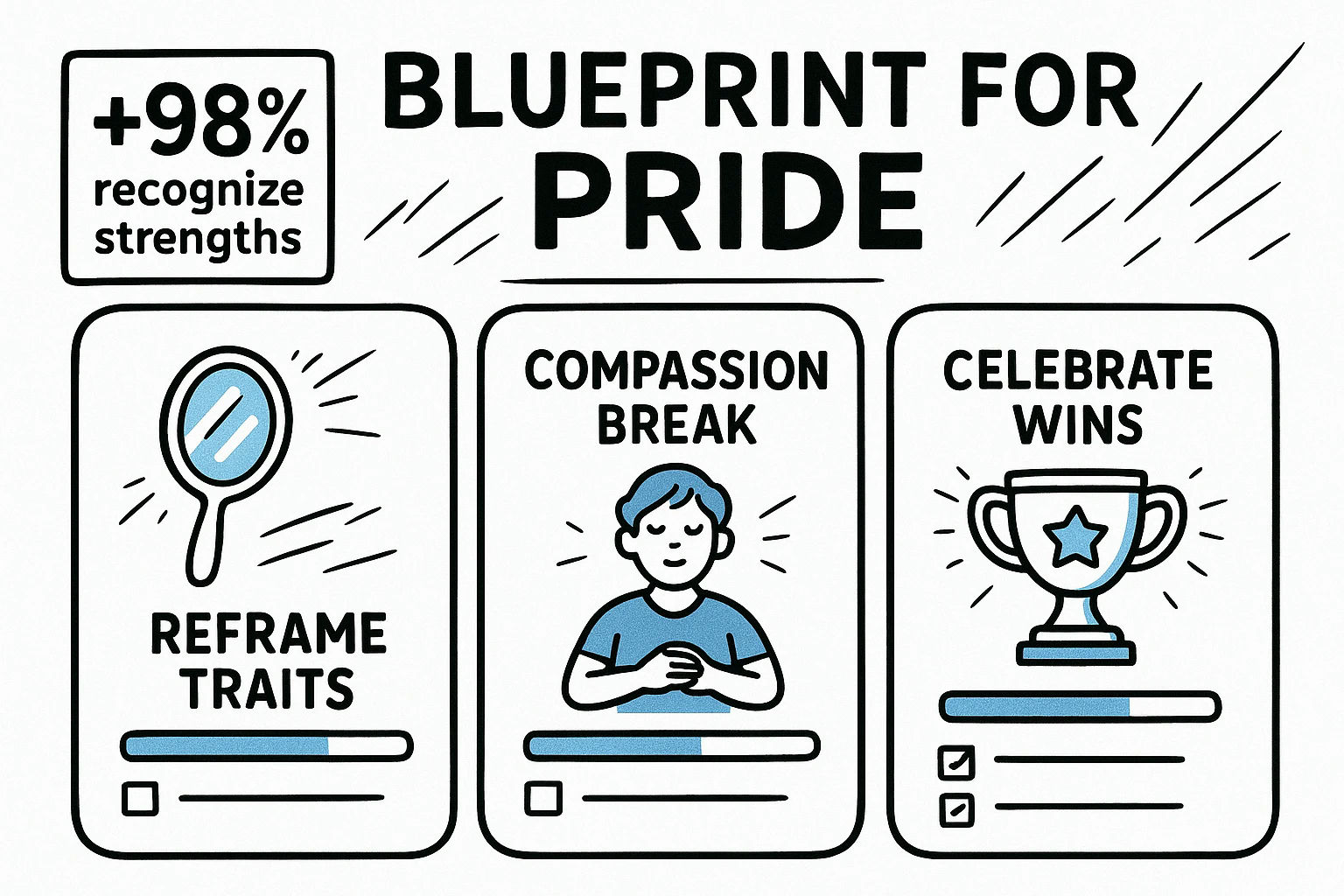
Self-acceptance as an ADHDer isn't about resigning yourself to your "flaws" or merely managing symptoms. It's about recognizing that your neurodivergent brain is a valid, valuable way of experiencing the world. It’s about leveraging your strengths, not just compensating for perceived weaknesses. In fact, nearly 98% of adults with ADHD recognize positive aspects of their condition, like creativity, empathy, and out-of-the-box thinking (Jill Johnson Coaching, 2025). This statistic isn't just encouraging; it's a foundation for building a positive identity.
Moving from knowledge to integration requires actionable steps, especially for the ADHD brain. We've designed these strategies to be engaging, digestible, and directly applicable.
The language you use, both internally and externally, profoundly shapes your identity.
Cultivating a sense of kindness towards yourself, especially following perceived blunders, is crucial.
Isolation fuels shame. Finding your community and shared experiences is vital for identity formation.

Traditional mindfulness can be challenging for those with ADHD. Here are adapted techniques:
Leverage tools not as crutches, but as acts of self-care and empowerment:
This is where the journey culminates—in actively celebrating the strengths your ADHD brain brings to the world.
Your ADHD isn’t just a list of challenges; it’s a suite of unique advantages. The ability to hyperfocus, for example, can lead to incredible depth of knowledge and productivity. Impulsivity can translate into spontaneity and innovative problem-solving. Your non-linear thinking can foster exceptional creativity and unique perspectives (ADDitude Magazine, 2022). Emerging trends emphasize fostering inclusive environments that support these strengths rather than focusing solely on deficits (Frontiers in Psychology, 2025; EY Global Neuroinclusion Report, 2025).
The mental health benefits of reducing masking—the exhausting effort to hide your ADHD traits to conform—are profound. When you allow yourself to be authentically neurodivergent in supportive environments, you reduce burnout, imposter syndrome, and mental health strain (HLB Neurodiversity Report, 2025). This doesn’t mean abandoning all social graces; it means choosing when and where to reveal your true self, celebrating the freedom that comes with authenticity. For more on navigating social situations authentically, see our piece on ADHD & Social Connections.
Ultimately, the goal is to fully integrate your ADHD into a positive, cohesive identity. ADHD is not a flaw to be fixed, but a unique way of experiencing the world—a vital part of your personal internet, filled with beautifully chaotic connections and fascinating rabbit holes. As you navigate towards a deeper understanding of your neurodivergence, remember to be kind to yourself. You are not just managing a condition; you are evolving into a more authentic, self-aware, and proud individual.

Cultivating a positive ADHD identity is not a destination but a dynamic, ongoing journey. It involves consistently choosing self-compassion over self-criticism, reframing perceived weaknesses into genuine strengths, and connecting with a community that understands and validates your unique wiring.
You are equipped with a powerful, creative, and resilient mind. The evaluation process you’re undertaking now—diving deep into the nuances of ADHD identity—is a testament to your commitment to self-worth. Embrace the beautiful chaos, celebrate your neurodivergent victories, and continue to build an identity that truly reflects your authentic, incredible self.
This journey of self-acceptance is complex, and you likely have lingering questions as you evaluate how to integrate these concepts into your life.
No, authentic neurodivergent pride isn't about glossing over difficulties. It’s about acknowledging your challenges with self-kindness and understanding (Beaton et al., 2020), while simultaneously recognizing the immense value and unique strengths that come with your neurodivergent brain. It's about a balanced, holistic view of yourself, moving beyond shame without being pollyannaish. It’s a shift from a deficit model to an asset-based mindset.
This is a common struggle, often intensified by Rejection Sensitive Dysphoria (RSD). Start with small, consistent acts of self-kindness. When you make a mistake, instead of defaulting to harsh self-criticism, pause. Acknowledge the feeling ("I messed up, and I feel bad"). Then, intentionally offer yourself a kind thought, as you would a friend ("It's okay; everyone makes mistakes, and this doesn't define my worth"). Remember Kristin Neff's framework: self-kindness, common humanity (you are not alone in making mistakes), and mindfulness (observing the feeling without judgment). Over time, these small shifts build new neural pathways.
This is a critical distinction that many grapple with. Neurodivergent pride is about accepting your identity as an ADHDer, not excusing behaviors. It fosters an environment where you can better understand your brain's unique needs, leading more effectively to personal responsibility. When you stop shaming yourself for a challenge, you can approach problem-solving with creativity and self-compassion rather than paralysis. For example, if time blindness is an issue, self-acceptance might lead you to explore an ADHD-specific timer app or an accountability partner, rather than simply berating yourself. The goal is to act from a place of empowerment, not shame-induced avoidance.
Self-advocacy begins with self-understanding. Educate yourself first, using resources like this article or those from reputable organizations like CHADD. Then, choose your moments and audience carefully. You might share specific articles or personal anecdotes that highlight the impact of your ADHD (e.g., "When I get overwhelmed by too much background noise, it's not because I'm ignoring you, it's because my brain is struggling to filter, and I need a quieter space"). Emphasize that you're seeking understanding and support, not exemptions. Remember, positive social quality of life is a significant predictor of adaptive diagnostic identity (Stern & Lamash, 2025), so fostering understanding in your immediate circle is key.
It's common to feel this way, especially if you've spent years internalizing negative feedback. The "Mirror Traits" exercise is designed for this very reason. It takes intentional practice to reframe your perspective. Consider asking trusted friends or family members what they perceive as your unique qualities or moments of brilliance. Often, what you see as "hyperactivity" they might see as "infectious energy" or "passion." Creativity, resilience, empathy, innovative thinking, and the ability to connect disparate ideas are frequently cited strengths among individuals with ADHD (Jill Johnson Coaching, 2025). With consistent effort, you will begin to see these in yourself.