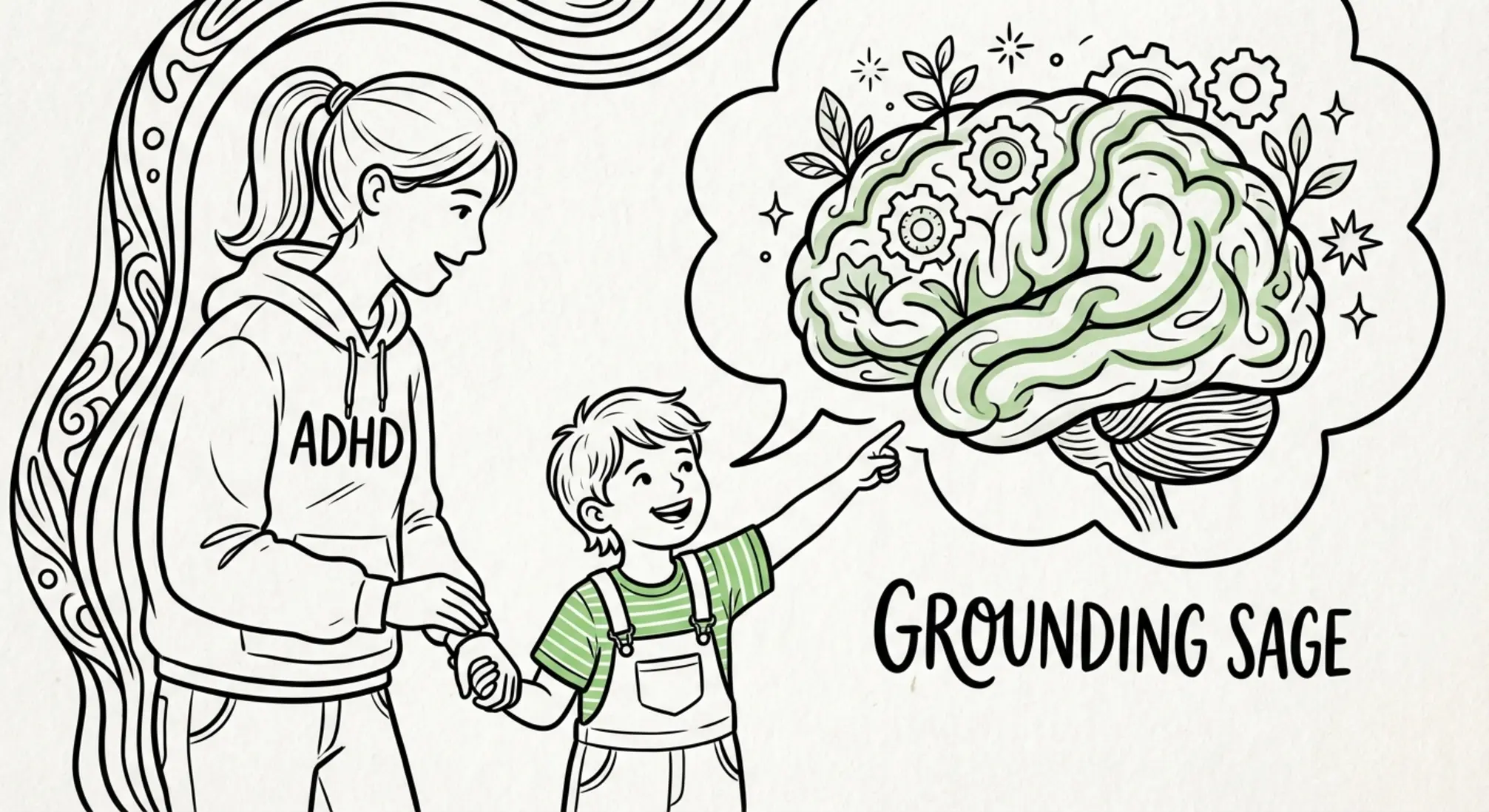
Neurodiversity in the Workplace Guide for ADHD Inclusion
Learn how to build a neuro-inclusive workplace that leverages ADHD strengths and cuts turnover. Discover practical accommodations, manager steps and ROI.

The modern workplace moves fast, demanding innovation, adaptability, and fresh perspectives. You're likely evaluating how to cultivate a team that thrives in this environment, and increasingly, that evaluation includes understanding neurodiversity. Specifically, if you're looking to integrate neurodivergent talent, especially individuals with ADHD, you're at a critical juncture. It’s no longer enough to simply acknowledge neurodiversity; the challenge is in transforming that awareness into tangible, inclusive policies that benefit everyone.
This guide isn't just about accommodations; it's about building a framework for systemic change, leveraging the unique strengths of ADHD individuals, and understanding the measurable impact on your organization's bottom line.
Neurodiversity in the workplace isn't a trend; it's a fundamental shift in how we understand talent and optimize team performance. As an HR leader, manager, or business owner, you're tasked with building resilient, innovative teams. Overlooking neurodivergent talent, particularly individuals with ADHD, means overlooking a significant competitive advantage. This goes beyond mere compliance; it's about strategic growth.
Neurodiversity refers to the natural variation in human brains, recognizing that neurological differences like ADHD, autism, and dyslexia are simply different ways of processing information, not deficits. Within this context, ADHD manifests as distinct patterns in executive functions—the brain's self-management system. While often associated with challenges in organization or task initiation, ADHD also brings remarkable strengths.
Adults with ADHD frequently navigate hurdles related to executive function, which can impact several areas in a conventional workplace. Research shows that 40-60% of adults with ADHD experience difficulties in inhibitory control, working memory, cognitive flexibility, and sustained attention (Frontiers in Neuroscience; PAR Inc.). This can translate to:
These aren't simply "bad habits" but expressions of neurobiological differences. Understanding them is the first step toward effective support.
Focusing solely on challenges misses the profound value ADHD individuals bring. Their neurocognitive profiles often lend themselves to exceptional strengths:
For an individual with ADHD, an unaccommodating workplace can be profoundly draining. The effort to "mask" or hide their natural behaviors to conform to neurotypical expectations leads to burnout, stress, and imposter syndrome. Our approach considers this human element, understanding that a truly inclusive environment not only boosts productivity but also safeguards employee well-being and fosters a sense of belonging.
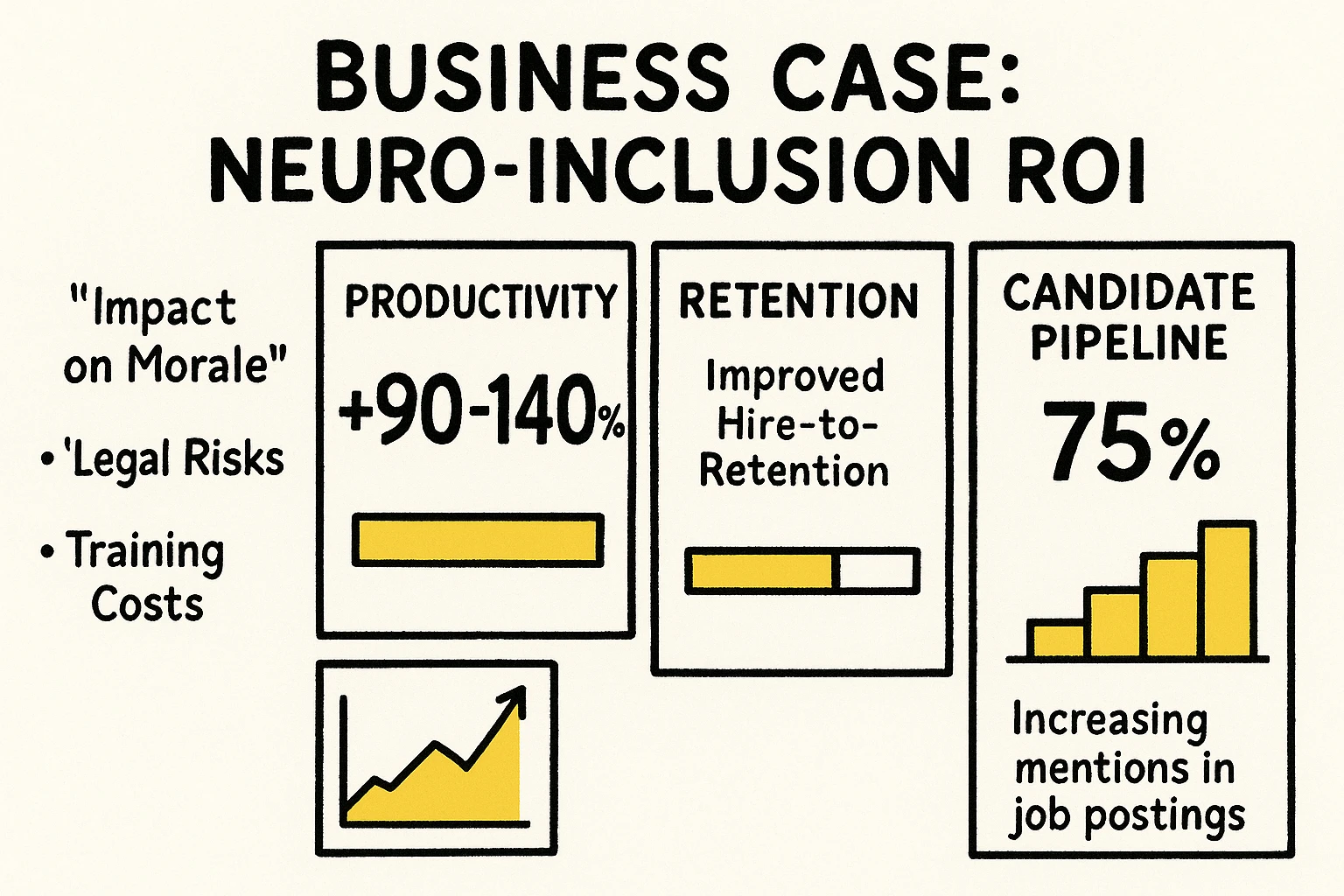
Beyond ethical considerations, there’s a compelling, data-driven argument for actively recruiting and supporting neurodivergent talent. Your investment in neuro-inclusive practices directly translates to measurable business benefits.
Studies underscore a significant untapped talent pool. While approximately 15-20% of the global population is neurodivergent, unemployment rates for this group can soar to 85-90% (Neurodiversity in Business Report 2023, Department for Work and Pensions 2025; Gallup). This means a vast segment of skilled individuals remains underutilized, not due to lack of ability, but lack of opportunity and accommodating environments.
Implementing neuro-inclusive policies isn't just about addressing unemployment; it's about enhancing internal team performance. Companies like JPMorgan Chase and Hewlett Packard have reported substantial productivity increases, ranging from 90-140% and 30% respectively, in teams with neurodivergent employees where appropriate accommodations and support were provided (Deloitte, Employment Studies). The value is clear.
The legal landscape is also shifting. Neurodiversity-related claims under the Americans with Disabilities Act (ADA) are significantly increasing, with autism-related claims alone rising 650% between 2015-2023 (Burr & Forman LLP). Proactive accommodation and comprehensive policies are no longer optional to avoid legal risk.
A diverse cognitive landscape fuels innovation. Teams with varied thinking styles are better equipped to approach problems from multiple angles, leading to more creative solutions and a stronger competitive edge. Neurodivergent individuals, with their unique perspectives, are often at the forefront of this innovation.
Creating an environment where all employees feel valued, understood, and supported significantly boosts morale and reduces turnover. Companies like PwC and ANZ Bank have demonstrated how neuro-inclusive workplaces lead to higher satisfaction and greater retention rates, directly impacting your human capital investment.
Here's a snapshot of the ROI you can expect:
Moving from intention to implementation requires a structured approach. It's about designing an environment where accommodations are seamlessly integrated and genuinely effective.
There's no one-size-fits-all solution for ADHD in the workplace, and a personalized approach is crucial.
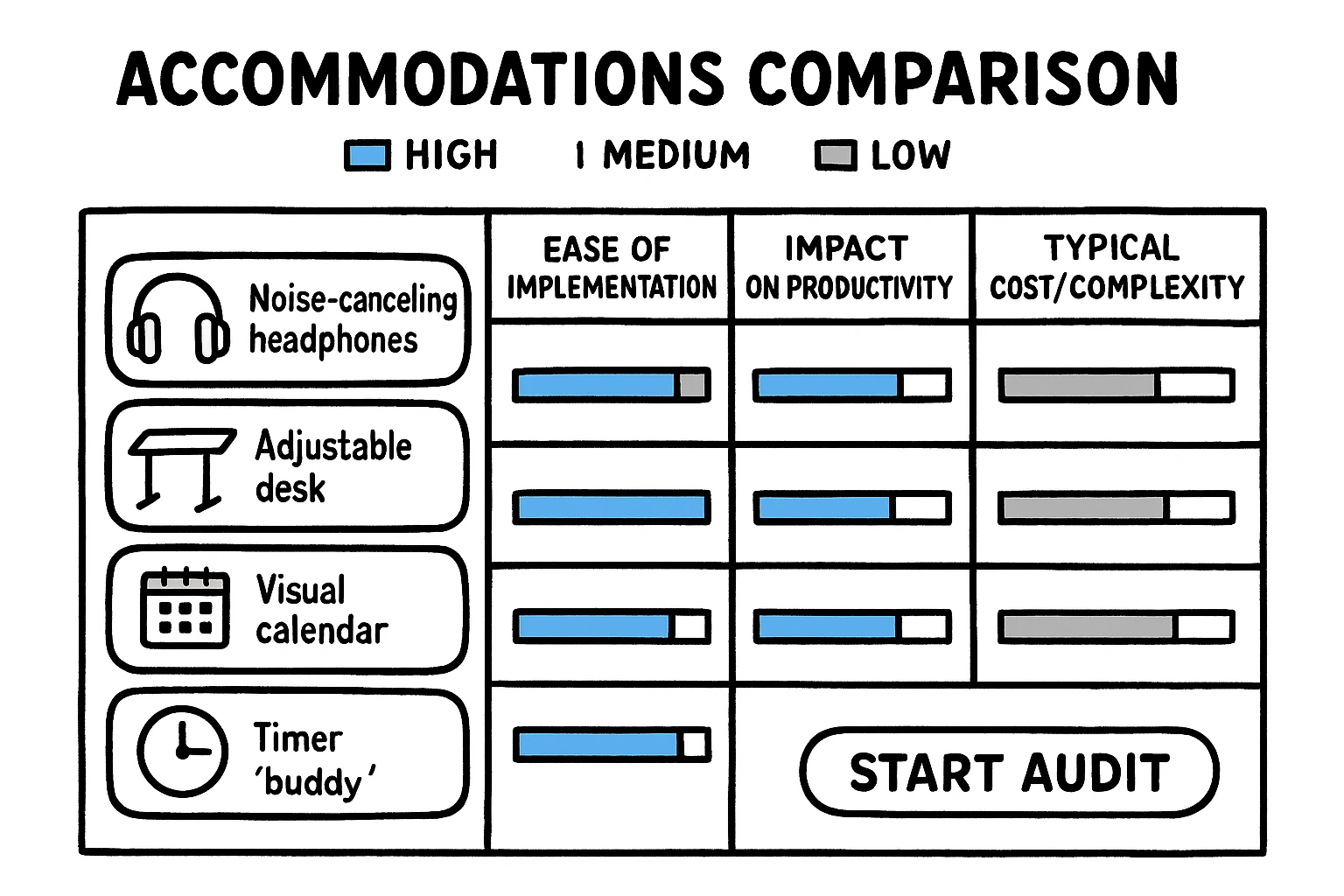
Effective accommodations address specific challenges by leveraging strengths.
To help you visualize and compare the impact of various accommodations:

Additionally, considering the interplay between physical and virtual workspaces is essential for a truly inclusive environment.

True neuro-inclusion extends beyond individual accommodations to embed principles of diversity and support throughout your organizational culture.
Recruitment is the first point of contact and often where neurodivergent talent is unintentionally screened out.
Awareness leads to empathy. Regular workshops for managers and staff on neurodiversity can demystify ADHD, explain executive functions, and promote effective communication. This training fosters a culture of understanding and reduces stigma.
Top-down support is non-negotiable. When leaders champion neuro-inclusion, it signals to the entire organization that this is a priority. Creating psychological safety—an environment where employees feel safe to speak up, disclose their needs, and make mistakes without fear of retribution—is foundational. This encouragement allows individuals to bring their full selves to work, unlocking their true potential.
Implementing these changes requires a clear roadmap for managers. Here's how to assess, pilot, train, and scale your neuro-inclusive initiatives:
Many leading organizations have already demonstrated the power of neuro-inclusion.
The decision to foster a neuro-inclusive environment isn't just a progressive choice; it's a strategic imperative. Your organization's ability to innovate, adapt, and lead in a rapidly changing world hinges on its capacity to harness diverse perspectives. Embracing neurodiversity, particularly by creating supportive environments for individuals with ADHD, will unlock untapped potential, drive innovation, and build a more resilient, empathetic, and ultimately, more successful workplace.
We invite you to champion neuro-inclusion within your organization. The benefits—from enhanced problem-solving and increased productivity to improved retention and a richer company culture—are undeniable. The future workplace is neuro-inclusive, and the time to build it is now.
A1: While flexibility is beneficial for all employees, ADHD accommodations are specifically designed to address neurocognitive differences in executive function. True accommodation goes beyond general flexibility to implement targeted strategies (e.g., sensory adjustments, specific task management tools) that directly enable an individual with ADHD to perform at their best, much like a ramp specifically aids someone using a wheelchair. It's about providing the right kind of support, not just any support.
A2: The best approach is always to engage in open, curious conversation. Instead of assuming what an employee needs, ask open-ended questions like, "What support would help you excel in this role?" or "What strategies have worked for you in previous positions?" NAMI's advice to ask about prior effective modifications is excellent. Avoid offering a diagnosis or making broad generalizations; focus on performance and specific challenges or strengths.
A3: The ADA (Americans with Disabilities Act) requires employers to provide reasonable accommodations for individuals with disabilities, including ADHD, unless doing so would cause undue hardship. This isn't "special treatment" but equal opportunity. Your goal should be to create an environment where all employees can thrive. Consult your HR and legal teams to ensure compliance. Remember, proactive inclusion often mitigates legal risks by fostering a supportive environment. The increase in neurodiversity-related claims highlights the importance of being prepared and informed (Burr & Forman LLP).
A4: Absolutely. Many effective accommodations are low-cost or no-cost. Simple adjustments like providing noise-canceling headphones, clear written instructions, flexible work hours, or using visual task boards can make a significant difference. The key is creativity and open communication. Furthermore, the productivity boosts seen in larger companies can be scaled to any size, making the ROI just as valuable for smaller organizations. The gains in retention, innovation, and employee morale are universally beneficial.
A5: Success can be measured through various metrics. Consider tracking: