Neurobiology of Unmasking Complete Guide to Authenticity
Discover how ADHD neurobiology reduces masking and shame, and how neuroplasticity-based strategies help you unmask authentically. Learn practical steps now.
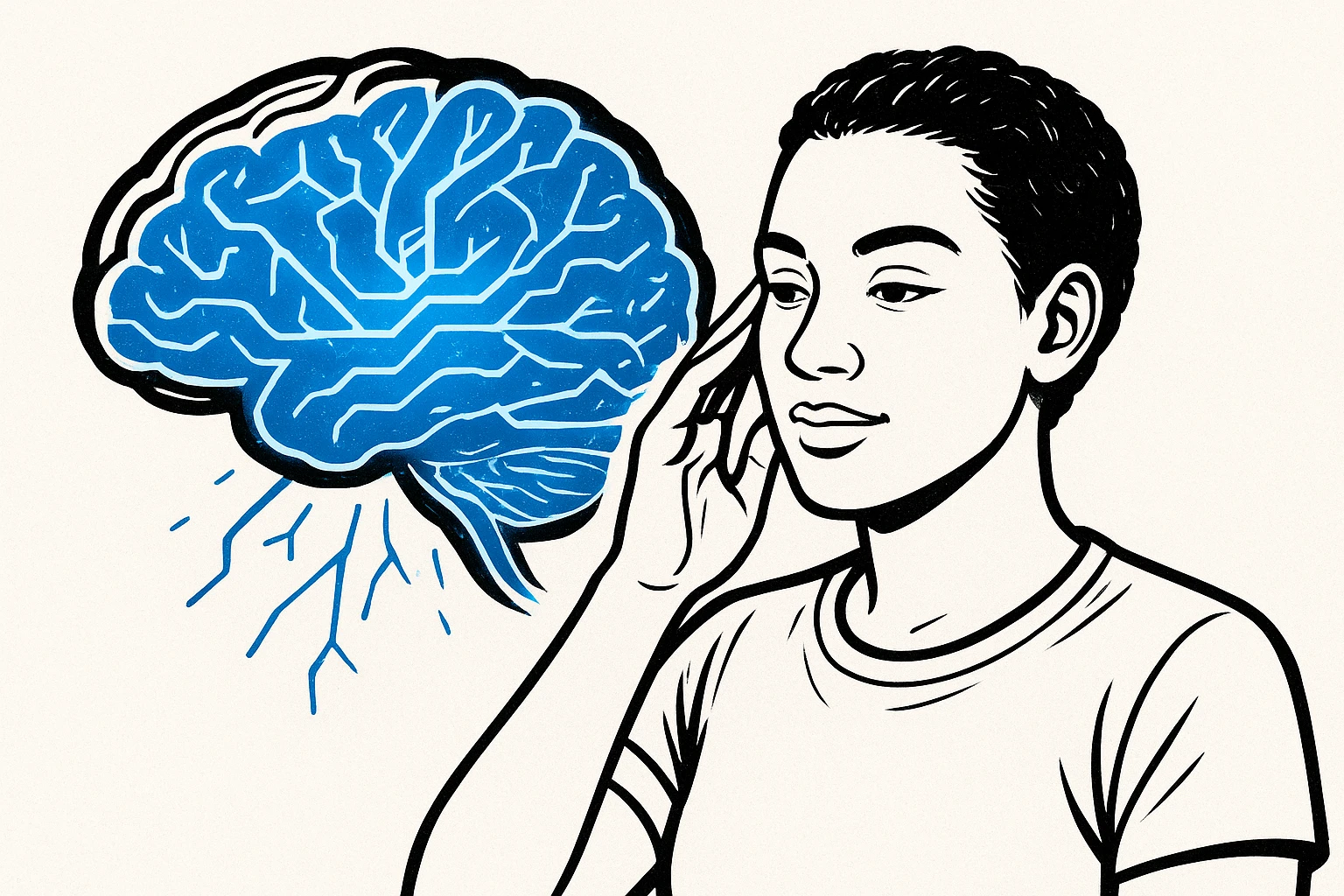
You've spent years navigating a world that often feels like it wasn't built for your brain. Perhaps you've perfected the art of "masking"—hiding your authentic self to fit in, to avoid judgment, or simply to survive. This constant performance is exhausting, and it leaves you wondering: Is there a way to truly be yourself, to unmask, without compromising success or connection?
The answer lies in understanding how your brain is wired. This isn't about pathology; it's about neurobiology. By recognizing the unique operational system of your ADHD brain, you can reframe perceived "deficits" as differences, reduce internalized shame, and cultivate genuine authenticity. This article will guide you through the scientific underpinnings, giving you the knowledge and confidence to embrace your neurodivergent self.
For too long, ADHD has been framed as a collection of undesirable traits. But recent research illuminates something far more empowering: it's a distinct neurological blueprint. Your brain isn't broken; it simply operates on a different, often brilliant, wavelength. Understanding this is the foundational step to unmasking.
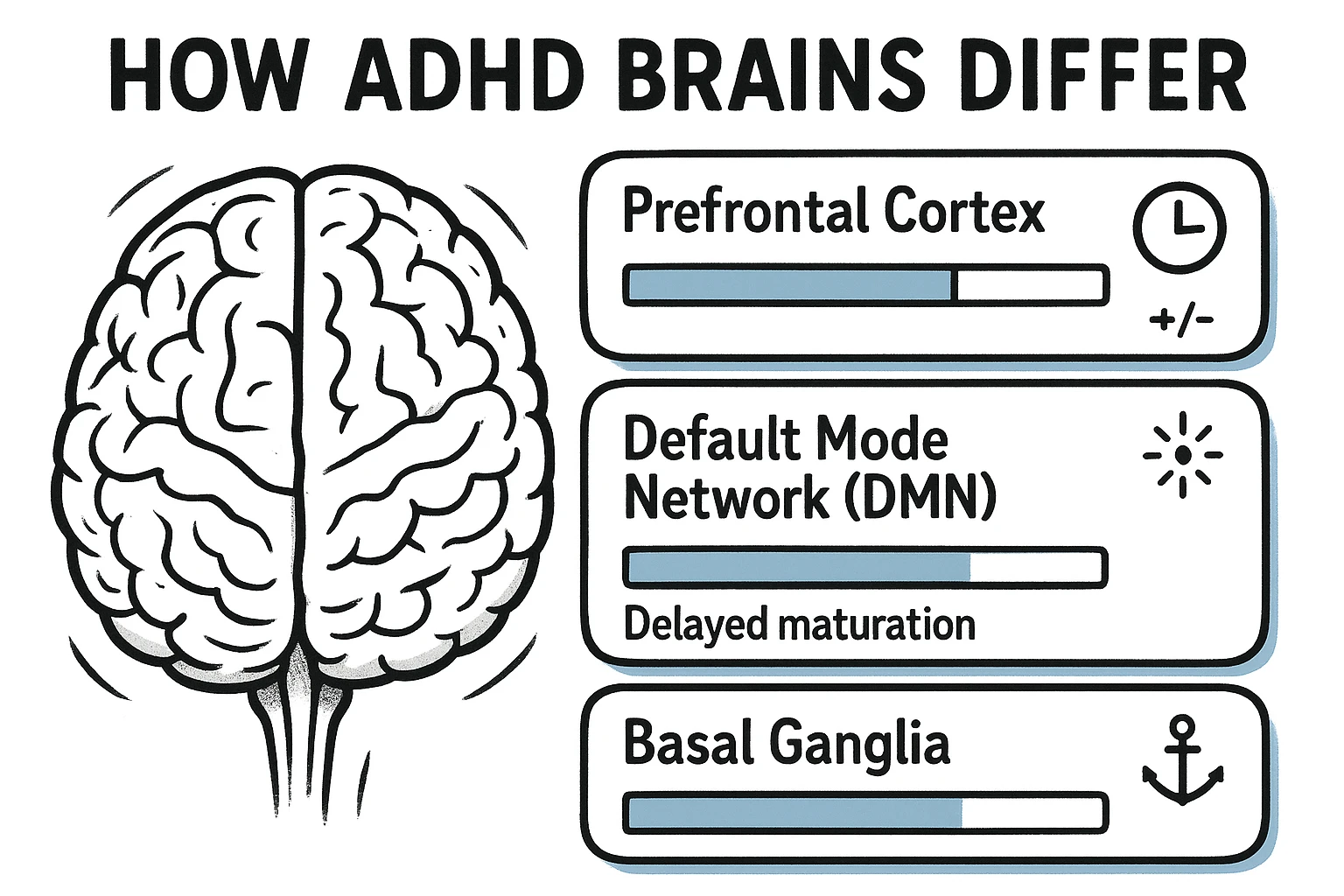
Think of your brain's prefrontal cortex (PFC) as the conductor of an orchestra, responsible for executive functions like planning, impulse control, and working memory. In ADHD brains, this region often shows smaller volume or delayed maturation compared to neurotypical brains (Child Mind Institute, ADDitude Magazine, NIH). This isn't a flaw; it just means your conductor needs a different baton, perhaps a visual cue, or a louder metronome.
This difference explains why tasks requiring sustained attention or sequential steps can feel uniquely challenging. It’s not a lack of intelligence or effort, but a characteristic of your brain's operating system. Instead of fighting it, we can learn to work with it.
The story often begins and ends with dopamine regulation, and it's a critical piece. Imbalances in dopamine and norepinephrine—neurotransmitters vital for motivation, reward, and attention—are central to ADHD (ADDA, Child Mind Institute). This dysregulation can affect motivation, influence your reward pathways, and profoundly impact emotional intensity.
This means your brain might struggle to generate intrinsic rewards for mundane tasks. You might find yourself constantly seeking novelty or high-intensity experiences just to get that dopamine hit, contributing to patterns of restlessness or hyperfocus on specific interests. This isn't a character defect; it's your brain seeking what it needs to feel engaged, often leading to a craving for external validation to stimulate those reward circuits.
Have you ever tried to focus on a task, only to find your mind wandering to a thousand other thoughts? This is often attributed to the Default Mode Network (DMN). In ADHD brains, the DMN (the network active during mind-wandering) struggles to deactivate sufficiently when you need to switch to task-focused activities (Child Mind Institute, ADDA, ADDitude Magazine).
Your mind might be a constant creative engine, constantly generating ideas, making connections, and exploring possibilities. The challenge isn't the volume of thoughts, but the brain's difficulty in hitting the "mute" button on this internal chatter when external focus is required. This isn't a deficit; it's a constant stream of information and potential, needing different strategies for management.
The initial scientific understanding often brings profound relief. It validates the struggles you’ve faced and shifts the narrative from "laziness" or "lack of willpower" to "my brain works differently." This isn't just about explaining symptoms; it's about providing the evidence that lays the groundwork for self-acceptance.
If your brain is simply wired differently, why the urge to mask? Why do we expend so much energy trying to appear "normal"? The answer lies in a complex interplay of neurobiological responses to societal pressures and perceived threats.
Masking, at its core, is a neurobiological survival strategy. It’s your brain attempting to protect you from the pain of rejection or judgment. The amygdala, your brain’s alarm system, plays a significant role here. Research suggests that ADHD brains can have an overactive amygdala and an underactive prefrontal cortex (Perplexity AI Research), making individuals more susceptible to Rejection Sensitive Dysphoria (RSD)—an intense emotional pain in response to perceived or actual criticism.
This heightened sensitivity means your brain learns to anticipate negative feedback. To avoid this pain, it develops compensatory behaviors—masking—to conform to neurotypical expectations. These aren't conscious choices made in isolation; they are deeply ingrained responses designed to minimize perceived threat.
Remember that dopamine dysregulation we discussed? It's not just about motivation; it also fuels the desire for external approval. When you "successfully" mask, you might receive positive social feedback—a moment of acceptance, appreciation, or simply going unnoticed in a positive way. This can provide a temporary dopamine hit, reinforcing the masking behavior (Psychology Today).
However, this reliance on external validation creates a vicious cycle. The performance anxiety associated with maintaining the mask is draining, and the dopamine rewards are fleeting. Your brain learns to associate "fitting in" with a short-term reward, even though the long-term cost is emotional exhaustion and a loss of self.

The constant effort of masking, coupled with internalized criticisms, can literally reinforce neural pathways of shame and self-criticism. When you're repeatedly told you're "too much," "not trying hard enough," or "distracted," your brain begins to internalize these messages. The hypervigilant DMN can further amplify self-critical thoughts, creating a loop where negative self-talk becomes the default (Perplexity AI Research). This constant internal battering impacts your self-perception, making you believe your true self is inherently flawed. For more on navigating these complex emotions, explore our guide on Understanding Emotional Dysregulation in ADHD.
This scientific understanding helps validate the profound struggle of masking. It's not a weakness; it's a neurobiological response to an often unsupportive environment. Recognizing this is crucial for dismantling the internalized shame and paving the way for authenticity.
The good news? Your brain is incredibly adaptable. This capacity for change is called neuroplasticity, and it’s your superpower for dismantling the mask and rebuilding an authentic self. Your brain isn't static; it can literally rewire itself in response to new experiences and intentional effort (ADDitude Magazine, Psychology Today).
Unmasking isn't just about stopping old behaviors; it's about actively building new, healthier neural pathways.
Instead of chasing external validation for those dopamine hits, you can learn to generate intrinsic rewards. This means cultivating joy from your personal interests, celebrating small achievable goals, and engaging in activities that genuinely light you up (Psychology Today). When your brain learns to find satisfaction internally, the need for external approval—and the masking that comes with it—diminishes.
It's time to reframe "deficits" into "differences" and leverage the unique strengths of your ADHD brain.
For practical strategies related to planning, organization, and emotional regulation, consider:
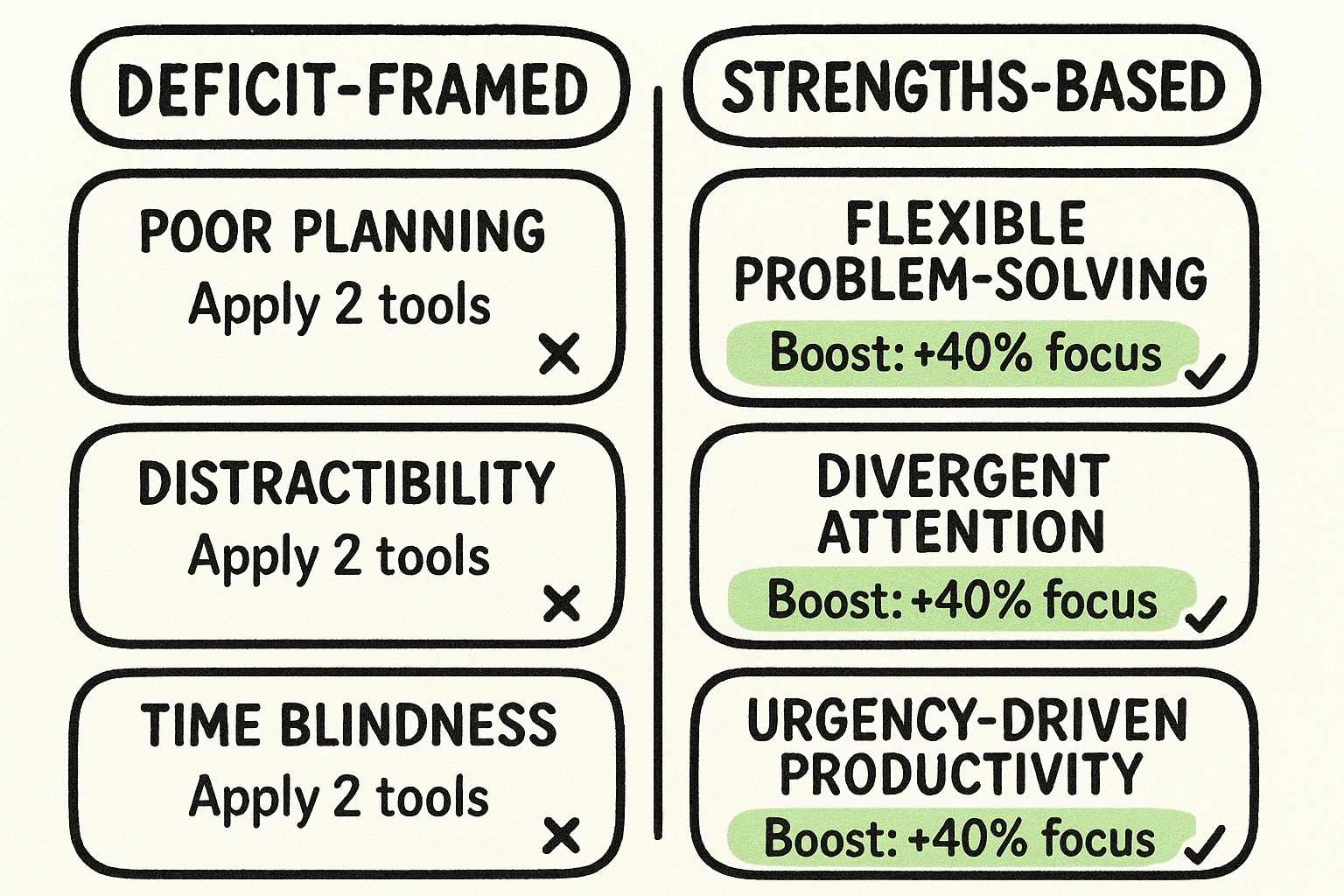
Unmasking requires actively quieting the internal critic. Practices like self-compassion meditation and positive self-talk explicitly target the amygdala, helping to calm its overactivity and strengthen the pathways of the prefrontal cortex for better emotional regulation (Perplexity AI Research). When we treat ourselves with kindness, we literally rewire our brains to be more resilient against shame. Our resource on Breaking Free from ADHD Shame provides further insights into this process.
This chapter offers not just hope, but an actionable roadmap. It demonstrates that you can apply neurobiological principles to actively sculpt a more authentic, fulfilling life.
Unmasking is more than personal growth; it's a step towards embracing a neurodivergent perspective of ADHD—viewing it as a natural human variation, not a defect. This perspective empowers you to move beyond simply coping with symptoms to truly thriving by leveraging your unique brain wiring.
The neurodiversity movement posits that neurological differences, including ADHD, autism, and dyslexia, are part of the natural spectrum of human variation. This framework challenges the traditional medical model that often pathologizes these differences. Instead, it encourages acceptance, accommodation, and appreciation of diverse cognitive styles (FamilyFirstAS, NIH, ADHD Aware).
When you adopt this perspective, you shift from seeing your ADHD traits as inconvenient flaws to recognizing them as integral parts of your unique cognitive blueprint. You begin to understand that the challenges often arise from a mismatch between your neurotype and a predominantly neurotypical society, rather than from an inherent personal deficiency.
Embracing a neurodivergent perspective also means recognizing the inherent advantages of your ADHD brain. While often associated with challenges like inattention or impulsivity, the same neural wiring can contribute to remarkable strengths:
Recognizing these unique qualities allows you to build a life that plays to your strengths, rather than constantly trying to shore up perceived weaknesses.
An authentic understanding of your neurobiology empowers you to make life choices—from career paths to relationships and daily routines—that are in harmony with your brain's natural rhythm. It means:
This isn't about ignoring challenges, but about strategically managing them while amplifying your inherent strengths. It's about building a life where you don't just tolerate your ADHD, but genuinely thrive because of it.

The journey from masking to authenticity is profound, underpinned by a deep understanding of your neurobiological self. We've explored how the unique wiring of the ADHD brain—from its prefrontal cortex and dopamine regulation to its Default Mode Network—informs not just the traits we experience, but also the powerful urge to conform. By recognizing the neurobiological roots of masking and internalized shame, you gain powerful validation: your struggles are not moral failings, but predictable responses of a complex brain adapting to its environment.
More importantly, you've seen how neuroplasticity empowers you to rewrite your narrative. Your brain's incredible capacity for change means you can actively build new neural pathways that foster self-validation, leverage your unique strengths, and cultivate profound self-compassion. This intentional rewiring is the science behind unmasking—a tangible process that moves you towards a life aligned with your true, neurodivergent self.
Embracing the neurodivergent perspective is the final, liberating step. It allows you to celebrate your unique blueprint, build a life that truly nurtures your strengths, and connect with others who appreciate your authentic self. The knowledge that your brain is capable of this transformation is not just informative; it's empowering. Take these insights as your foundation, embark on this journey of self-discovery, and step confidently into your unmasked future.
The scientific consensus is that ADHD is a neurodevelopmental condition with clear, consistent structural and functional brain differences (Child Mind Institute, NIH). While traditionally classified as a "disorder," the neurodiversity movement advocates for viewing these differences as natural variations in brain wiring, encouraging a shift in language to "neurotype" or "neurodivergence." This perspective emphasizes that challenges often arise from a mismatch with neurotypical environments, rather than an inherent defect.
Understanding the neurobiological basis of ADHD reframes traits like inattention, impulsivity, or emotional dysregulation not as personal failings but as direct consequences of your brain's unique operation. For example, knowing that dopamine dysregulation impacts motivation (ADDA) or that your DMN might be overactive (ADDitude Magazine) validates your experiences. This scientific explanation can alleviate the burden of internalized shame by providing an objective, non-judgmental reason for your struggles, shifting blame from your character to your neurology.
Yes, neuroplasticity confirms that your brain changes and adapts throughout your life (ADDitude Magazine, Psychology Today). While you can't "cure" ADHD in the traditional sense, you can absolutely create new neural pathways that strengthen desired behaviors and diminish less helpful ones. This can involve intentionally cultivating self-compassion to calm an overactive amygdala, practicing mindful attention to improve focus circuitry, or developing new strategies that leverage your brain's strengths. It's a process of targeted rewiring, supporting improved emotional regulation, self-perception, and authentic living. For practical strategies, you might find our article on ADHD and Dopamine: Your Brain's Motivation Machine helpful.
Unmasking is about reducing the burden of performing a neurotypical persona to your own detriment, not necessarily abandoning all social accommodations. It's a personal journey of self-acceptance and strategic self-presentation. It means consciously choosing when and how to engage your authentic self, prioritizing your well-being, and seeking environments and relationships where your neurodivergence is understood and valued. It empowers you to make intentional choices about how much energy to invest in masking, and when to be fully transparent about your needs and strengths.
Our growing library of resources is designed to support you on your journey. We recommend starting with our articles on Optimizing Executive Function Strategies for ADHD for practical tips and our guide on Navigating Relationships and ADHD for insights into authentic connection. We continually publish new content backed by the latest research to help you understand and embrace your unique brain.