Late ADHD Diagnosis in Adulthood Complete Guide and Steps
Find relief and clarity with a late ADHD diagnosis in adulthood. Learn treatment, coaching, and coping strategies and get practical next steps to improve focus.
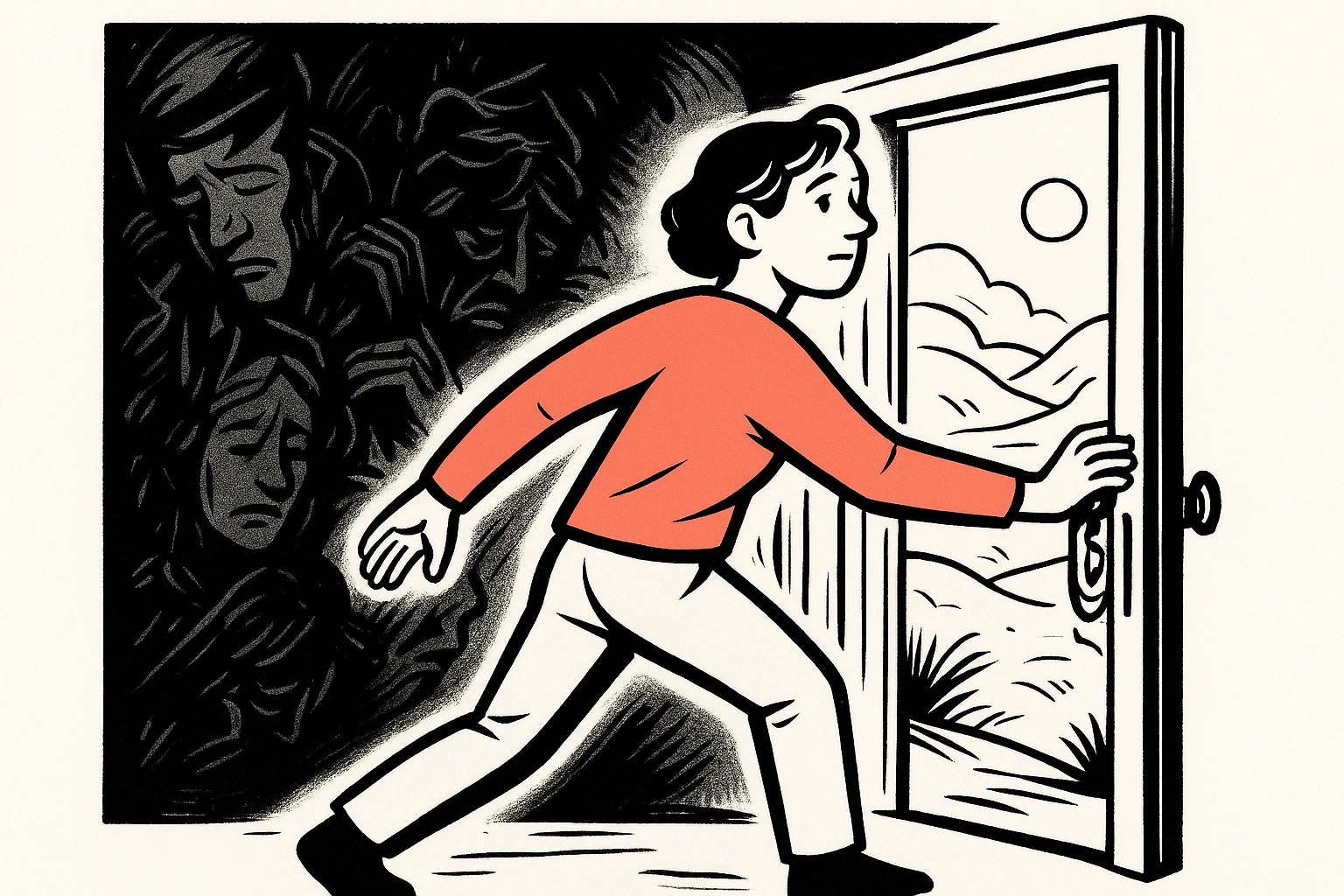
Many of us spend years feeling like an outlier, struggling with an internal chaos that defies explanation. You might've told yourself you're just disorganized, or maybe even lazy. You've probably mastered the art of masking, of appearing 'together' while an invisible internet of thoughts and ideas battles for bandwidth inside your head. But what if that lifelong struggle isn’t a character flaw, but a neurological difference? What if there's a reason behind the beautiful chaos, the endless fascination that sometimes leads to exhaustion?
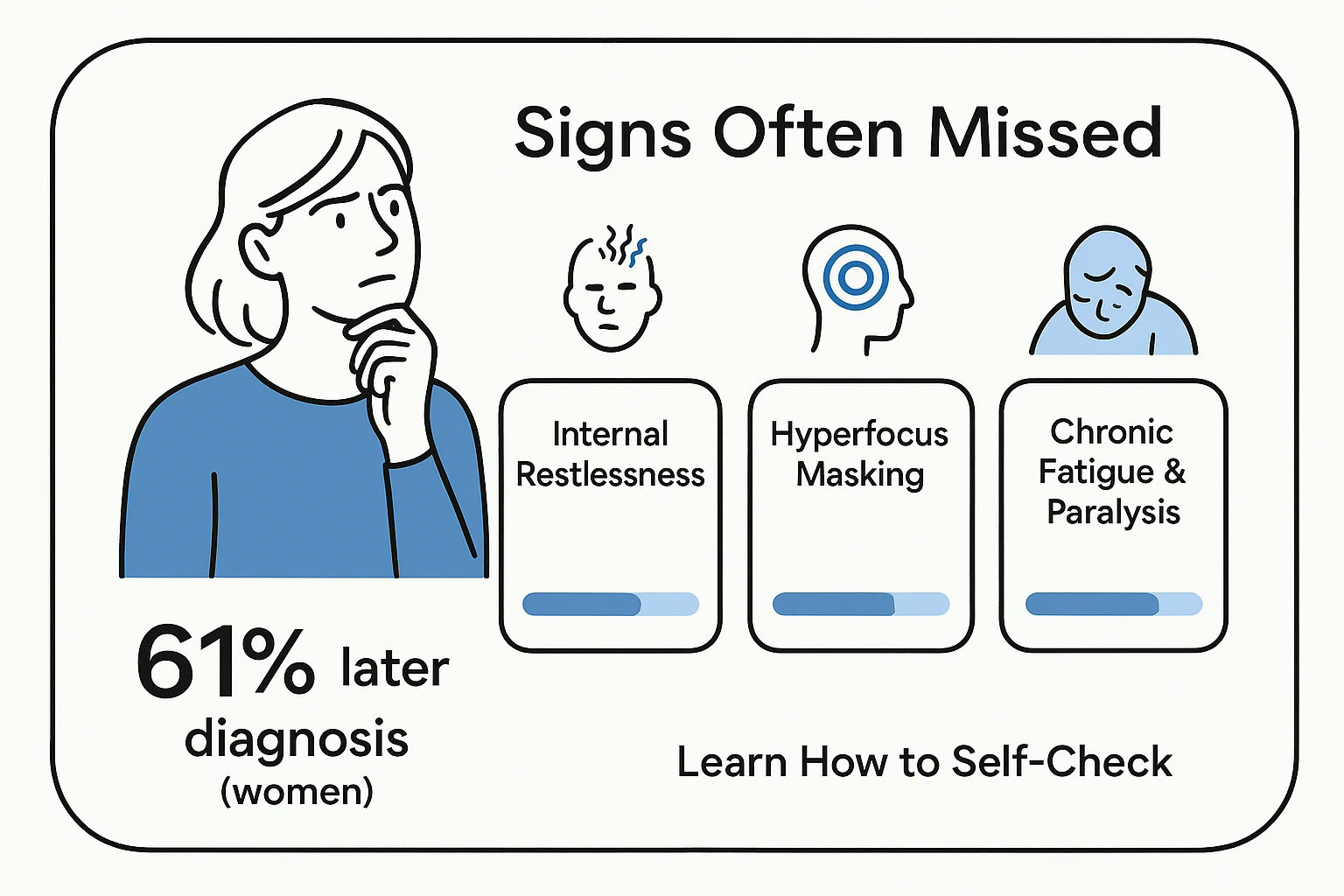
This is the journey of late ADHD diagnosis in adulthood. It’s a path that more than half of adults with ADHD walk, a path increasingly taken by women (61%) and men (40%) alike as awareness grows (Perplexity data, Citatations 1, 6). If you're sensing a connection, you're not alone. The journey from initial suspicion to official diagnosis and its aftermath is a profound one, offering both relief and a complex emotional landscape.
For years, the stereotype of ADHD was the hyperactive young boy, bouncing off the walls. This narrow view meant that countless adults, especially those whose ADHD manifested differently, slipped through the diagnostic cracks. It's estimated that 75-80% of adult ADHD cases remain undiagnosed, leaving a vast majority to navigate life without understanding their foundational neurotype (Perplexity data, Citatations 2, 4).
When we think of ADHD, we often picture overt hyperactivity. But for adults, the presentation is far more nuanced, often hidden behind sophisticated coping mechanisms and internal struggles.
Internal Restlessness, Not Just Fidgeting: While children might physically bounce, adults often experience an internal hum, a racing mind, or an inability to truly relax, even when stillness is required. This can manifest as constantly needing to be busy, a relentless stream of thoughts, or difficulty with meditation.
Emotional Dysregulation: This is a crucial, yet often overlooked, symptom. It's not just mood swings but an intense, overwhelming response to emotions—be it excitement, frustration, or sadness—making it hard to regulate emotional reactions in a proportional way. This can lead to perceived overreactions or difficulty managing stress.
Hyperfocus as a Double-Edged Sword: While often seen as a strength, hyperfocus is a symptom of ADHD. It’s the ability to dive so deeply into a task that the world fades away, leading to incredible productivity in specific areas but often at the expense of other essential tasks, sleep, or personal needs. Healthline highlights hyperfocus as a surprising adult symptom.
Chronic Fatigue and Task Paralysis: The constant effort to override executive dysfunction, to manage the internal chaos, and to "mask" as neurotypical is profoundly exhausting. This can lead to chronic fatigue and an experience known as "task paralysis," where despite knowing what needs to be done, the initiation feels insurmountable.
Relationship Patterns and Financial Struggles: Difficulties with communication, impulsivity in decision-making, and challenges with planning can impact long-term relationships and financial stability. Missed deadlines, late payments, or impulsive spending can be subtle indicators.
The "Gifted Kid Burnout": Many adults diagnosed with ADHD excelled in school, often through sheer effort or the novelty of new subjects. However, as academic and professional demands increase, these compensatory strategies often break down, leading to burnout, anxiety, and depression. NIMH notes that women are often missed in childhood due to masking and differing presentations.
Adults with ADHD are often champions of masking. We've learned to adapt, to mimic neurotypical behaviors, to create elaborate systems (or chaotic ones) to keep up. This masking can be incredibly effective at camouflaging symptoms, but it's also psychologically taxing. Often, the breaking point comes with significant life changes: a child's ADHD diagnosis (leading to a sudden realization, "that sounds like me!"), career burnout, the demands of parenthood, or the cumulative stress of an unacknowledged struggle. These moments strip away the coping mechanisms, making the underlying ADHD symptoms impossible to ignore.
Historically, ADHD understanding focused on the observable hyperactive boy. This bias, coupled with a lack of medical awareness for adult presentations, created systemic barriers. The idea that ADHD is "just for kids" or that adults are "just looking for an excuse" has perpetuated misunderstanding and stigma, contributing significantly to delayed diagnoses. Studies show that a lack of provider knowledge about adult ADHD is a major barrier (Perplexity data, Citatations 1, 2, 3, 4, 5, 6, 7).
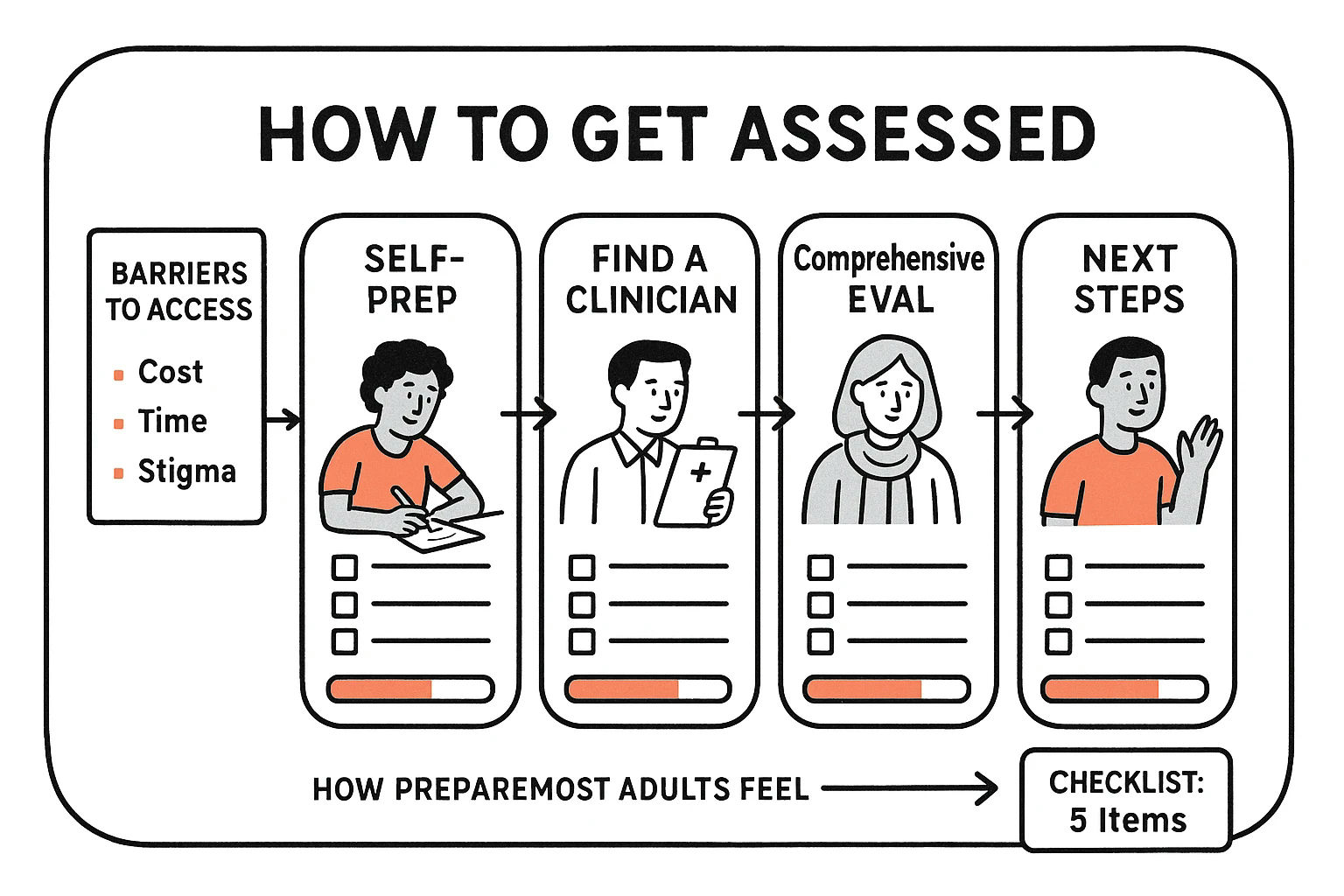
Once the suspicion sets in, the next step is often daunting: how do you actually get diagnosed? The process for adults differs significantly from children, requiring a retrospective look at your entire life.
If you resonate with the signs above, the first step is often to gather your evidence. Documenting your symptoms, how they impact your life, and any childhood memories that now make sense (perhaps reports from parents or old school records) can be invaluable. This doesn't need to be formal; even a bulleted list can help. ADDA suggests using self-assessment tools as a starting point, but always remember these are for reflection, not diagnosis.
This is perhaps the most critical step. General practitioners may not have sufficient expertise in adult ADHD (Perplexity data, Citatations 1, 2, 3, 4, 5, 6, 7). You'll want to seek out a psychiatrist or a psychologist specializing in adult ADHD. When you call, don't be afraid to ask:
These questions help ensure you find someone equipped to understand the nuances of late-diagnosed ADHD.
The diagnostic process isn't a single test. It's a comprehensive evaluation that typically includes:
The journey isn't always smooth. Long waitlists for specialists, particularly in countries with national healthcare systems like the UK or Australia, can be frustrating. Cost can also be a significant barrier, highlighting disparities in access to care. It's important to research what's available in your region, including public health options versus private clinics, and to explore insurance coverage.
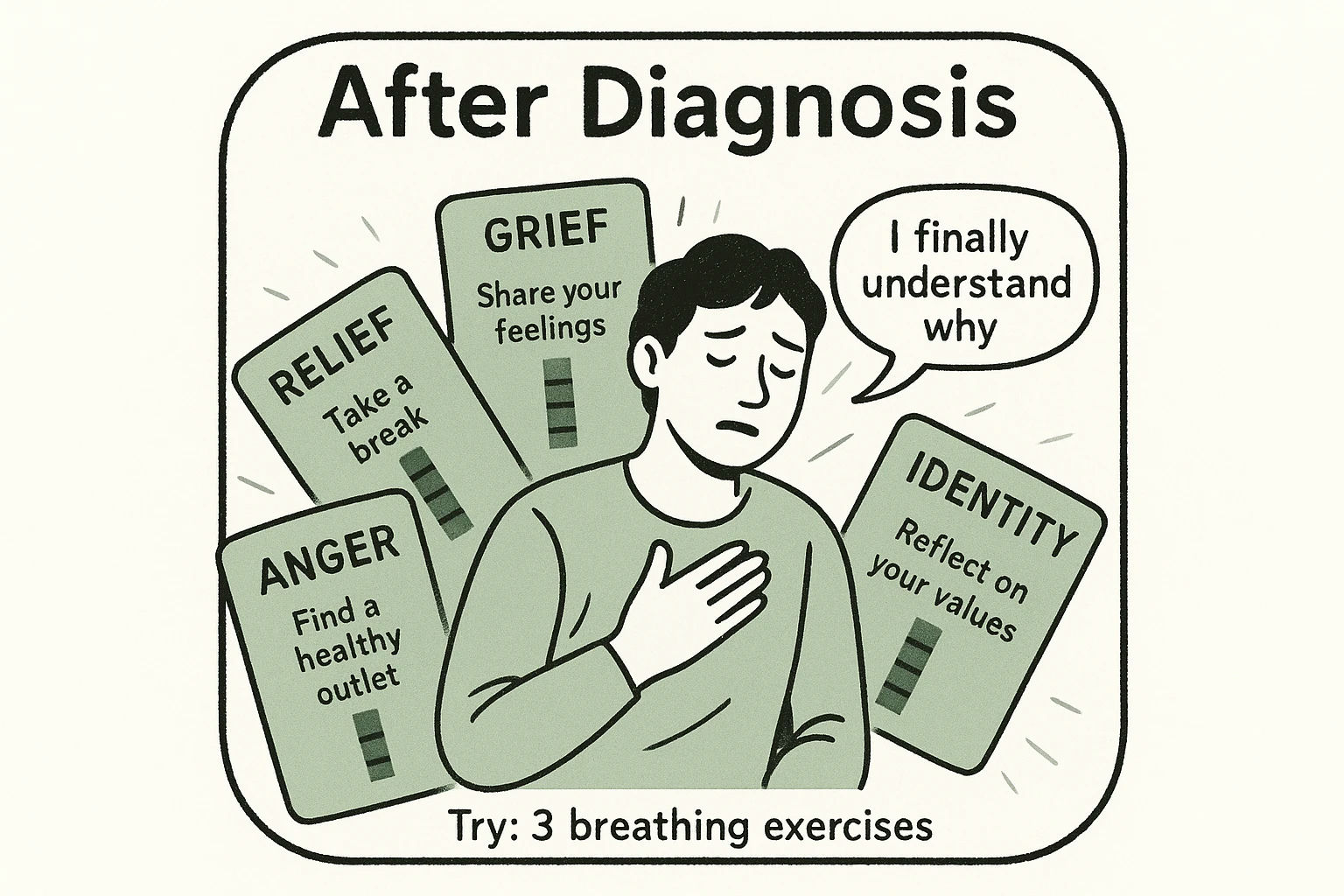
Receiving an ADHD diagnosis as an adult is rarely a simple "okay, next step" moment. It's an emotional reckoning that can bring a cascade of feelings. This is where the emotional journey truly deepens, often a core unmet need in purely clinical content. As Psychology Today notes, there's often a "big exhale of relief" alongside "tears at lost opportunities".
The diagnosis offers a powerful lens through which to reframe your entire life story. Those "failures" — the forgotten appointments, the projects started but never finished, the impulsive decisions — can now be understood as symptoms, not character deficits. This reframing is crucial for self-compassion and moving forward. It’s about shifting from blame to understanding.
Sharing your diagnosis can be another emotional hurdle. Some loved ones will be immediately supportive, others skeptical. Be prepared for a range of reactions. It helps to:
A diagnosis isn't a finish line; it's a starting gun. It opens the door to understanding and implementing strategies that can profoundly improve your quality of life.
Effective ADHD management often involves a multimodal approach:
You don't just learn to live with ADHD; you learn to live well with it. This involves understanding how your brain works and deploying targeted strategies.
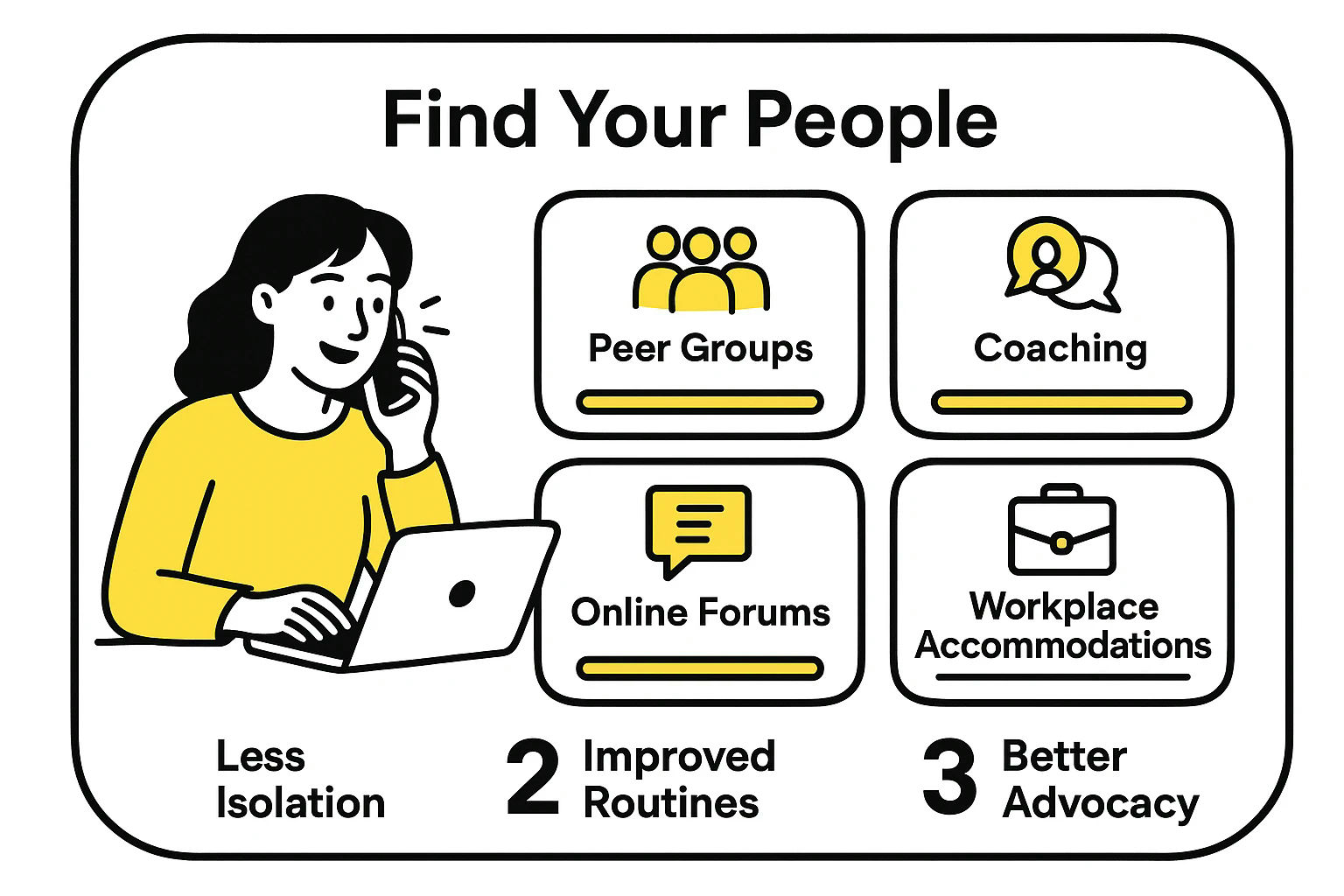
Validation and shared experience are powerful healers. Connecting with others who understand the "beautifully chaotic, endlessly fascinating, mildly exhausting mental internet" (My ADHD) can reduce feelings of isolation.
Understanding your rights is crucial.
A late ADHD diagnosis isn't a deficit; it's a doorway. It's a shift from questions to answers, from self-blame to self-compassion. It provides a roadmap for understanding your unique brain and building a life that honors its strengths and supports its challenges. The path is deeply personal, sometimes challenging, but ultimately one of profound self-discovery and empowerment. It's about taking the beautiful chaos and learning to navigate it with intention and self-kindness.
A: Yes, it is very common. More than half of all adults with ADHD receive their diagnosis in adulthood. Women are particularly prone to late diagnosis, with 61% being diagnosed as adults compared to 40% of men (Perplexity data, Citatations 1, 6). The pervasive stereotype of ADHD as a childhood condition, particularly in hyperactive boys, led to many adults being overlooked for decades.
A: Several factors contribute to missed diagnoses:
A: The benefits are extensive:
A: While self-identification and recognizing symptoms in yourself are crucial steps in the journey, only a qualified healthcare professional (psychiatrist or psychologist specializing in adult ADHD) can provide an official diagnosis. Self-assessment tools can be helpful for initial reflection but are not diagnostic.
A: To make the most of your appointment:
A: This can be a frustrating and common experience, often due to a lack of training in adult ADHD. If your concerns are dismissed:
A: It can, and often does, but in a profoundly positive way. Many people describe it as finally receiving the user manual for their brain. While it might initially feel like an earthquake, shaking your previous understanding of yourself, it ultimately leads to a stronger, more authentic sense of identity rooted in self-understanding and acceptance.