Emotional Intelligence with ADHD Step by Step Guide
Discover ADHD-friendly strategies to build self-awareness and emotional regulation. Learn how to manage intense emotions and improve relationships. Start today.
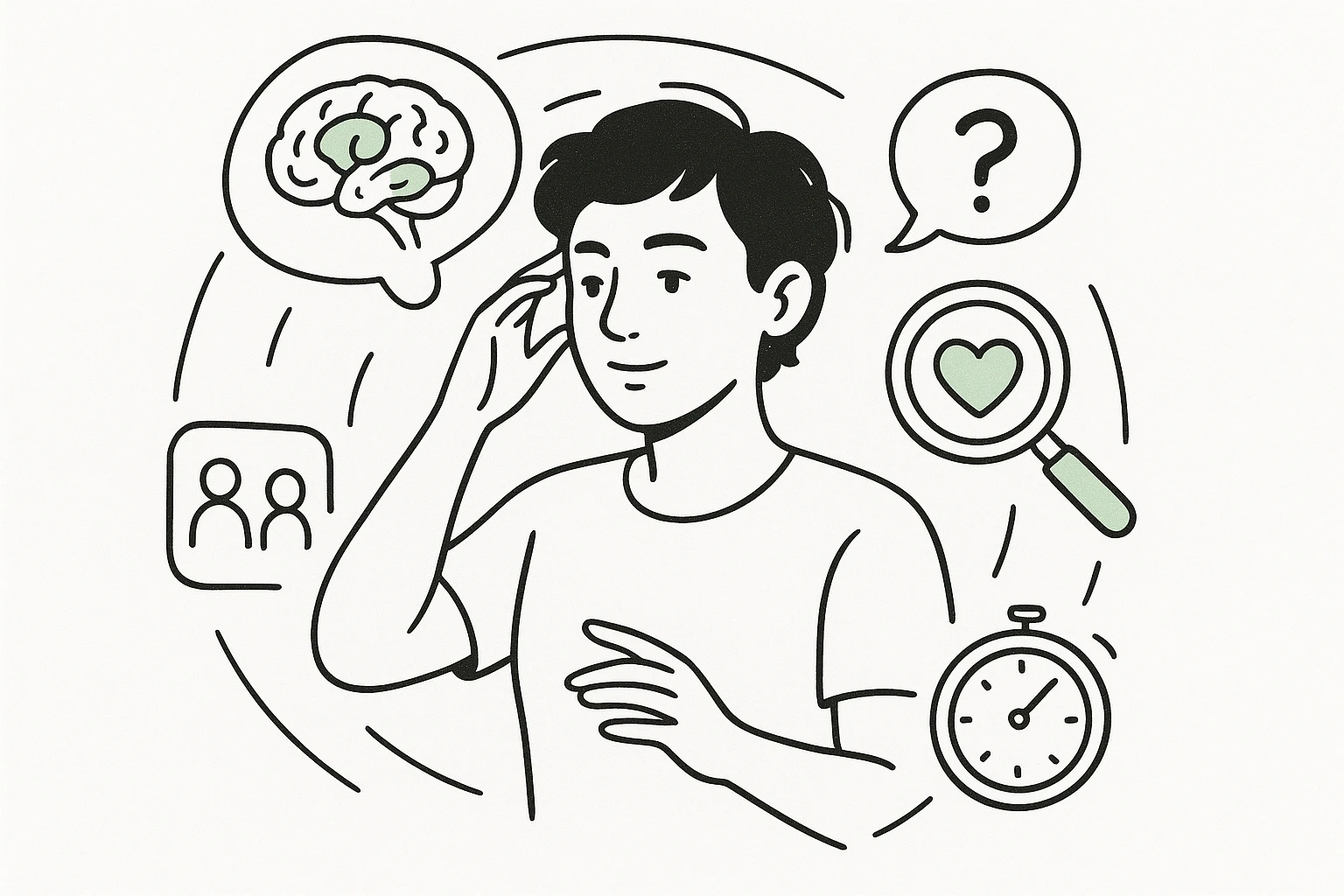
Life with ADHD can feel like navigating a high-speed emotional rollercoaster, often without a seatbelt. You experience intense highs and lows, rapid mood shifts, and sometimes, it feels like your emotions have a mind of their own. If you’ve ever felt overwhelmed by your feelings, misread social cues, or struggled to keep your cool in a heated moment, you’re not alone. This isn't a moral failing; it's a neurologically-rooted reality for many with ADHD.
The good news? This isn't your permanent state. Building emotional intelligence (EQ) with ADHD is entirely possible, and it can profoundly improve your self-awareness, relationships, and overall quality of life. This guide isn't about generic advice; it’s about understanding your unique brain and arming you with strategies designed to work with your ADHD, not against it.
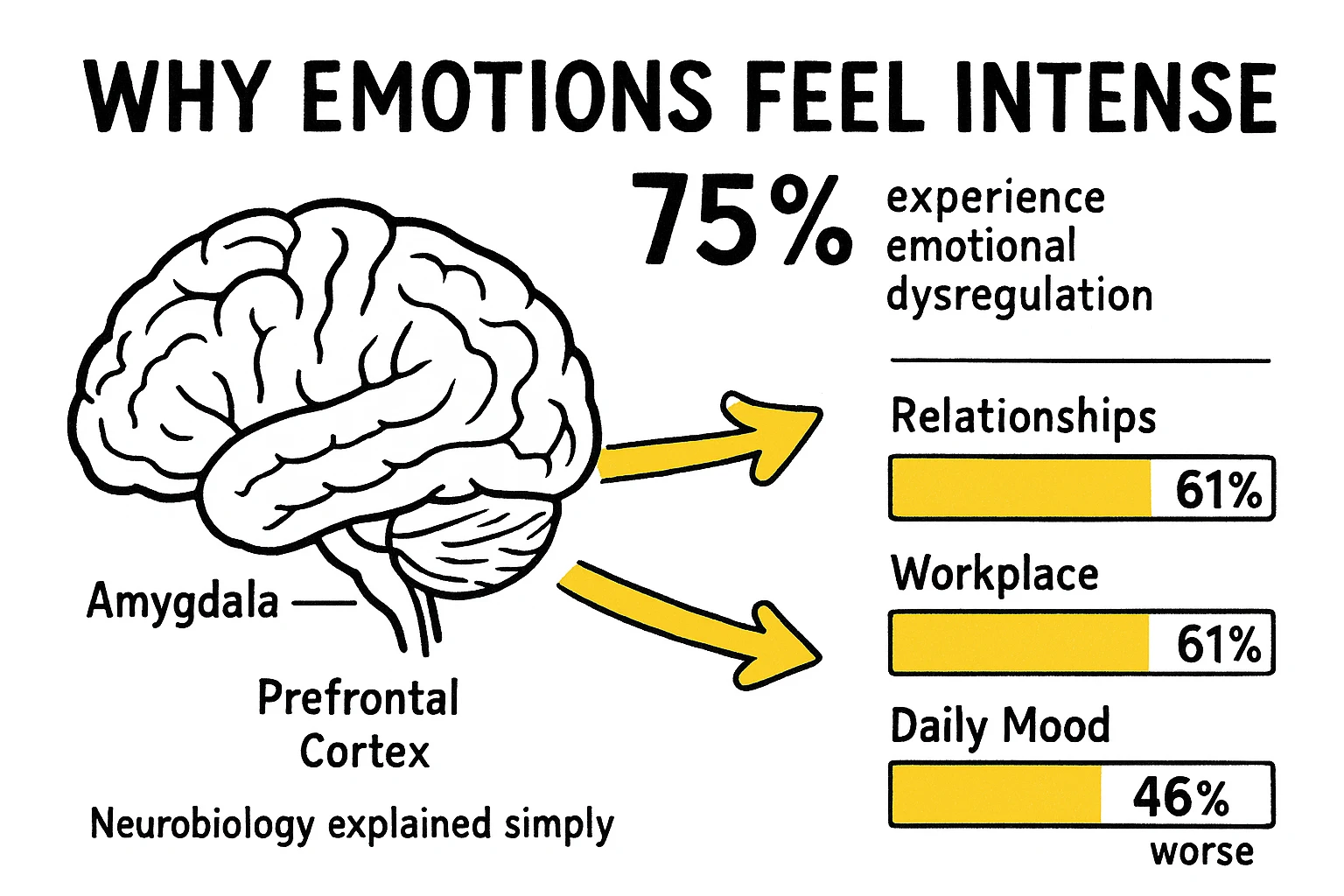
To effectively manage your emotions, it helps to understand why they often feel so intense. Emotional dysregulation affects approximately 75% of individuals with ADHD, manifesting as rapid mood shifts, irritability, and difficulty controlling emotional responses. It's now recognized as a fundamental feature across all ADHD subtypes (Perplexity). This isn't just about feeling things deeply; it’s rooted in your brain's unique wiring.
Your brain’s emotional center—the amygdala—can be more reactive in ADHD, while the prefrontal cortex, responsible for interpreting, expressing, and regulating emotions, might have reduced activation (ADDA.org, Perplexity). Think of it like this: your emotional "gas pedal" (amygdala) is highly sensitive, and your emotional "brakes" (prefrontal cortex) might be a bit weaker.
The fronto-limbic pathway, a critical communication highway between these emotional and regulatory centers, doesn't always operate at peak efficiency in ADHD. This means strong feelings can bypass your logical processing, leading to impulsive emotional responses. Neurotransmitter imbalances, particularly involving dopamine and norepinephrine, also play a role, influencing mood stability, motivation, and attention (Perplexity).
This neurological difference can lead to a range of challenges:
A simple fronto-limbic visual that validates ADHD emotional intensity and links neurobiology to real-life impacts for credibility.
Understanding this isn't an excuse; it's a powerful tool. It means you can stop blaming yourself and start strategizing. Knowing the "why" empowers you to find the "how."
Self-awareness is the bedrock of emotional intelligence. For ADHD brains, this needs to be a conscious, often structured, process. You're learning to identify those rapid emotional shifts and understand what triggers them.
Common triggers for intense emotions in ADHD include:
Activity: My Emotional Trigger LogStart simply. When you experience a strong emotion (anger, intense sadness, overwhelming frustration), pause. You might need to set a reminder on your phone or keep a small notebook handy. Jot down:
This objective observation helps you spot patterns. The ADHD Centre emphasizes logging these instances to learn your triggers (adhdcentre.co.uk).
Often, the default for ADHD brains is a broad "good" or "bad." Learning to differentiate (e.g., "I'm not just bad, I'm feeling disappointed because X didn't work out") gives you more nuanced control. Expanding your emotional vocabulary helps you understand the true nature of your feelings. You can find emotion charts online if you struggle to name the emotion.
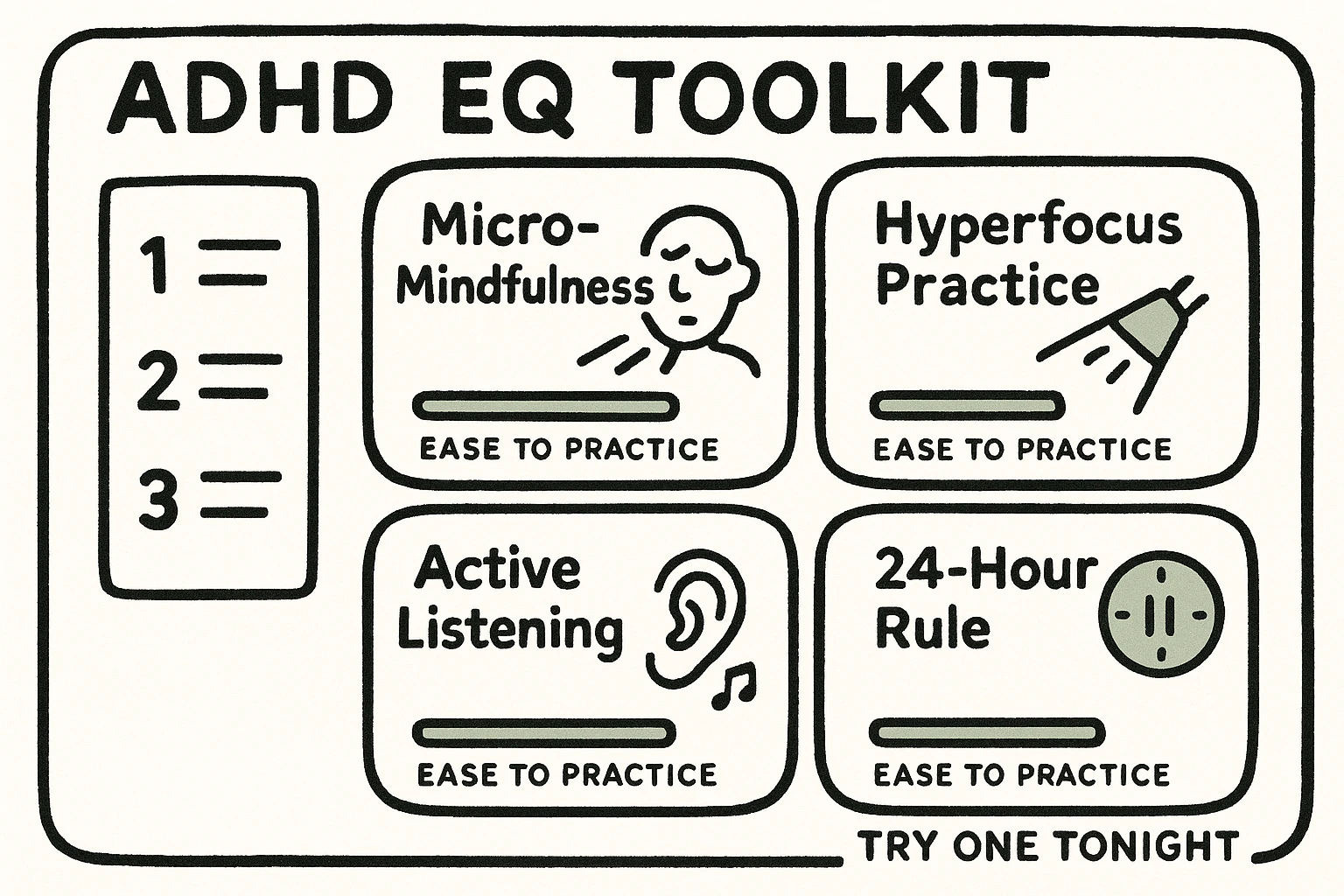
Traditional long meditations can feel like torture for an ADHD brain. Instead, try "micro-body scans." Find a quiet minute or two. Close your eyes (or keep them softly open), take three deep breaths, and quickly scan your body from head to toe. Notice any tension, heat, or sensations without judgment. This quick check-in builds awareness of your physiological cues before emotions fully escalate.
Once you're aware of your emotions, the next step is learning to manage them effectively. This is where tailored strategies come in, designed to bypass common ADHD challenges like working memory deficits and impulsivity.
Mindfulness isn't about clearing your mind; it's about paying attention to the present moment without judgment. CHADD highlights mindfulness as a powerful tool for emotional management in ADHD (chadd.org).
Hyperfocus, often seen as an ADHD superpower, can be harnessed for emotional intelligence. Instead of solely fixating on a new hobby or project, direct that intense focus inward, specifically for emotional learning.
Your thoughts directly impact your emotions. Cognitive Behavioral Therapy (CBT) helps challenge unhelpful thought patterns. For ADHD, this means simplifying the process of checking your thoughts against reality.
Dialectical Behavior Therapy (DBT) provides skills for coping with intense, overwhelming emotions without making the situation worse.
A compact, ADHD-friendly toolkit showing four micro-skills with ease-of-practice bars to encourage immediate, low-friction action.
Remember, ADHD often means struggling with consistency more than capability. Start with micro-skills. Try one technique for a few days, then another. The goal isn't perfection, but progress.
Emotional intelligence in relationships is about understanding and responding to others' emotions while effectively communicating your own. This can be particularly challenging with ADHD, where communication can be a minefield of interruptions, misinterpretations, and emotional intensity. Amen Clinics highlighted 12 common ways ADHD can strain relationships, from speaking without thinking to emotional volatility (amenclinics.com).
The ADHD brain can sometimes struggle to pick up on subtle social cues or non-verbal signals.
Active listening is crucial but difficult with an easily distracted mind.
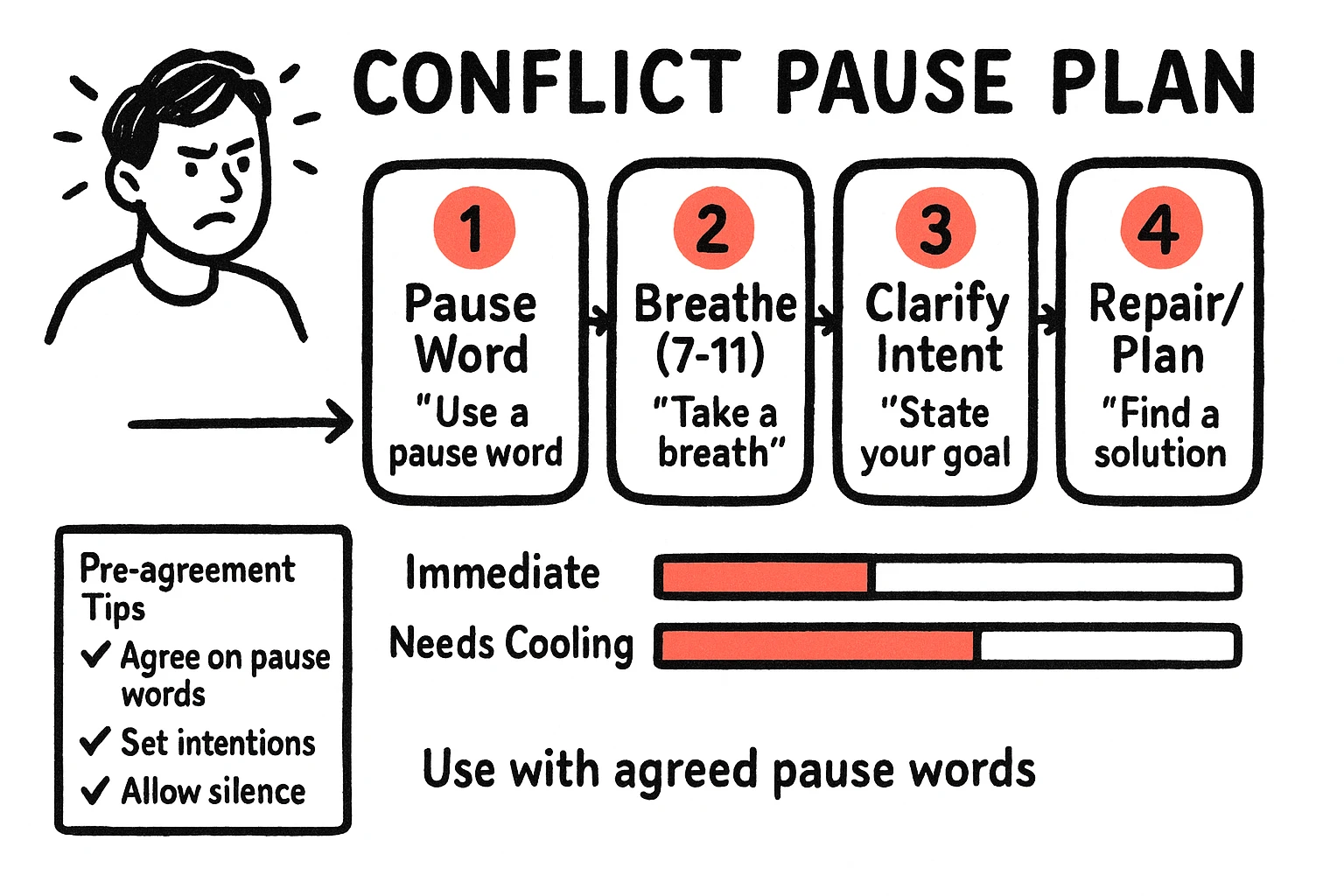
Conflict is inevitable in any relationship, but for ADHD individuals, it can quickly escalate into an "amygdala hijack"—a sudden, intense emotional outburst.
A clear, ADHD-tailored conflict flow showing a four-step pause-and-repair method to de-escalate and rebuild after heated moments.
You don't have to navigate this journey alone. Building a supportive network is paramount.
Emotional intelligence isn't a separate skill; it's woven into the fabric of your daily life.
While self-help strategies are powerful, sometimes you need specialized guidance. Knowing when to seek professional help is a sign of high emotional intelligence.
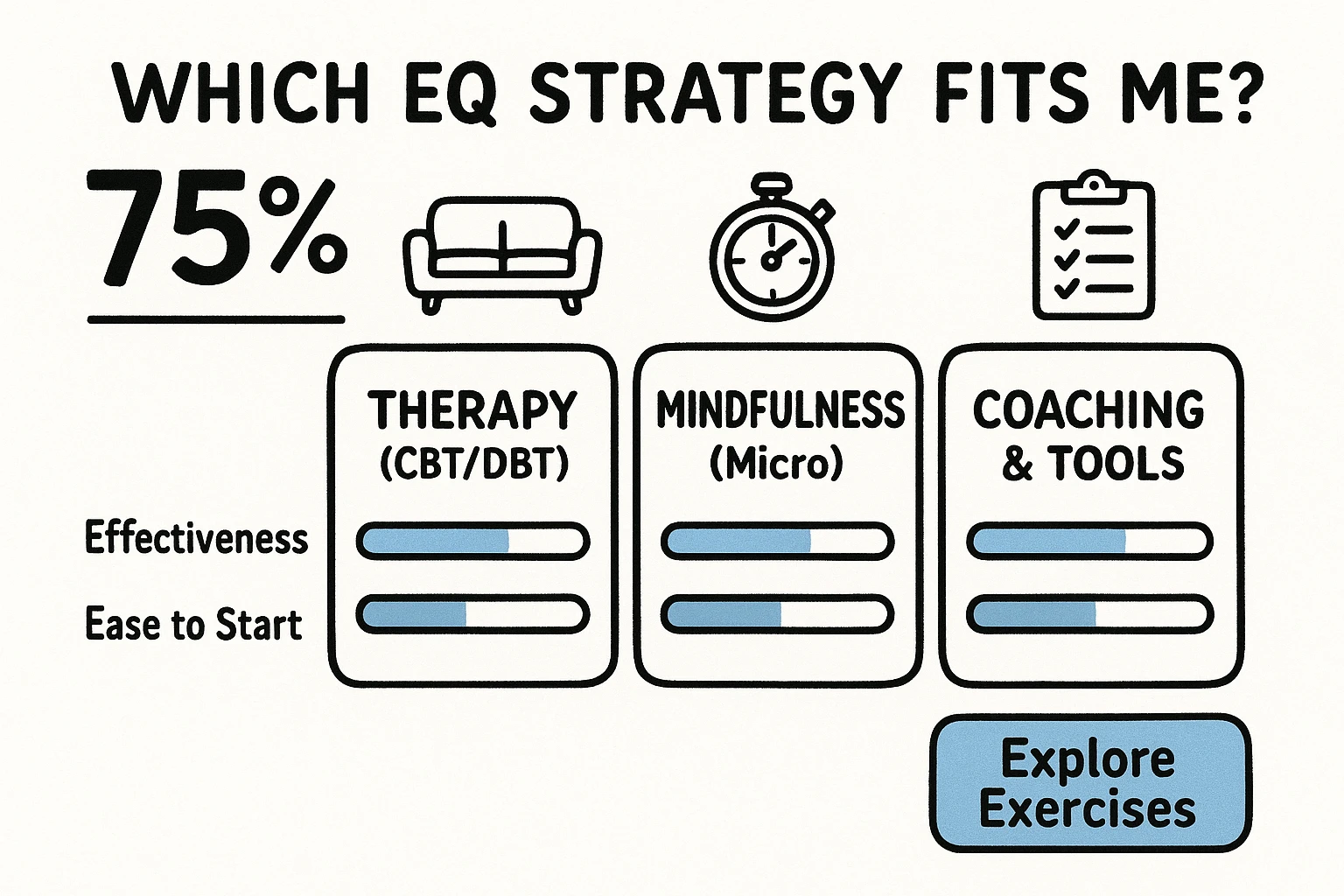
Compare therapy, adapted mindfulness, and coaching with clear effectiveness and ease-to-start bars tailored for ADHD decision-making.
For many, ADHD medication (stimulants and non-stimulants) can significantly help with emotional regulation. They improve focus and impulse control, which in turn can lead to better emotional stability and reduced emotional over-reactivity (SerpScraper). Medication is often most effective when combined with therapy and behavioral strategies. Discuss this option with an ADHD-specialized medical professional. You can read more about medication options and their effects on our page dedicated to [] (internal link to a medication comparison article if available).
Building emotional intelligence with ADHD is a journey of self-discovery, strategy, and self-compassion. It's about truly understanding your neurotype, embracing your unique strengths (like hyperfocus), and systematically addressing your challenges with tailored, ADHD-friendly approaches.
You are not destined to be on an emotional rollercoaster forever. By consistently applying these strategies, seeking appropriate support, and celebrating every small victory, you can move from merely surviving your emotions to truly thriving with them. This journey enhances not just your internal world, but also the richness and depth of your connections with others.
A: This is often due to differences in brain structure and function. Your amygdala (the brain's emotional center) may be more reactive, and your prefrontal cortex (involved in emotional regulation) may have reduced activation. This means your emotional "gas pedal" is more sensitive, and your emotional "brakes" are less effective. Neurotransmitter imbalances also play a role (ADDA.org, Perplexity).
A: Emotional dysregulation is increasingly recognized as a core symptom and fundamental feature of ADHD across all subtypes, affecting around 75% of individuals with the condition. It's not a separate disorder but an integral aspect of how ADHD manifests for many (Perplexity).
A: Yes, but it requires adaptation. Traditional long mindfulness sessions can be challenging. ADHD-adapted mindfulness focuses on "micro-mindfulness" exercises, short bursts of attention, and sensory anchors. The goal isn't to clear your mind, but to gently bring your attention to the present, even for a few seconds. Techniques like the adapted RAIN method make it more manageable (CHADD, Perplexity).
A: Structure is key. Try using physical cues, like the "Permission to Interrupt" rule where only the person holding an object can speak. Practice summarizing what the other person said before you respond. Keep a "Thought Parking Lot" (a notepad) to quickly jot down your thoughts so you can return your focus to the speaker without losing your idea.
A: Instead of allowing hyperfocus to drift to random topics, intentionally direct it toward understanding and managing your emotions. For example, you can hyperfocus on dissecting a past emotional reaction to identify triggers and alternative responses, or deeply research and test a specific coping mechanism. This intense, targeted focus can accelerate your emotional learning.
A: Consider professional help if your emotional dysregulation significantly impacts your daily functioning, relationships, work, or mental health. Therapies like CBT and DBT are highly effective. If you suspect medication might help stabilize your mood, consult an ADHD-specialized doctor. A coach can also provide personalized strategies and accountability.
A: Implement pre-agreed "pause words" or "cooling-off periods" to de-escalate during heated moments, allowing you both to calm down before resuming important discussions. Practice using "Clarifying Questions" to avoid misunderstandings, and consider role-playing common conflict scenarios in calm moments to rehearse better responses. Remember, communication about your ADHD is crucial for your partner to understand your experience (Amen Clinics).
A: For many, yes. ADHD medications can improve focus, reduce impulsivity, and help stabilize mood, which can contribute to better emotional control and reduce emotional over-reactivity. However, responses vary, and medication is often most effective when combined with therapy and behavioral strategies (SerpScraper).