Emotional Hyperfocus Guide How to Navigate ADHD Feelings
Learn how to stop getting 'stuck' in intense emotions with strategies for emotional hyperfocus and rumination in ADHD. Find quick interrupts and when to get help
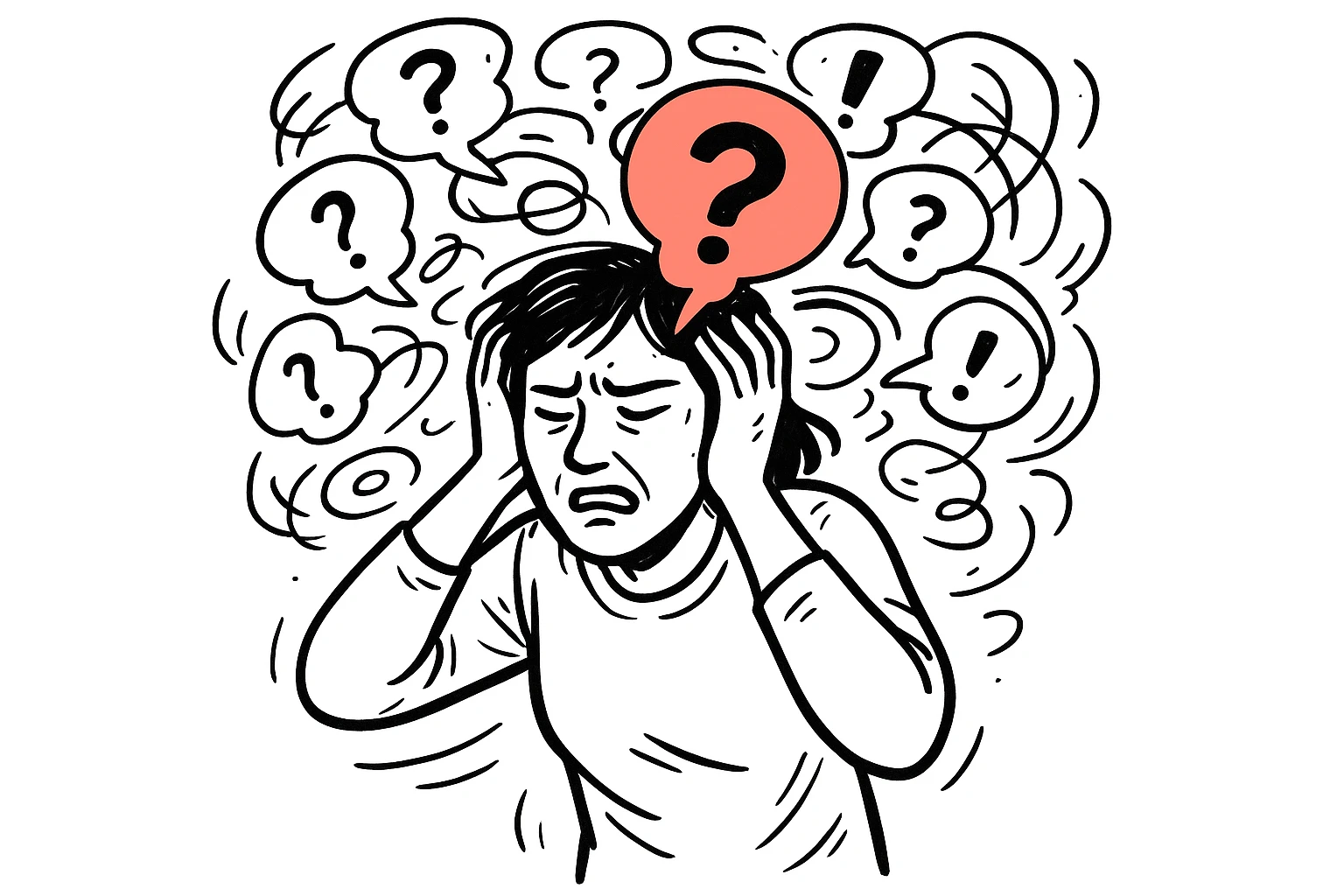
Ever felt an emotion so intensely it consumes your whole world? That single feeling – whether joy, anger, or a persistent worry – becomes the only thing your brain seems capable of processing. For many with ADHD, this isn't just a fleeting mood; it's a deep, overwhelming immersion, a phenomenon we call emotional hyperfocus. It's different from general emotional dysregulation, which causes intense emotions, but adds another layer: the inability to shift away from that deep emotional state once it's taken hold.
Many resources discuss ADHD and emotional intensity, but few truly capture this specific, relentless focus on an emotion itself. You're likely here because you're evaluating your own experiences, seeking clarity beyond clinical definitions, and looking for ways to navigate these intense internal landscapes. This isn’t about just having big feelings; it’s about getting metaphorically stuck in them, like your brain's spotlight is permanently fixed on one feeling, making it impossible to see anything else.
Imagine your mind as a vast internet, full of tabs and open applications. When you're experiencing emotional hyperfocus, it's like one emotional tab has seized full screen, demanding all your processing power. You can't minimize it, you can't close it, and you certainly can't open a new one. This can manifest in several ways:
This isn't a failure on your part. It's a neurologically-driven experience rooted in how the ADHD brain processes and regulates emotions.
To understand emotional hyperfocus, we need to look at the unique wiring of the ADHD brain. While hyperfocus is commonly discussed in terms of task engagement, its underlying mechanisms also explain its emotional manifestation.
Research consistently shows that emotional dysregulation (ED) is a significant and often overlooked aspect of ADHD, affecting a substantial portion of adults with ADHD, from 34-70% [ADD.org, APA]. This isn't just about having strong emotions, but about challenges in regulating them.
The key players here are:
In essence, your brain's unique chemistry and structure make you powerfully susceptible to both intense emotions and the specific kind of sustained focus that can turn an emotion into an all-consuming experience. This isn't a character flaw; it's a manifestation of how your brain works.
One of the most challenging forms of emotional hyperfocus is when it morphs into ruminative thinking. This is the endless loop of negative thoughts and feelings, often about past events, perceived failures, or anxieties about the future. For individuals with ADHD, this rumination isn't just a bad habit; it's often a direct result of emotional hyperfocus latching onto a distressing thought or scenario.
You might find yourself obsessing over:
This ceaseless internal monologue can significantly impact mental health, exacerbating symptoms of depression and anxiety, which are already commonly co-occurring with ADHD. It drains mental energy, impairs decision-making, and can make even simple tasks feel monumental because your mind is perpetually occupied elsewhere.
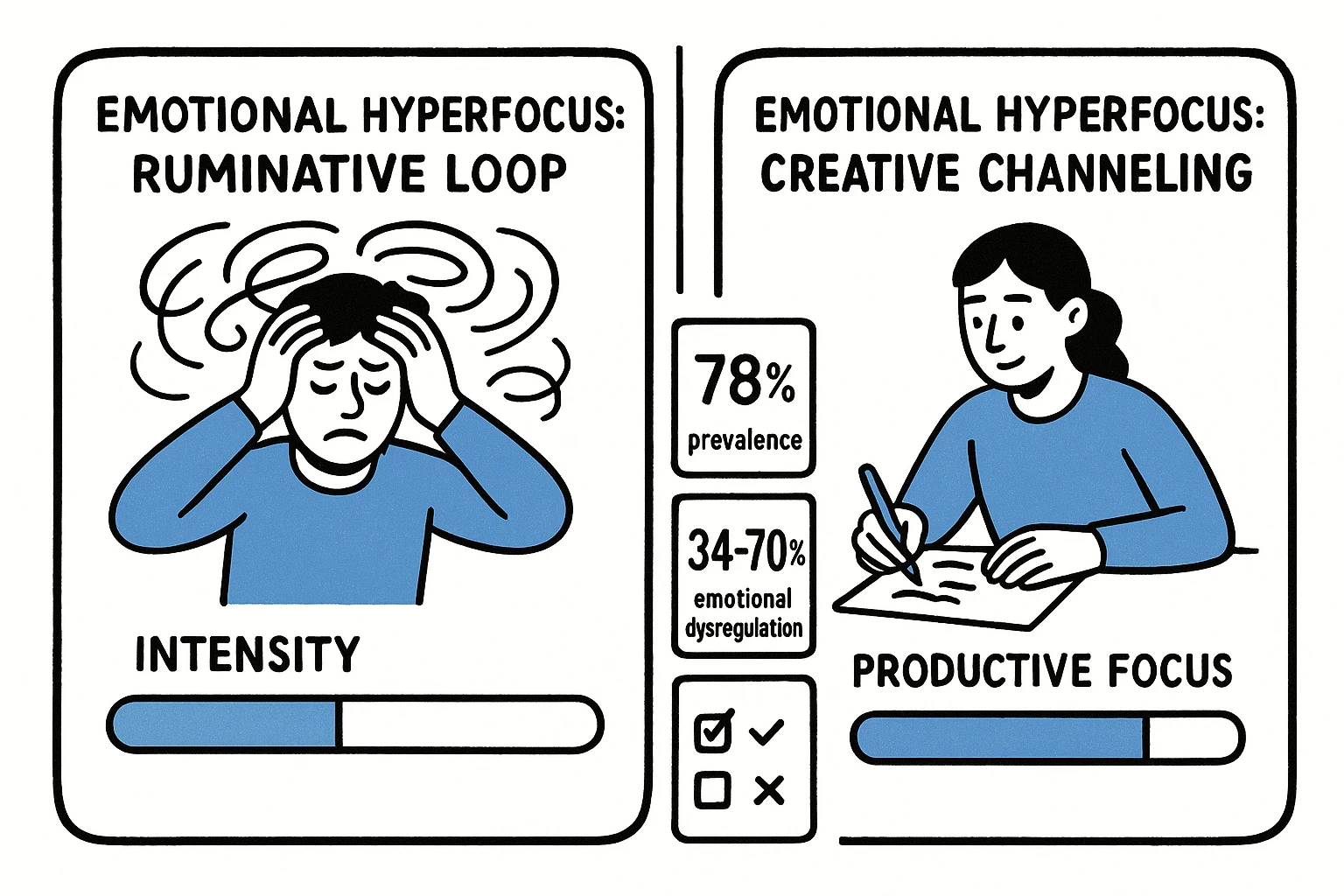
Emotional hyperfocus, like all aspects of ADHD, is a double-edged sword. While it presents significant challenges, it also holds unique strengths when channeled effectively.
Challenges:
Potential Strengths (Leveraging Emotional Depth):When harnessed, this emotional depth can be a profound asset:
Understanding this dual nature is the first step toward transforming something that feels like a burden into a unique strength.
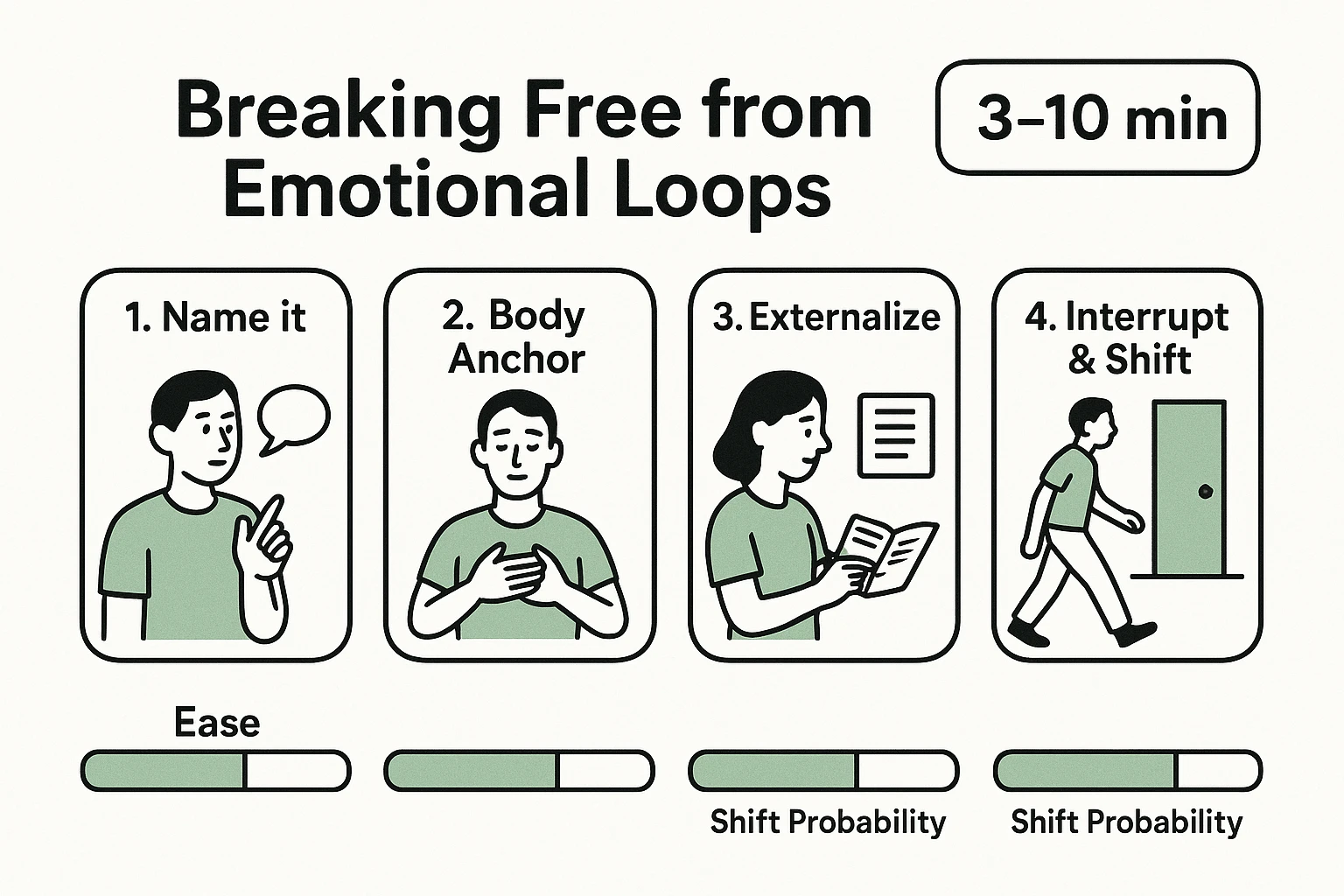
The goal isn't to eliminate emotional intensity – that’s part of who you are. The goal is to gain agency over when and for how long you engage with an emotion, preventing it from spiraling into an uncontrollable cycle. Here are strategies specifically tailored to interrupt and redirect emotional hyperfocus:
Emotional hyperfocus doesn't just impact your internal world; it profoundly affects your external relationships. The intensity, the difficulty in shifting focus, and the potential for ruminative thinking can all create friction. However, with awareness and communication, you can foster deeper understanding and connection.

While self-help strategies are invaluable, there are times when professional support is crucial. If emotional hyperfocus significantly impairs your daily life, relationships, or mental well-being, consider reaching out.

No, but they are closely related. Emotional dysregulation refers to the difficulty regulating emotional responses, leading to intense or inappropriate reactions and a challenging time returning to a baseline emotional state [ADD.org]. Emotional hyperfocus is a specific manifestation of this, where the hyperfocus aspect of ADHD causes the individual to get "stuck" on a particular emotion, unable to shift their mental attention away from it, similar to how they might hyperfocus on a task.
Absolutely. While often associated with negative rumination, emotional hyperfocus can also amplify positive emotions, leading to intense passion, sustained motivation for causes you care about, and profound empathy. Many creative individuals with ADHD leverage this emotional depth for their art or work. The challenge is learning to direct its energy.
Like any skill, emotional regulation takes practice. You might find some "emotional interrupts" work quickly in the moment, while cognitive restructuring and mindfulness require consistent effort over time. The key is persistent practice and self-compassion. Track your progress in an emotional diary to see how patterns shift over weeks and months.
Emotional dysregulation in ADHD certainly has a genetic component, as ADHD itself is highly heritable. The neurological differences in dopamine regulation and brain structure (amygdala, frontal cortex) that contribute to emotional hyperfocus are influenced by genetics [APA].
This refers to the potential challenge faced by individuals with ADHD who have profound empathy due to emotional hyperfocus. While empathy is a strength, getting intensely "stuck" on others' emotions can be overwhelming, leading to emotional burnout, difficulty setting boundaries, and absorbing others' distress to an unmanageable degree. It requires conscious effort to feel deeply without being consumed.
Living with ADHD's emotional hyperfocus is a journey of understanding and skill-building. It means acknowledging that your experience of emotions is often more intense and persistent than that of neurotypical individuals, not because of a flaw, but because of your unique brain architecture. You are not "too much"; your brain just processes emotions with a powerful, concentrated beam.
By understanding the neurobiology, recognizing the patterns of rumination, and actively implementing tailored strategies, you can learn to navigate these intense internal worlds. You can move from being at the mercy of emotional loops to consciously de-regulating and, perhaps most importantly, to embracing the depth and richness of your emotional experience. This nuanced aspect of ADHD, when understood and managed, can unlock incredible strengths – from profound empathy to boundless creativity. It's about finding your agency within the chaos and transforming a challenge into a source of unique power.