Authentic ADHD Self Guide, Self Acceptance and Empowerment
Discover how to accept and harness your authentic ADHD self to reduce shame and use strengths like hyperfocus. Learn practical ADHD friendly strategies now.
The journey to understanding ADHD often begins with a critical decision point: do you view it as a burden to be managed, or a unique operating system to be understood and leveraged? For many, years of trying to fit into neurotypical molds leave behind a residue of self-doubt and unaddressed shame. You've likely encountered countless resources focused on "fixing" ADHD, but what if the most powerful solution lies not in changing who you are, but in fully embracing it?
This isn't just about coping; it's about confidently navigating your world and thriving on your own terms. We understand you're actively evaluating solutions, and our approach centers on empowering you to redefine success, cultivate deep self-compassion, and harness the remarkable strengths that come with your ADHD neurotype. It’s about building a life that truly fits you.
For too long, the narrative around ADHD has been dominated by deficit-focused language, painting a picture of challenges and struggles. This perspective, while acknowledging real difficulties, often overlooks something crucial: the inherent strengths and unique perspectives that come with an ADHD brain. You’re not broken; your brain just operates differently. Understanding this is the first step toward self-acceptance and empowerment, a powerful shift from managing a "disorder" to embracing a neurodivergent identity.
The statistics speak volumes: an estimated 404 million adults worldwide live with ADHD, with over half in the U.S. receiving their diagnosis in adulthood. This means many have spent decades internalizing negative feedback, trying to force themselves into systems that weren't designed for their cognitive style. This often leads to deep-seated self-blame, a hidden intent we recognize and aim to heal. Our goal is to provide a path where you can confidently stop conforming to neurotypical expectations, and instead, give yourself permission to be different.
The neurobiology of ADHD, involving differences in areas like the frontal cortex and limbic regions, isn't just responsible for executive function challenges; it's also the engine behind traits like intense creativity and rapid-fire idea generation. Lower levels of dopamine and norepinephrine, often associated with attention regulation, can also drive a powerful pursuit of novelty and reward, fueling passions and hyperfocus. Understanding these intricate connections helps validate your experiences, allowing you to move beyond feeling "faulty" to understanding why your brain works the way it does.
You’ve probably heard about specific ADHD traits like "hyperfocus" or "creativity," but how do you move past simply identifying them to actually harnessing them? This is where strategic understanding turns into practical power.

As the chart illustrates, identifying your unique constellation of strengths is the initial yet crucial step in your evaluation journey. By acknowledging that 98% of diagnosed adults recognize positive aspects like creativity, empathy, and non-linear thinking, we affirm that your experience is not an anomaly. Instead of focusing solely on what's difficult, let's look at how your brain is uniquely wired for ingenuity.
Hyperfocus, for example, isn't just intense concentration; it's the ability to dive so deeply into a topic that you can uncover novel connections and generate groundbreaking ideas others might miss. This isn't a flaw; it's an innovation superpower. Similarly, the rapid idea generation often associated with ADHD can be channeled into incredible creative output, whether in art, problem-solving, or entrepreneurship.
Actionable Insight: Begin by tracking moments when you feel most energized and engaged, especially when working on complex or novel tasks. These are often indicators of your hyperfocus kicking in, pointing toward areas where your unique brain wiring naturally excels. Explore our guide on leveraging hyperfocus for productivity.
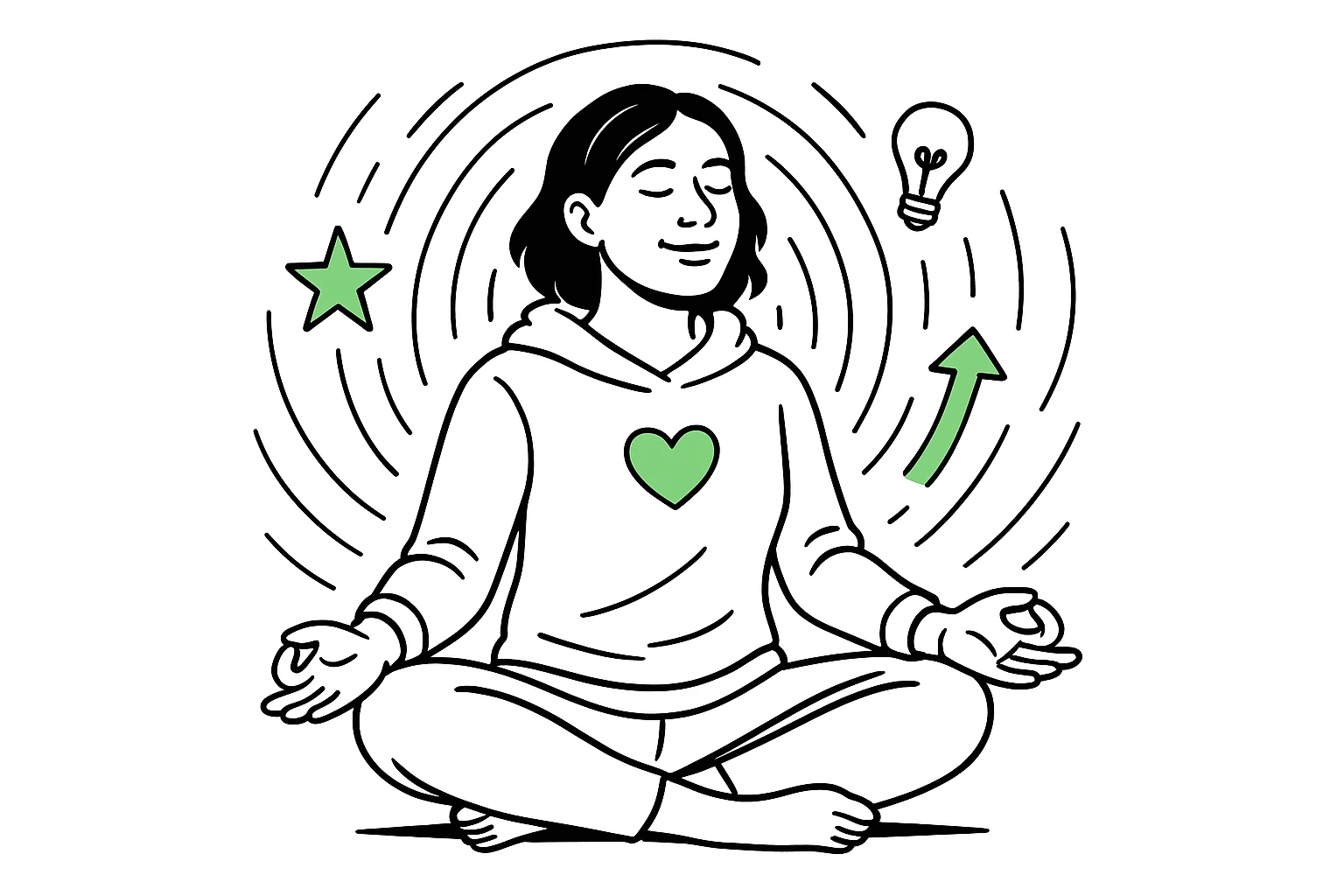
The path to self-acceptance in ADHD is rarely linear, especially when confronting years of internalized criticism and shame. It requires self-compassion, a concept often discussed, but rarely broken down into practical, ADHD-friendly steps. Our approach integrates principles from Acceptance and Commitment Therapy (ACT) to help you befriend your ADHD, rather than constantly battling it. For more on managing emotional experiences, see our resource on emotional regulation for ADHD.

This isn't about ignoring challenges. It's about developing strategies for moments when the ADHD brain feels overwhelming. For instance, Rejection Sensitive Dysphoria (RSD), a common experience among individuals with ADHD, can lead to intense emotional pain even from perceived criticism. Practicing self-compassion means acknowledging that pain without judgment, offering yourself the same kindness you would a dear friend. These practices, when integrated daily, offer a measurable reduction in emotional distress and foster resilience. Learn more about understanding and coping with RSD.
Practical Exercise: When you notice negative self-talk, try the "Thought Diffusion" technique from ACT:
Consistent practice of such techniques can re-script internal narratives and facilitate emotional healing.
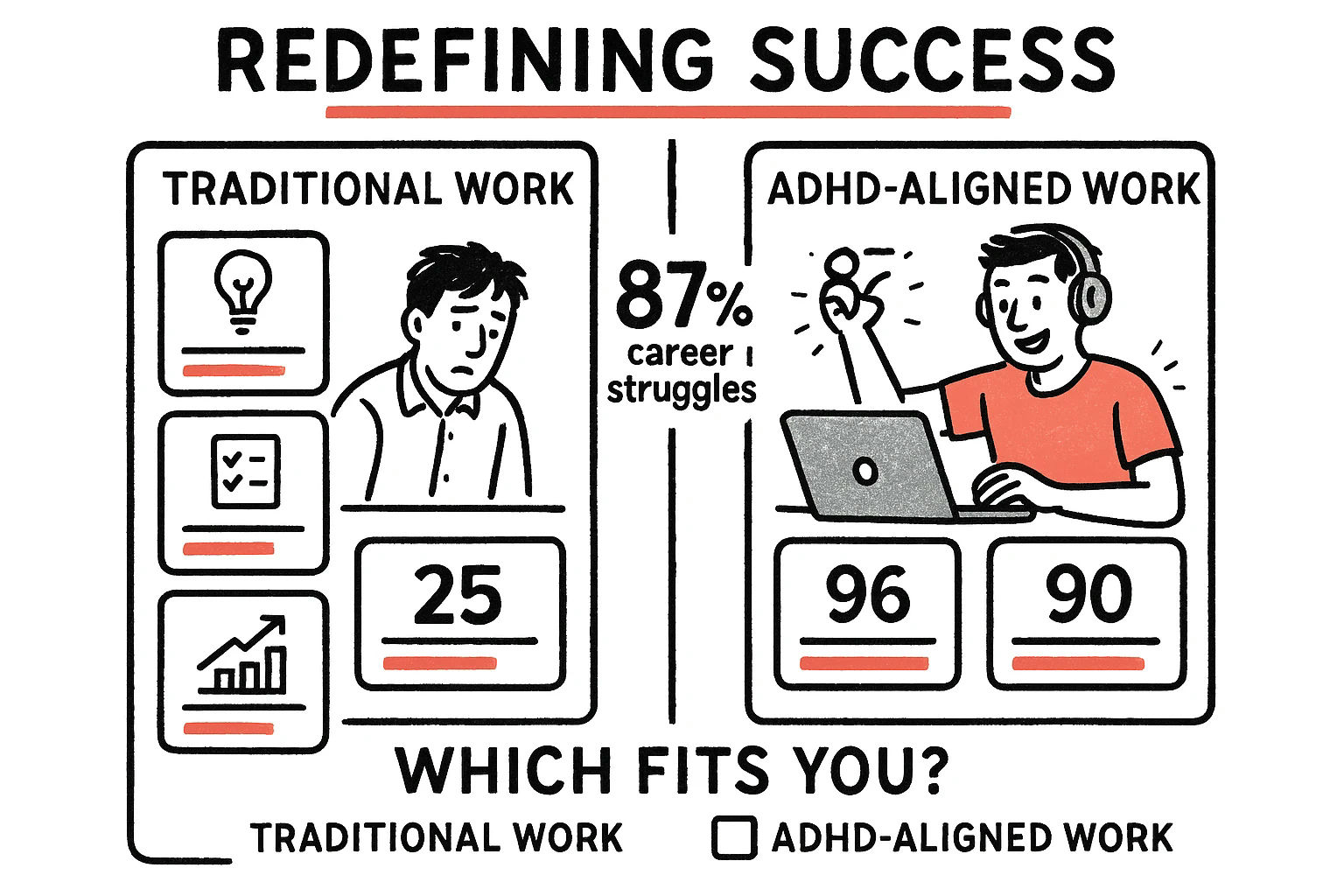
Traditional definitions of success, often rooted in linear progression and predictable routines, can feel inherently misaligned for an ADHD brain. The struggle is real: 87% of U.S. adults with ADHD experience career challenges, indicating a profound need for tailored strategies that go beyond mere coping.
The side-by-side comparison highlights a critical evaluation point: do you continue to force-fit yourself into neurotypical structures, or do you design a life that truly supports your unique operating system? This isn't about lowering expectations, but about personalizing them.
Consider the "30% Rule": If a task typically takes a neurotypical person an hour, allocate an hour and a half for yourself to account for potential distractions or hyperfocus shifts. This isn't inefficiency; it's realistic planning that respects your cognitive processes and reduces self-induced pressure. Our detailed guide on ADHD-friendly productivity strategies offers more such tactical advice.
Redefining success means recognizing that a vibrant, fulfilling life for you might look different than it does for others. It might involve a portfolio career, unconventional work hours, or a career deeply rooted in your hyperfixations. The goal is to create environments where your strengths are maximized, and your challenges are proactively addressed.
Having identified your strengths and practiced self-compassion, the next step is to create external structures that support your authentic self. This involves designing your physical and social environments in ways that minimize friction and enhance your natural flow.
Creating an ADHD-friendly environment isn't about perfection; it's about practical, confidence-building changes across key areas.
Implementing these changes—even small ones—can dramatically improve your daily experience, reduce stress, and free up mental energy for what truly matters to you.
One of the most potent remedies for the often-isolating experience of living with ADHD is finding your community—your neurotribe. The high ranking of Reddit and Quora discussions around self-doubt underscores a universal human need for validation and shared experience. Knowing you're not alone, and interacting with others who genuinely "get it," is profoundly healing.
Connecting with others who share similar experiences can provide invaluable insights, practical advice, and a sense of belonging that traditional support systems might not offer. This connection provides a crucial feedback loop, reinforcing your self-acceptance and empowering you further on your journey. Discover resources on building an ADHD support network.
A: Absolutely not. Embracing your authentic ADHD self is about understanding how your brain works, so you can leverage its strengths and strategically address challenges. It's moving from a place of battling yourself to collaborating with your unique cognitive style. This approach is backed by the fact that non-pharmacological interventions like CBT and mindfulness show promise in improving ADHD symptoms.
A: Start with gentle self-observation. When do you feel most engaged, alive, or uniquely effective? What tasks do you get lost in? What problems do you approach differently, leading to novel solutions? These are often signs of your inherent strengths at play. Remember, 98% of diagnosed adults identify positive ADHD traits, so yours are there to be found!
A: It's never too late. With over half of U.S. adults diagnosed later in life, many embark on this self-acceptance journey well into adulthood. The process often involves healing from past trauma and internalized shame, but with self-compassion and a strength-based approach, profound shifts are possible. Our content directly addresses the need for emotional healing and a "permission to be different."
A: Open, honest communication is key. Start by sharing what you've learned about your ADHD, focusing on both the unique ways your brain works and how certain traits might impact your interactions. Encourage them to ask questions and offer resources to foster mutual understanding. Setting clear boundaries and communicating your needs can significantly strengthen relationships.
A: Your environment is for your well-being and productivity, not for others' judgment. The goal is to design a life and space that supports you in thriving. This might mean unconventional work setups, specific organizational systems, or unique routines. The 87% statistic on career struggles for adults with ADHD highlights the critical need to personalize your work environment, rather than conforming to norms that don't serve you.
You’ve evaluated the alternatives, considered the data, and sensed the yearning for an approach that resonates with your unique experience. The decision to embrace your authentic ADHD self is a powerful one, leading to a life not just managed, but truly fulfilling.
We invite you to dive deeper into our resources, which blend neuroscientific insights with practical, actionable strategies designed specifically for the ADHD brain. It’s time to move beyond merely coping, and start building a life where your ADHD isn't a limitation, but a source of unique strength and creativity. Ready to own your exceptional brain?