ADHD Friendly Work Environments Complete Guide to Optimize
Learn how to design ADHD friendly work environments and routines that boost focus, reduce sensory overload, and cut decision fatigue. Discover practical fixes.
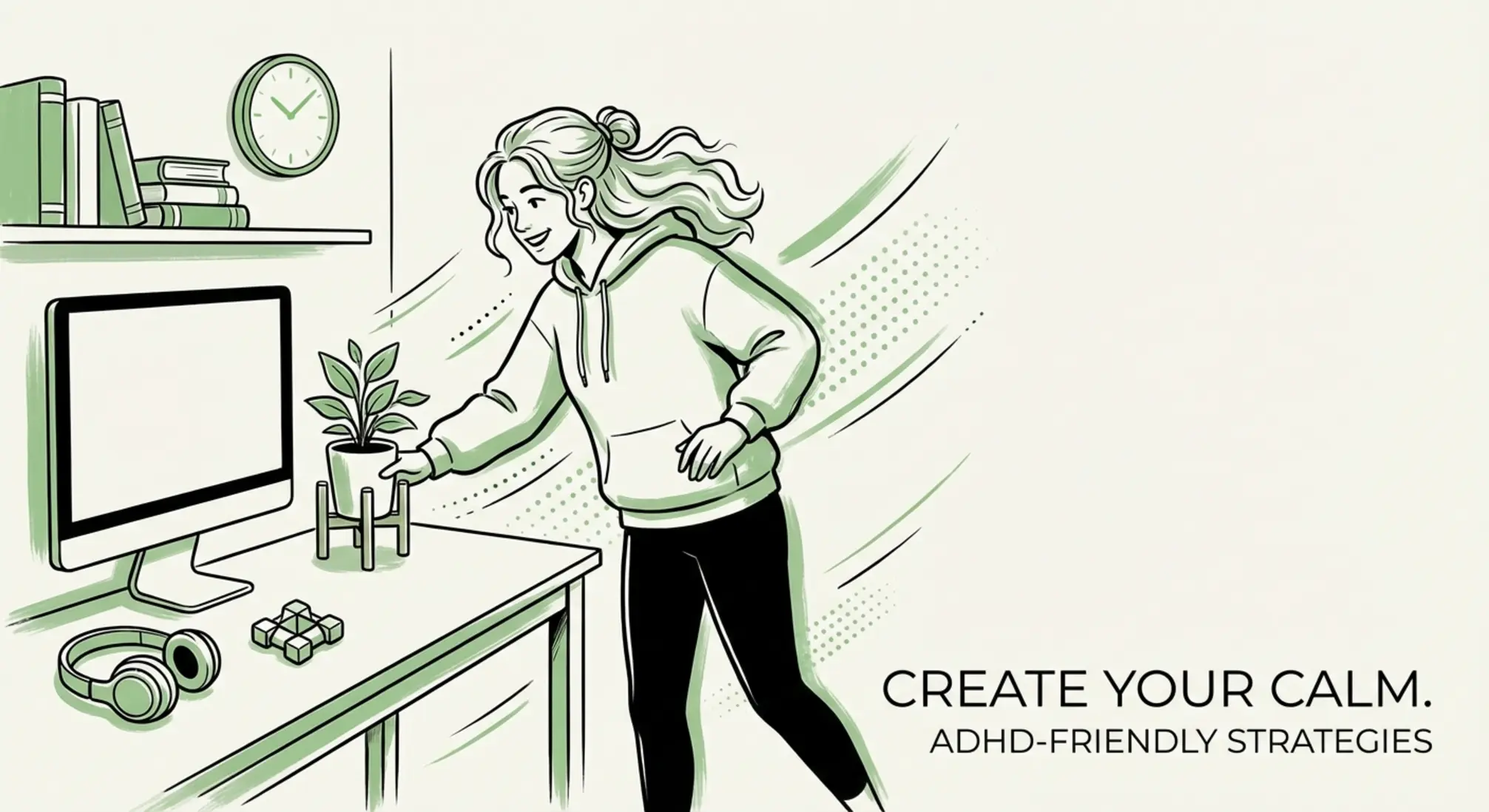
Working with ADHD can feel like navigating a beautifully chaotic, endlessly fascinating, yet often exhausting mental internet. Every task might open a rabbit hole, and hyperfixations can either propel us forward or derail our entire day. The truth is, traditional work environments and routines often aren't built for a neurodivergent brain. If you've ever felt overwhelmed by distractions, struggled with task initiation, or found yourself proverbially "bouncing off the walls" in a silent office, you're not alone. The good news? You don't have to simply endure; you can actively design your world to work with your brain, not against it.
This guide will move beyond generic productivity tips, offering targeted, neurobiologically informed strategies to optimize your physical and digital workspaces, and daily routines, to enhance focus, reduce distractions, and combat executive dysfunction. We'll explore how to reduce the immense cognitive load that often plagues ADHD adults, leading to better performance and, crucially, a greater sense of well-being.
For adults with ADHD, the workplace often presents unique, pervasive challenges. Statistics paint a clear picture: approximately 16.13 million adults in the US will have ADHD in 2025, and a staggering 87% (14.1 million) of them experience career struggles. This isn't a character flaw; it's a neurological reality. Adults with ADHD are 30% more likely to face chronic employment issues, 60% more likely to be fired, and three times more likely to impulsively quit jobs (ADD.org). These numbers highlight the critical need for tailored support.
At the core of these struggles lies executive dysfunction. Research published in Frontiers in Neuroscience (2025) links ADHD's executive control deficits to differences in prefrontal cortex and frontostriatal/frontoparietal networks. This impacts crucial functions like:
Beyond executive functions, heightened sensory sensitivity is a significant, often overlooked, factor. The Progressive Therapy Associates and ADDA.org note that sensory overload in work settings, particularly open-plan offices, leads to increased stress, fatigue, inattention, and emotional dysregulation for individuals with ADHD. You might find certain sounds, lights, or even textures disproportionately distracting or irritating, impacting your ability to focus.
Understanding these neurological underpinnings isn't just academic; it empowers us to approach solutions with self-compassion and precision. We're not fixing a broken person, but rather designing an environment and routine that supports a uniquely wired, creative, and dynamic brain.
Your physical environment is the first line of defense against distraction and a powerful ally for focus. Whether you work from home or in a traditional office, small changes can yield significant benefits.
Start by honestly assessing your current space. What visual, auditory, olfactory, or even tactile elements pull your attention away?
Once identified, actively eliminate or minimize these. This isn't about creating a sterile box, but a calming, predictable space. Clear visual clutter, use privacy screens or simple room dividers, and keep only essential items on your desk.
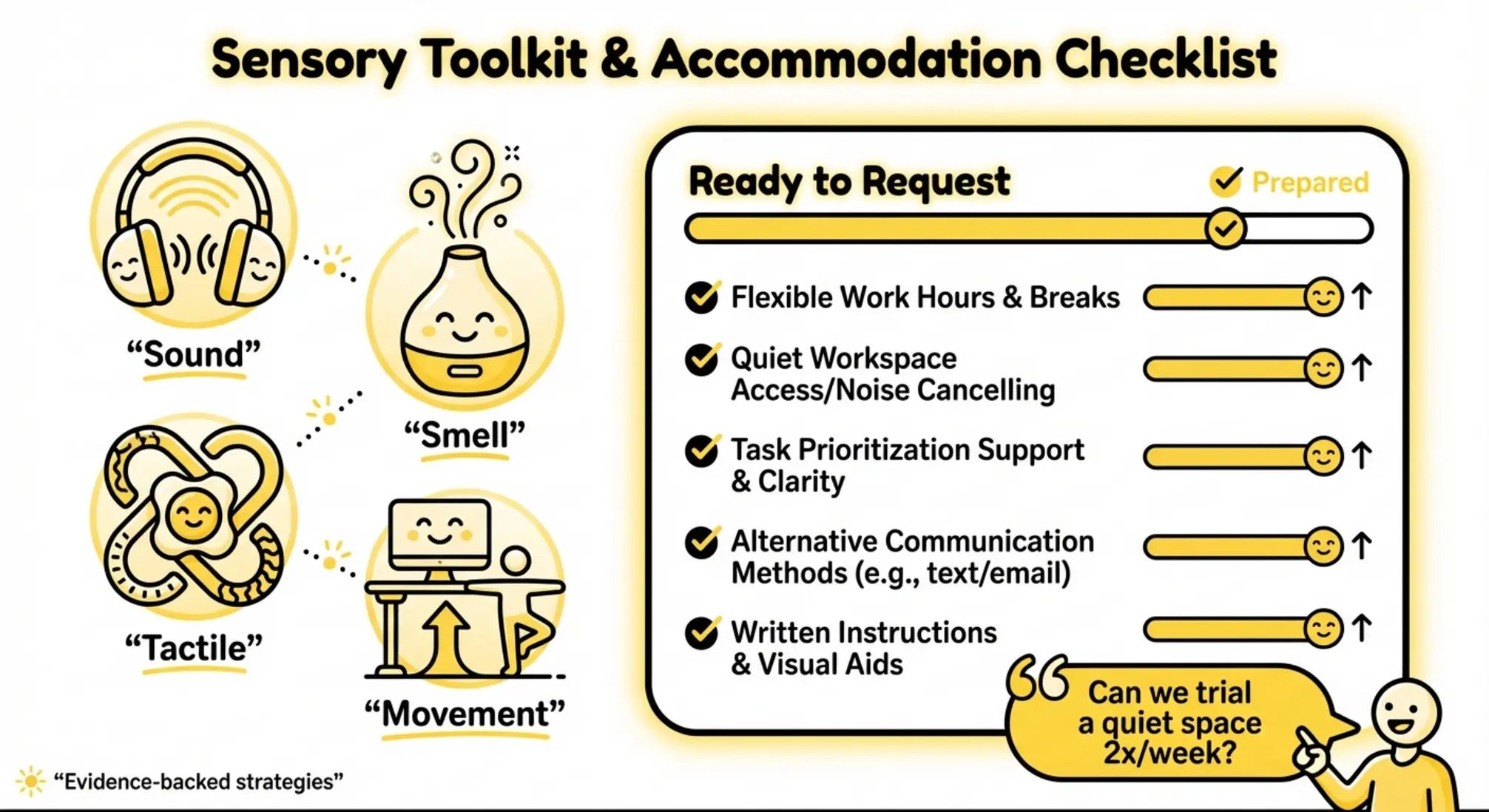
Sensory sensitivity in ADHD calls for a more nuanced approach than simply seeking silence.
The ADHD brain thrives on clear boundaries. Designating specific zones within your workspace can reduce decision fatigue and support transitions.
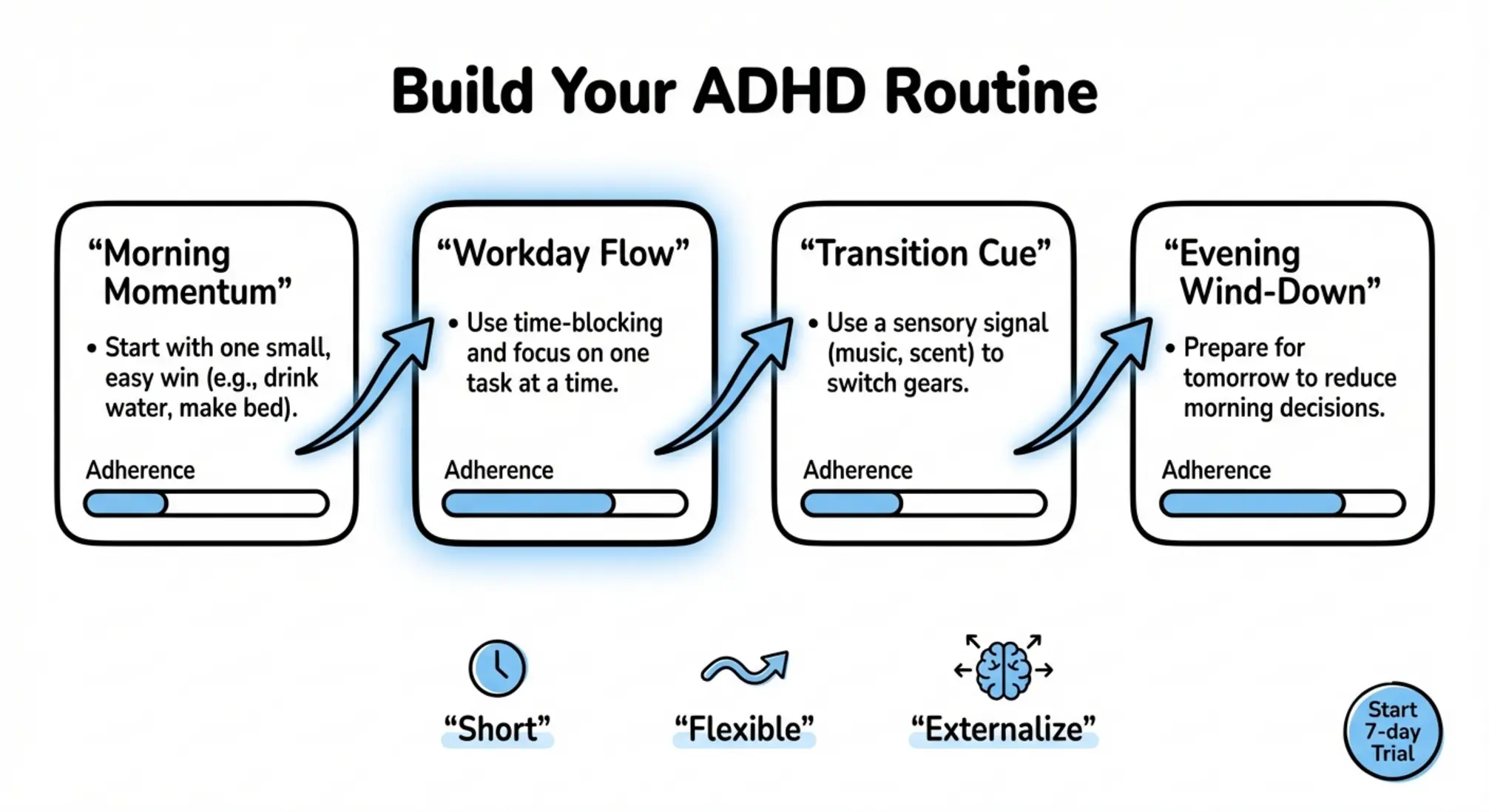
Routines might sound restrictive, but for the ADHD brain, they are liberators. They create structure, reduce decision fatigue, and externalize executive functions, freeing up mental energy. This is especially critical given that the annual productivity and income losses for adult ADHD are estimated at $87 billion to $138 billion in the US (ADD.org), underscoring the economic imperative for effective routine management.
The executive function challenges inherent in ADHD make starting tasks, managing time, and remembering steps incredibly difficult. Routines provide a predictable framework that bypasses some of these hurdles. They become automatic sequences, reducing the mental effort required for initiation and transition. The key is to make them adaptable and flexible, not rigid and punishing.
The way you start your day often dictates its trajectory.
Your workday routine needs to balance structure with the reality of ADHD's fluctuating focus.
Transitioning between tasks is a major executive function hurdle for ADHD brains, often leading to lost time and energy.
Your evening routine significantly impacts your sleep quality and how you start the next day.
In an increasingly digital world, your digital workspace is just as critical as your physical one. Fortunately, technology can be a powerful co-pilot for the ADHD brain, helping to externalize memory, automate tedious tasks, and manage distractions.
The internet is a vast rabbit hole waiting to swallow your focus. Proactive management is key.
The latest advancements in AI are creating dynamic, personalized tools that directly address ADHD challenges. AI-driven digital tools are showing promise in improving executive function and reducing cognitive overload (Fluidwave, Motion - 2023+ research).
Working memory challenges mean important details can easily slip away. Leverage technology to capture and consolidate information.
Reduce friction and cognitive load with quick wins.

For a deeper dive into available tools, an "ADHD Productivity App Finder" quiz might help you identify the best tech solutions for your unique work style.
While personal strategies are crucial, navigating a broader workplace with ADHD often requires advocacy and understanding your rights. The US alone faces an estimated $87 billion to $138 billion in annual productivity and income losses due to adult ADHD (ADD.org), underscoring the critical need for effective support strategies and workplace accommodations.
Address your specific executive function challenges head-on:
Proactively addressing sensory input can dramatically reduce stress and improve focus.
You have rights to reasonable accommodation under disability laws. The Job Accommodation Network and APA Blog confirm that accommodations like flexible schedules, distraction-minimizing environments, and task prioritization tools significantly improve performance for individuals with ADHD.
A: Not at all! While these strategies are specifically designed for the unique needs of ADHD brains, many people without a formal diagnosis find them incredibly helpful for improving focus, managing distractions, and organizing their work. If you identify with the challenges described, these strategies can be valuable.
A: It's not an either/or; it's a "both/and." Start with simplifying your physical space as a foundation, then layer in digital tools that support your specific executive function challenges. For example, a quiet physical space helps, but an AI-powered scheduler can then optimize your daily tasks within that quiet. The goal is to create a holistic system.
A: This is a common challenge! Focus on what you can control. Noise-canceling headphones are essential. Request a desk in a less trafficked area if possible. Use a privacy screen for your monitor. Talk to your manager or HR about the possibility of occasionally working from a quiet room or implementing flexible hours. ADDA.org provides detailed guides on advocating for workplace accommodations.
A: Absolutely not! The ADHD brain thrives on novelty and can quickly become bored with rigid routines. The key is adaptability and self-compassion. If a routine isn't working, iterate! Tweak it, try a different approach, or simplify it. The goal is sustainability, not perfection. Remember, only 67% of adults with ADHD are employed versus 87% of neurotypical college graduates (My Disability Jobs), showing that the system often isn't set up for success; the onus isn't solely on you.
A: A good ADHD-friendly AI tool should reduce cognitive load and friction, not add to it. Look for features like dynamic scheduling, automated reminders, and intuitive interfaces. Tools like Motion or Fluidwave, mentioned earlier, prioritize ease of use and automation specifically to support executive function. Beware of tools that require extensive setup or constant tweaking, as these can quickly become overwhelming.
You now have a deeper understanding of why an ADHD-friendly work environment and routine are crucial, and a wealth of strategies to implement. The journey of optimizing your world is deeply personal, much like navigating your own "mental internet." There's no one-size-fits-all solution, but a continuous process of experimentation, adaptation, and self-compassion.
We encourage you to pick one or two strategies from each section—physical space, routine, and digital tools—and implement them this week. Start small. Celebrate your wins. And remember, the goal is not to eliminate your ADHD, but to harness its unique strengths by creating a supportive ecosystem around it.
Explore more resources on myadhd.co/your-journey for additional insights and community support. By intentionally designing your environment and routine, you're not just improving your productivity; you're cultivating a life where your beautifully chaotic, endlessly fascinating brain can thrive.