ADHD Stigma Guide Deconstruct Stereotypes and Shame
Learn how to deconstruct ADHD stereotypes and tackle internalized shame. Discover evidence-based strategies to build resilience and access meaningful support.
For many navigating ADHD, the journey often involves more than just managing symptoms; it means confronting a pervasive landscape of misunderstanding and judgment. You're not alone if you've felt the sting of dismissive comments or the heavy burden of internalized shame. This isn't just about external perceptions; it's about the very real impact these stereotypes have on your self-worth, your pursuit of diagnosis, and your access to effective support. In this deep dive, we'll strip away the myths, reveal the true nature of ADHD, and equip you with the insights and tools to challenge stigma head-on—both in the world and within yourself.
Imagine trying to explain a complex internal experience only to be met with skepticism or platitudes. This is the daily reality for many with ADHD. The "mental internet" of an ADHD mind—beautifully chaotic, endlessly fascinating, mildly exhausting, as we often describe it—is frequently misread by a world that expects linear thought and predictable discipline. This disconnect breeds stigma, a silent burden that carries a heavy emotional weight. Research shows that public uncertainty around the reliability of ADHD diagnoses fuels this stigma, directly affecting treatment adherence and effectiveness. About two-thirds of people believe ADHD symptoms exist on a spectrum, yet a quarter expressed annoyance towards those with ADHD. This isn't just an inconvenience; it's a barrier to a fulfilling life.
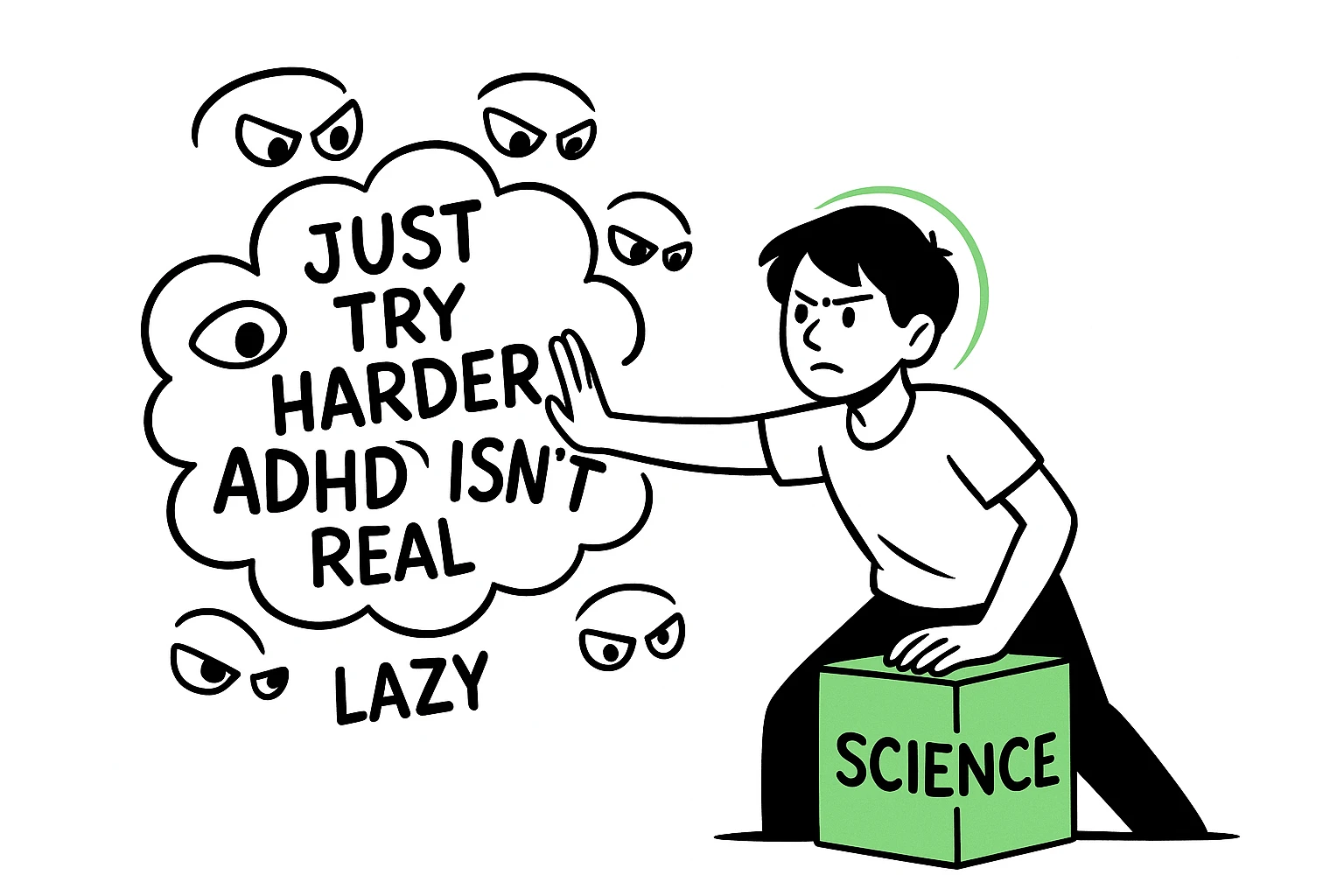
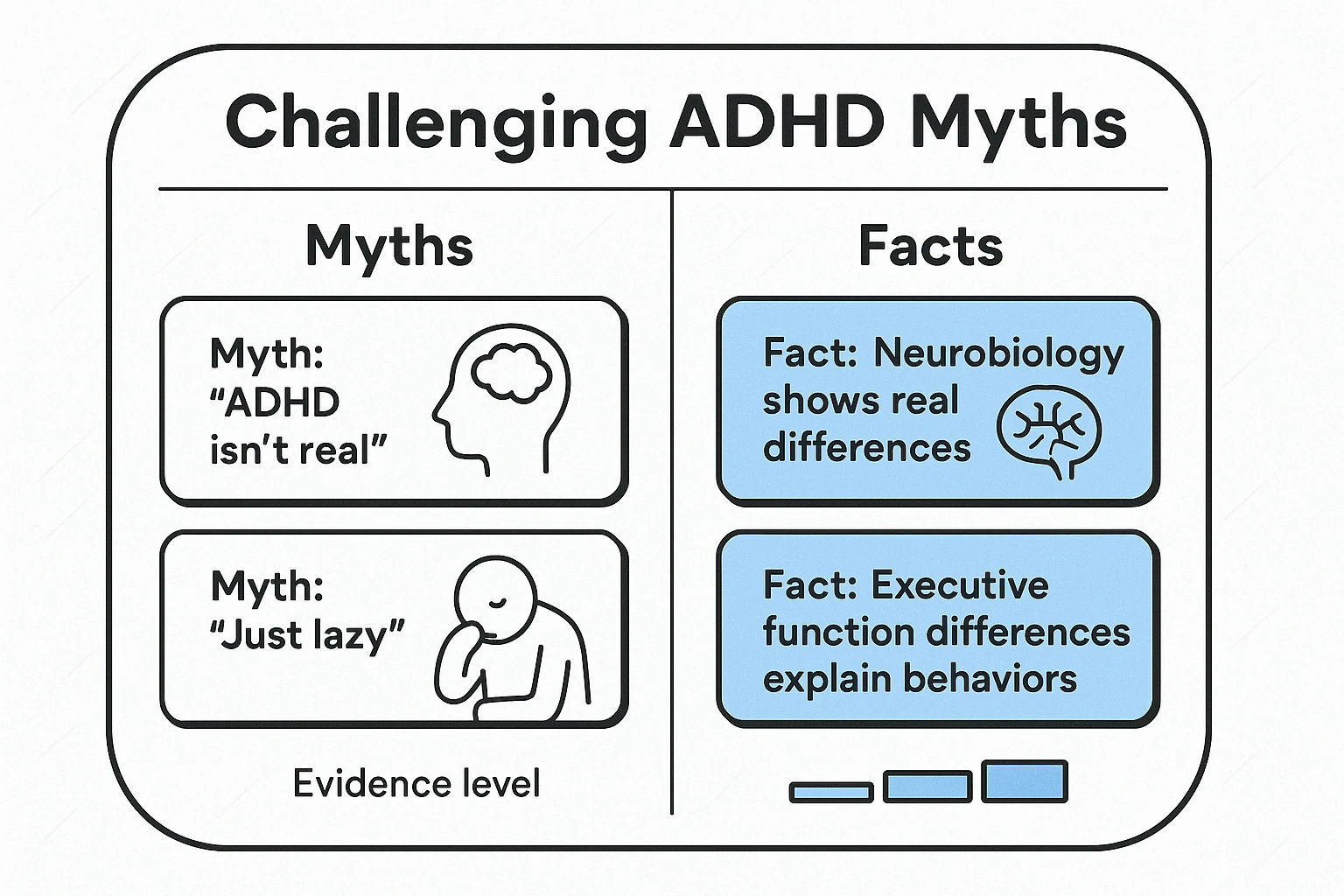
One of the most insidious and damaging misconceptions is the idea that ADHD isn't a genuine neurobiological condition. This narrative is a foundational pillar of stigma, undermining self-belief and hindering external support. When you hear "just try harder" or "everyone gets distracted sometimes," it invalidates a core part of your experience.

The science is clear: ADHD is a neurobiological condition, characterized by differences in brain structure and function, particularly in areas related to executive functions like attention regulation and impulse control. Genetic factors play a significant role, not poor parenting or a lack of moral fiber [NIH, ADHD Evidence Project]. These aren't opinions; they are well-established scientific facts. The danger of dismissal is stark: These myths create significant barriers to diagnosis and treatment, leaving individuals without the support they need to thrive.
Stigma isn't monolithic; it manifests in various forms, each carrying its own weight and impact. Understanding these distinctions is crucial for identifying and combating them effectively.
This is what most people picture: the societal stereotypes, unfair judgments, and discrimination from others. It's the eye-roll when you mention a hyperfocus or the assumption that you're unreliable because you have ADHD. A German study even highlighted public opinions that ADHD is merely a societal construct, reinforcing these unfair judgments.
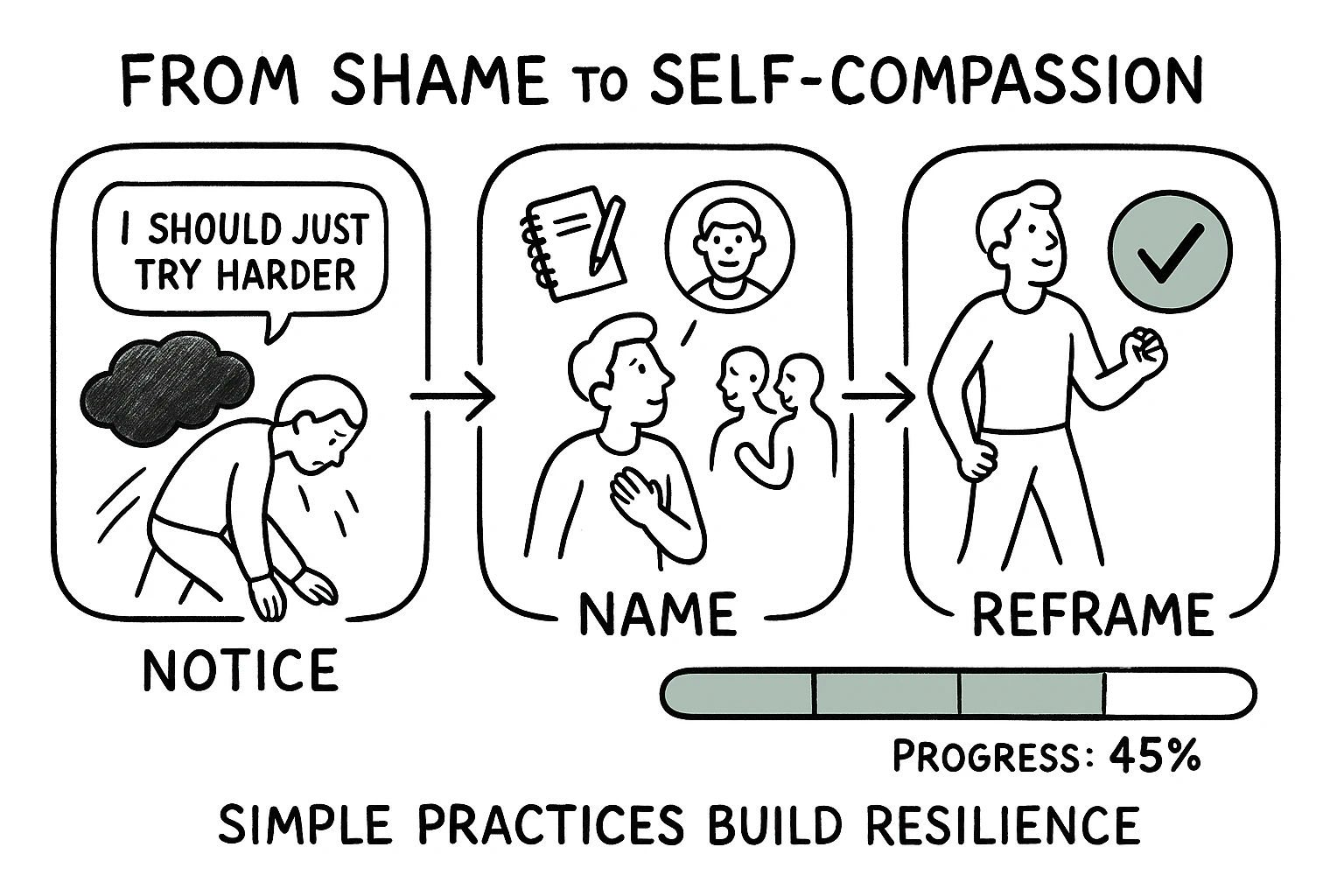
Perhaps the most damaging form, internalized shame occurs when external public stigma is absorbed and becomes part of an individual's self-perception. This leads to feelings of inadequacy, self-blame, and a fear of disclosure. It's the voice in your head saying "I'm not good enough" or "I should be able to do this." This is a significant factor preventing adults from seeking diagnosis and treatment, and it's linked to increased depression, anxiety, and psychological distress. You might find yourself avoiding situations where you fear your ADHD will be exposed, or downplaying your struggles to avoid judgment.
This form affects family, friends, and caregivers of individuals with ADHD. They might experience judgment for associating with someone with ADHD, or be blamed for their loved one's challenges. Parents, for instance, might be accused of poor parenting or feel ashamed of their child's behaviors, as highlighted by resources like CHADD.
The constant barrage of misconceptions and judgments takes a profound emotional toll. It feeds a cycle where external criticism becomes internal self-criticism, leading to feelings of inadequacy and low self-esteem.
Understanding this cycle is key to breaking free. When you recognize that external judgment is often rooted in ignorance rather than a flaw in your character, you can begin to loosen its grip. This is where self-compassion becomes radical. Rather than blaming yourself for ADHD-related challenges, offer yourself the same kindness and understanding you would a friend. Mindfulness techniques and practical exercises can help you quiet the critical inner voice and shift towards a narrative of self-understanding and acceptance. This isn't about excusing behaviors; it's about acknowledging the neurobiological realities that shape your experience and treating yourself with dignity.
Combating stigma requires a multi-pronged approach, both personally and collectively.
Empowering yourself with knowledge and strategies is the first step.
Your role in combating stigma is invaluable.

Beyond individual actions, advocating for public policy shifts and promoting media literacy can dismantle systemic stigma. Support organizations like CHADD that work towards broader advocacy for ADHD awareness and legislative changes.
Challenging ADHD stereotypes and undoing internalized shame is an ongoing journey, but one that is essential for well-being and progress. It requires understanding, empathy, and consistent action. By deconstructing myths, acknowledging the varied impacts of stigma, and empowering ourselves and our allies with proactive strategies, we can move towards a future where ADHD is understood, supported, and celebrated for its unique strengths, rather than marginalized by misconception.
Yes, absolutely. ADHD is a well-researched and recognized neurodevelopmental disorder with a strong biological and genetic basis. Brain imaging studies show differences in structure and function, particularly in regions involved in executive functions, in individuals with ADHD compared to neurotypical individuals [NIH]. Dismissing ADHD as "not real" ignores decades of scientific evidence.
Public stigma refers to the negative attitudes, stereotypes, and discrimination from society or individuals towards people with ADHD. Internalized shame (or self-stigma) is when individuals with ADHD absorb these negative societal views and apply them to themselves, leading to feelings of inadequacy, guilt, and low self-esteem.
You can respond calmly but firmly: "While many people experience distraction, ADHD is a persistent and impairing condition that affects executive functions critical for daily life. It's not the same as occasional forgetfulness." Or, "It's a neurological condition, and experiencing some symptoms isn't the same as having a full diagnosis that significantly impacts functioning."
When prescribed and monitored by a healthcare professional, stimulant medications for ADHD are generally safe and effective. Research actually suggests that individuals with ADHD who are treated with medication may have a lower risk of substance abuse than those who are not treated. The idea that ADHD medication is inherently addictive is a common misconception that contributes to stigma.
The best way to support them is to listen without judgment, validate their experiences, and educate yourself about ADHD from reliable sources. Offer practical help if they need it and ask how you can be most helpful. Encourage them to seek professional support if they haven't already. Your belief and understanding can make a significant difference.
Intersectional stigma refers to the compounded discrimination faced by individuals who belong to multiple marginalized groups (e.g., a Black woman with ADHD, an LGBTQ+ person with ADHD). These individuals may face unique biases that sometimes lead to misdiagnosis or delayed treatment, as their ADHD symptoms might be misattributed to cultural factors or identity instead of the condition itself.