ADHD Spectrum Guide to Hyperactive Inattentive Authenticity
Find clarity on adult ADHD presentations and stop masking to embrace authenticity. Learn how to identify hyperactive, inattentive, and combined patterns.
You’ve landed here because you’re evaluating what ADHD truly means, not just for "someone" with ADHD, but for you. Perhaps you've received a diagnosis and are piecing together what it means beyond the clinical definitions. Or maybe you suspect ADHD, but the common portrayals don't quite align with your internal experience, leaving you wondering if your struggles are "valid" enough. The truth is, ADHD is far from monolithic; it’s a spectrum, and understanding its diverse expressions is crucial for navigating your own path to authenticity.
Most resources offer symptom checklists, and while those are a starting point, they rarely delve into the profound impact different ADHD presentations have on your daily life, your masking behaviors, and your journey toward truly being yourself. This isn't just about managing symptoms; it's about understanding the unique internal landscape of your specific ADHD type and leveraging that insight to live a more genuine, fulfilling life.
We're going beyond the typical "what is ADHD" to explore how each presentation shapes your reality and provides concrete pathways to unmasking.
When most people think of ADHD, a single, often stereotypical image comes to mind: the fidgety, hyperactive child. Yet, the reality for adults, particularly, is far more complex. The Diagnostic and Statistical Manual of Mental Disorders (DSM-5) categorizes ADHD into three main presentations: Predominantly Inattentive, Predominantly Hyperactive-Impulsive, and Combined. While Combined type is the most common among adults, accounting for roughly 62% of diagnoses, Predominantly Inattentive type still makes up a significant 31%, with Hyperactive-Impulsive type being rarer at 7% (Perplexity Source: large adult study). These numbers alone hint at the diversity, but they don't tell the full story of internal experience.
Understanding your specific presentation is not merely an academic exercise; it's foundational to understanding yourself. Generic coping mechanisms often fall short because they don't account for the unique ways each presentation impacts executive functions, emotional regulation, and, critically, how you mask your struggles from the world—and from yourself. Masking, while a survival mechanism, leads to significant mental strain, increasing risks of anxiety, depression, imposter syndrome, and burnout (Perplexity Source: multiple, including ADHDTA.com.au, ADDitudeMag.com). Your journey to authenticity begins by truly recognizing which facet of the ADHD diamond reflects your experience.

This visual comparison helps clarify the landscape, but let's dive deeper into what these distinctions truly mean for your lived experience.
If your ADHD often feels "invisible" to others, you likely resonate with the Predominantly Inattentive Presentation (ADHD-PI). This is where the stereotype of a disruptive, hyperactive child completely fails, leaving many, especially women and girls, undiagnosed until much later in life. Data shows that girls and women are more frequently diagnosed with predominantly inattentive ADHD, often at a later age (16.3–28.6 years vs. boys/men 11.2–22.7 years) (Perplexity Source: PsychiatryAdvisor.com). This delay in diagnosis means a lifetime of internalizing struggles, often leading to chronic shame and self-doubt.
Those with ADHD-PI aren't often bouncing off the walls. Instead, their hyperactivity is frequently internalized: a racing mind, an endless to-do list replaying, a tendency to get lost in thought even mid-conversation. The visible signs might be subtle: missed details, difficulty starting tasks, forgetfulness, or appearing "spacey." The masking behaviors for ADHD-PI are often about overcompensation: hyper-organization to combat disorganization, people-pleasing to deflect attention from perceived failures, or excessive self-monitoring to avoid judgment. This constant effort to appear "normal" is exhausting and contributes significantly to imposter syndrome.
The silent struggle of inattentive ADHD can manifest as chronic overwhelm, anxiety, and a feeling of forever playing catch-up. You might feel immense pressure to conform to neurotypical expectations, constantly battling an internal world that thrives on depth and tangential thought, but struggles with linear processing.

To move toward authenticity, you must first validate your internal experience. Embrace the "daydreaming" as a sign of a vibrant internal world. Learn to leverage your capacity for hyperfocus by intentionally directing it toward your passions. Structure your environment for success, not just to mitigate symptoms, but to honor how your brain works. This means, perhaps counter-intuitively, building in moments for genuine mental wandering, rather than constantly fighting it. Recognizing that your challenges don't equate to a lack of intelligence or effort is the first step toward self-compassion and genuine self-expression.
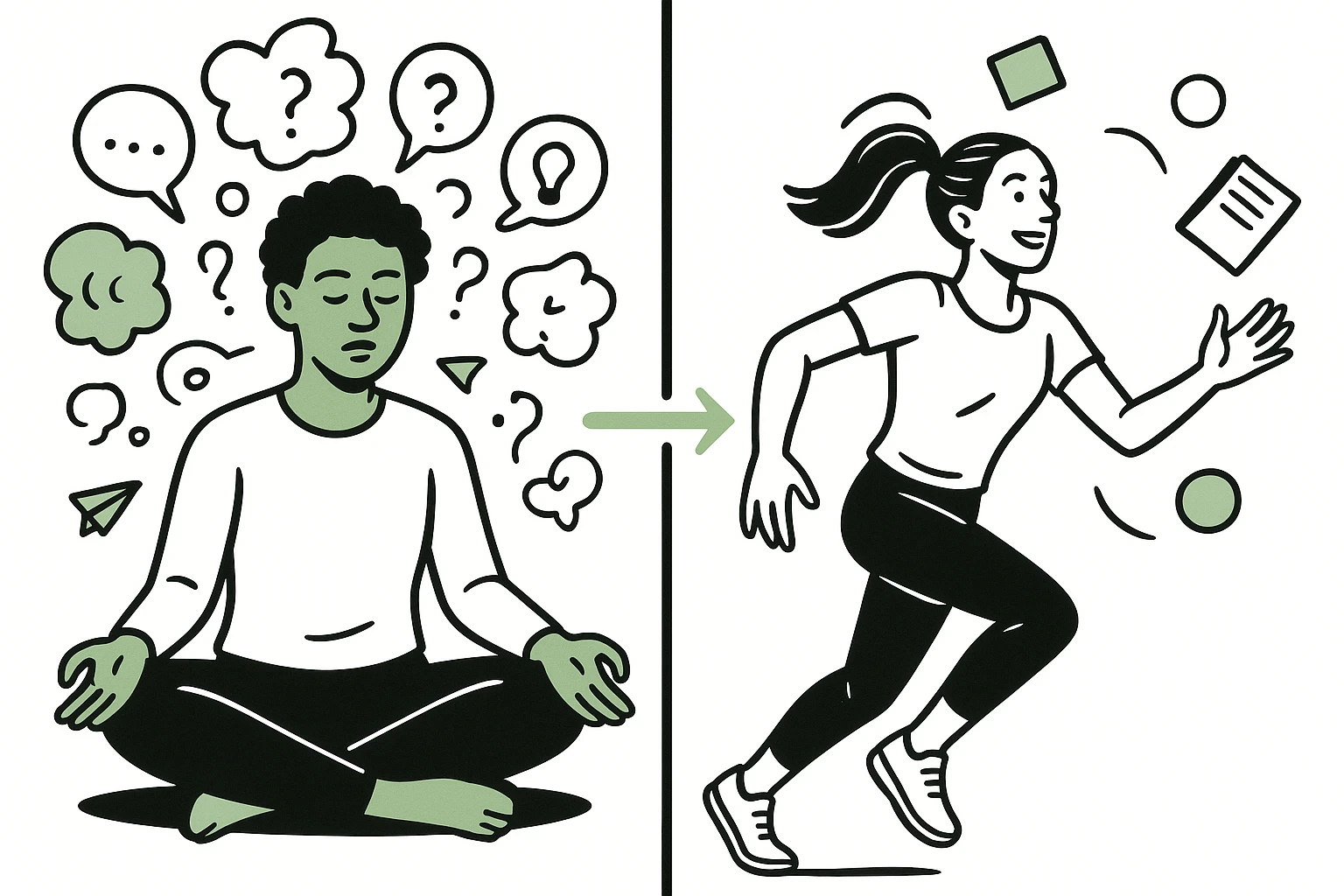
If your ADHD presentation leans towards Hyperactive-Impulsive, you might find the common portrayals equally frustrating. While children may exhibit overt fidgeting and constant motion, adult hyperactivity often morphs into internal restlessness. This can manifest as a racing mind, a constant need for stimulation, difficulty relaxing, or an incessant urge to be doing something. It’s not always about physical movement, but a deep-seated inner drive.
Masking for this presentation can involve channeling that energy into overworking, becoming a "human doing" rather than a "human being," or seeking constant thrills and external validation. You might interrupt others frequently, struggle with patience, or make impulsive decisions, only to regret them later. You learn to suppress the urge to speak out of turn or to leave a mundane situation, creating an internal pressure cooker.
The constant internal hum of hyperactivity can lead to emotional dysregulation, anxiety, and frustration with perceived personal failures. The societal expectation to sit still, be quiet, and think before speaking can feel like an existential battle.
Authenticity here means learning to channel that powerful energy productively. Find outlets for movement that are socially acceptable and personally fulfilling – sports, walking meetings, standing desks, or active hobbies. Embrace your spontaneity, but learn to temper impulsivity with conscious reflection, perhaps creating a "pause before action" habit. Your rapid idea generation and boundless energy are strengths to be harnessed, not weaknesses to be suppressed. The goal isn't to eliminate your hyperactive traits, but to integrate them into a life that honors your needs and allows you to thrive.
As the most prevalent presentation in adults, Combined Type ADHD is a complex dance between inattentive and hyperactive-impulsive traits. This means navigating difficulties with focus, organization, and memory, while also grappling with internal restlessness, impulsivity, and emotional intensity. It’s like having two distinct neurodivergent experiences co-existing, often leading to a unique set of challenges and profound internal conflict.
Masking for Combined Type often involves a double effort. You might compensate for inattention by creating elaborate organizational systems, while simultaneously suppressing hyperactive urges or impulsive comments in social settings. This constant, dual-faceted masking can be incredibly draining, leading to a profound sense of "not enough" and chronic self-criticism. The unique diagnostic challenges arise because symptoms can fluctuate, with one presentation being more prominent depending on context or stress levels.

Harmonizing these diverse traits for authenticity requires a nuanced approach. It means recognizing that your brain has both deep wells of creative energy and challenging inconsistencies. Strategies might involve structured flexibility: using strict external systems for organization while building in significant room for spontaneous, hyperfocus-driven projects. It's about leveraging your ability to dive deep (inattention's hyperfocus) and execute rapidly (hyperactivity's drive), carefully balancing them rather than constantly trying to suppress one for the other. This integrated approach acknowledges the full complexity of your ADHD and allows you to find an authentic flow.
Our understanding of ADHD has historically been skewed by research predominantly conducted on white, hyperactive boys. This narrow lens has profoundly impacted how ADHD is recognized, diagnosed, and consequently, how individuals from different genders and racial backgrounds experience masking and their journey to authenticity.
Gender expectations, for instance, significantly influence symptom presentation. Girls are often socialized to be "well-behaved" and people-pleasing, leading them to internalize or mask inattentive symptoms more effectively than boys. This contributes to their later diagnosis rates and the common perception that ADHD is a "male" condition. What appears as anxiety or depression in women may, in fact, be undiagnosed ADHD, forcing them to double-mask their true neurotype under layers of societal expectation.
Racial disparities also run deep. Studies indicate that ADHD is often underdiagnosed in minority populations due to implicit bias in diagnostic processes, lack of access to healthcare, and cultural interpretations of symptoms (Perplexity Source: research on health disparities). An individual from a marginalized community might face additional pressure to mask their ADHD to avoid further stigmatization or misinterpretation of their behavior. This added layer of navigating cultural norms and systemic barriers makes the journey to authenticity even more complex.
Recognizing these societal influences is critical for a truly personalized understanding of your ADHD. It allows you to externalize some of the shame and self-blame, understanding that your struggles might be amplified by societal expectations, not just inherent to your neurotype. Your authentic self might defy stereotypes, and that's not just okay – it's powerful.
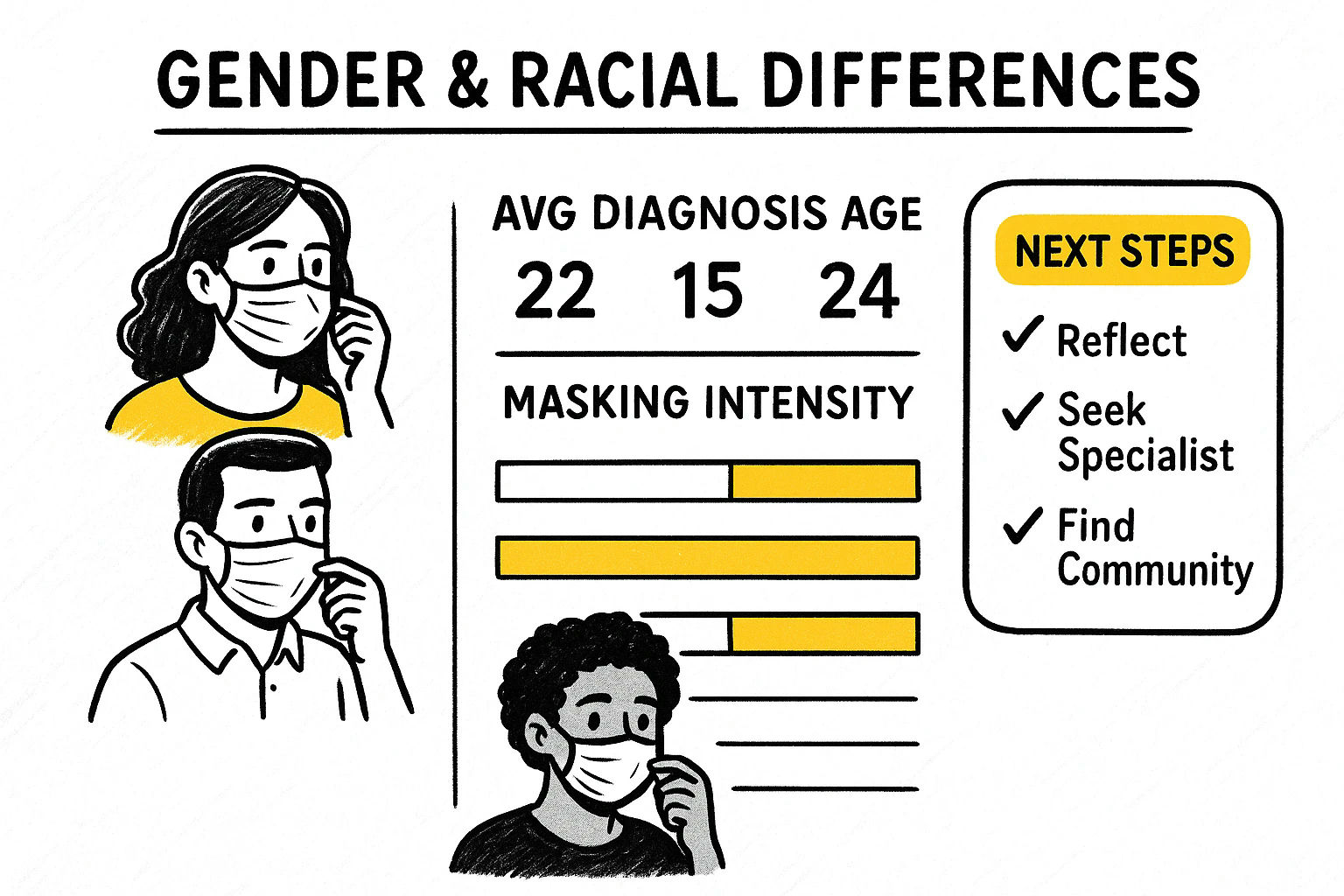
This self-reflection checklist encourages you to consider these often-overlooked factors, empowering you to advocate for yourself and seek support that truly understands your unique context.
Understanding the nuances of ADHD presentations is a powerful step, but it raises a critical question: how do you confidently differentiate your own experience and move forward? While self-assessment tools are not diagnostic, they are invaluable for self-reflection and can guide you toward seeking appropriate professional support.
The DSM-5 criteria for adults (17+) require at least five symptoms of inattention or five symptoms of hyperactivity-impulsivity for diagnosis, and critically, these symptoms must be inconsistent with developmental level, negatively impact functioning, and have been present before age 12 in multiple settings (Perplexity Source: NeurodivergentInsights.com, AAFP.org). This emphasis on early onset and functional impairment helps distinguish ADHD from other conditions.
Yes, to some extent. Many individuals experience a mix of symptoms. The "Combined Type" diagnosis specifically means you meet the diagnostic criteria for both Predominantly Inattentive and Predominantly Hyperactive-Impulsive presentations. The DSM-5 requires 5 or more symptoms in each category for adults. If you experience some traits from both but don't meet the full criteria for both, you'd be diagnosed with the presentation whose criteria you do meet. Understanding this nuance is key to personalized support.
Masking is a big deal because it’s a constant, energy-draining performance. For adults, society often has fewer allowances for "ADHD behaviors" than for children. You learn to suppress impulses, force focus, and control emotional responses just to fit in. This leads to profound mental health issues like chronic anxiety, depression, burnout, and imposter syndrome because you're constantly hiding your true self and internalizing the message that 'you're wrong' (Perplexity Source: multiple, including ADHDTA.com.au, ADDitudeMag.com). Unmasking is about reclaiming your energy and owning your authentic identity.
No, fluctuating symptoms are very common, especially with Combined Type ADHD. Stress, sleep, environment, and even interest level can influence which symptoms are more prominent on any given day. This variability is precisely why many struggle with diagnosis or doubt their own experiences. An ADHD diagnosis acknowledges a persistent pattern of symptoms that impact functioning, not that every symptom is present 100% of the time, or that they present identically in every situation. This variability highlights the critical need for a diagnostic process from an informed professional to distinguish between these nuances.
The key differentiator lies in its impact on functioning and control. Everyone daydreams. With inattentive ADHD, daydreaming often happens involuntarily, significantly impacting your ability to focus on tasks, listen to conversations, or remember vital information. It feels less like a pleasant escape and more like an unavoidable mental drift that frequently leads to missed details, errors, or a perceived lack of presence. If your mind constantly wanders despite your best efforts to reign it in, and it consistently causes problems in your life, it aligns more closely with inattentive ADHD.
The point is reclaiming your authentic self and improving your long-term well-being. While unmasking can be challenging initially – it involves shedding years of ingrained habits and managing external reactions – the benefits are profound. Reduced anxiety and depression, improved self-esteem, more genuine relationships, and the ability to build a life that truly supports your neurotype are all compelling reasons. It’s an investment in your mental and emotional health that allows you to finally live in alignment with who you are. The journey to authenticity is a continuous process, and it's never too late to start.
You've delved deep into the varied landscape of ADHD expression, moving beyond superficial definitions to understand the profound impact of each presentation on your personal journey. The insights shared here are designed to confirm your understanding as you evaluate what's best for you.
If these descriptions resonate with you, especially if you now recognize how deeply your specific ADHD presentation has influenced your experiences with masking and your continuous search for self-acceptance, consider taking these next steps:
Understanding your unique ADHD expression is the bedrock. Armed with this knowledge, you are empowered to make informed decisions about your well-being, seek the precise support you need, and confidently step into your most authentic self.