ADHD Self Advocacy Guide to Communicate Needs and Boundaries
Learn to advocate for your ADHD during emotional dysregulation with scripts, pause tactics, and boundary-setting. Find steps to reduce guilt and rebuild trust.

Let's face it: navigating emotional ups and downs is tough for anyone. But when you add ADHD into the mix, with its unique dance of emotional dysregulation, impulse control challenges, and the ever-present hum of Rejection Sensitive Dysphoria (RSD), those moments can feel like an uncontrollable storm. You’re not just feeling emotions; you’re being engulfed by them. And in the aftermath, there's often that heavy blanket of guilt and shame.
You're here because you know this storm. You're looking for something beyond generic advice—you need concrete strategies, actual words to say, and a roadmap to repair and rebuild. You're evaluating how to empower yourself, not just cope. This isn't about fixing yourself; it's about confidently advocating for your real self, especially when your brain is running a thousand miles an hour.
The truth is, emotional dysregulation (ED) isn't a character flaw; it's a core feature of ADHD, impacting a significant portion of adults—between 30-70% according to research compiled by ADDitude Magazine and the APA. And for women with ADHD, this experience is often amplified by hormonal shifts and a lifetime of masking, leading to higher rates of anxiety and depression (Perplexity, ADDitude Magazine). Understanding this neurobiological reality—that your brain is wired differently with an overactive amygdala and an underactive prefrontal cortex—is the first step in shifting from self-blame to empowered self-advocacy (APA, Verywell Mind).
This guide is designed to give you the practical frameworks and actual scripts to navigate these intensely emotional moments, set crucial boundaries, communicate your ADHD needs effectively, manage post-meltdown guilt, and build a powerful circle of allies.
Before you can advocate, you need to understand what you're advocating for. Your emotional landscape with ADHD isn't just a mood swing; it's often a complex interplay of neurological differences that make emotions bigger, faster, and harder to regulate.
Think of it like this:
This isn't just theory; it's your lived experience. The frustration of wanting to articulate your feelings but only responding with an emotional outburst. The shame spiral after saying something you immediately regret. The exhaustion of constantly feeling "too much."
Recognizing this internal chaos as part of your ADHD, rather than a personal failing, is foundational. It allows you to approach self-advocacy from a place of understanding rather than self-recrimination.
When emotions run high, your first instinct might be to react. But with ADHD, that reaction can often be impulsive and regretted later. The key is to create a conscious pause. This isn't about suppressing what you feel, but about creating space to respond rather than react.
Drawing from principles of Dialectical Behavior Therapy (DBT), highly effective for emotional regulation, here are ways to hit the "pause" button:
The challenge isn’t just pausing internally, but communicating that need to others without escalating the situation. This is where pre-prepared phrases incredibly useful:
These simple sentences are powerful. They communicate your need, set a boundary, and signal an intention to return, which can reassure the other person.
This is often the hardest part: finding the words when your brain is fuzzy, your emotions are raw, and the fear of being misunderstood (or worse, rejected) is lurking. We're moving beyond "just communicate" to giving you the exact language.
The beauty of having scripts isn't to sound robotic, but to provide a foundational structure when your mind goes blank. You can adapt these to your comfort level.

1. The "I Need a Pause" Script:
2. The "Explaining My Emotional Reaction" Script (After the fact, or in a calmer moment):
3. The "Boundary Setting" Script:
It's one thing to know what to say, and another to actually say it when your internal alarm bells are blaring. This framework helps you decide how to set a boundary in real-time.
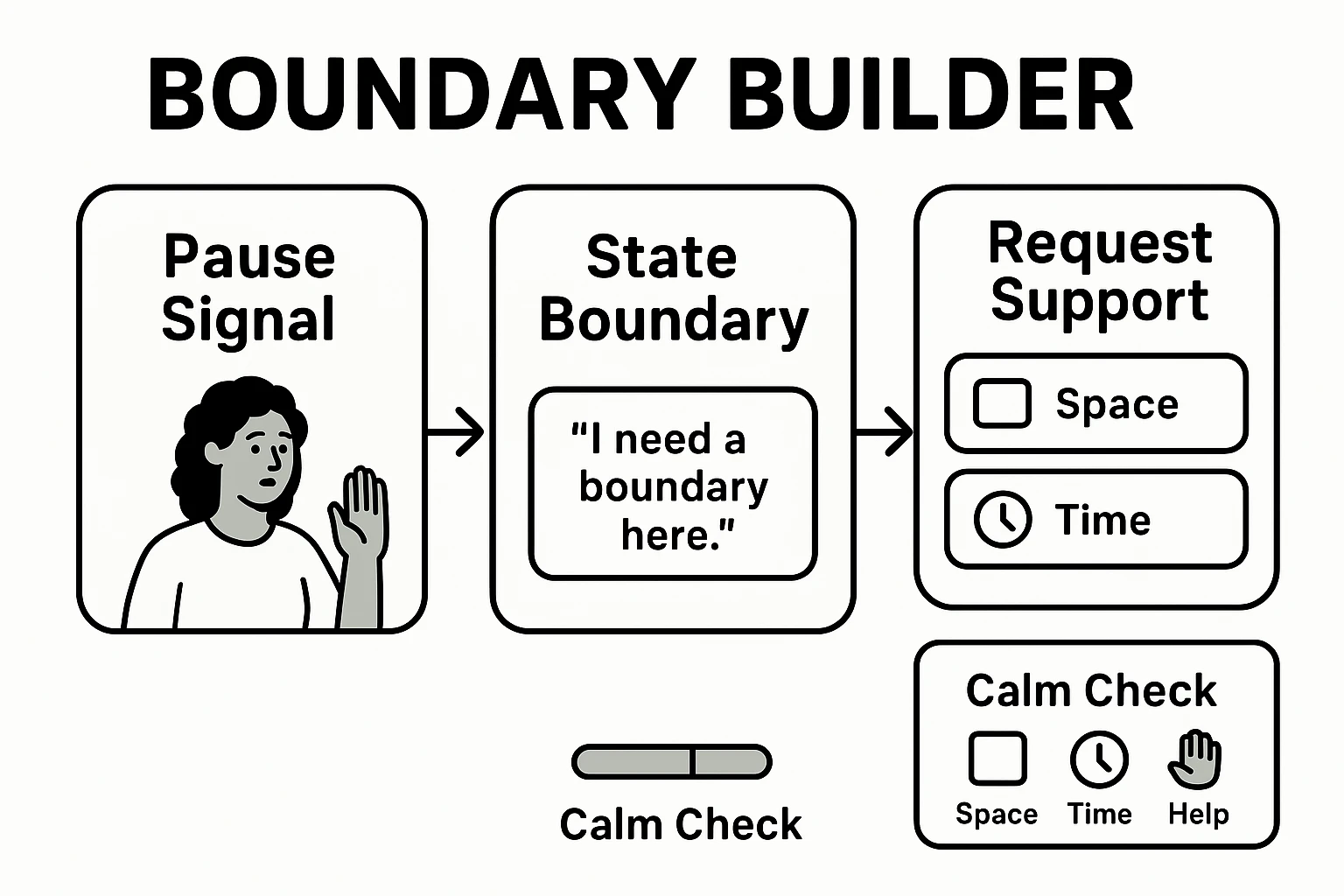
Remember, setting boundaries is an act of self-care. It's not selfish; it's a necessary step to manage your energy and emotional capacity. This is especially crucial for individuals with ADHD who often struggle with people-pleasing and masking, leading to burnout.
The storm may pass, but the wreckage of guilt and shame can linger, often doing more damage than the initial emotional outburst. This is a crucial, often overlooked, aspect of emotional regulation with ADHD. Many resources focus on immediate coping, but neglect the "aftercare." Our research indicates a significant gap here (Content Gap Matrix).
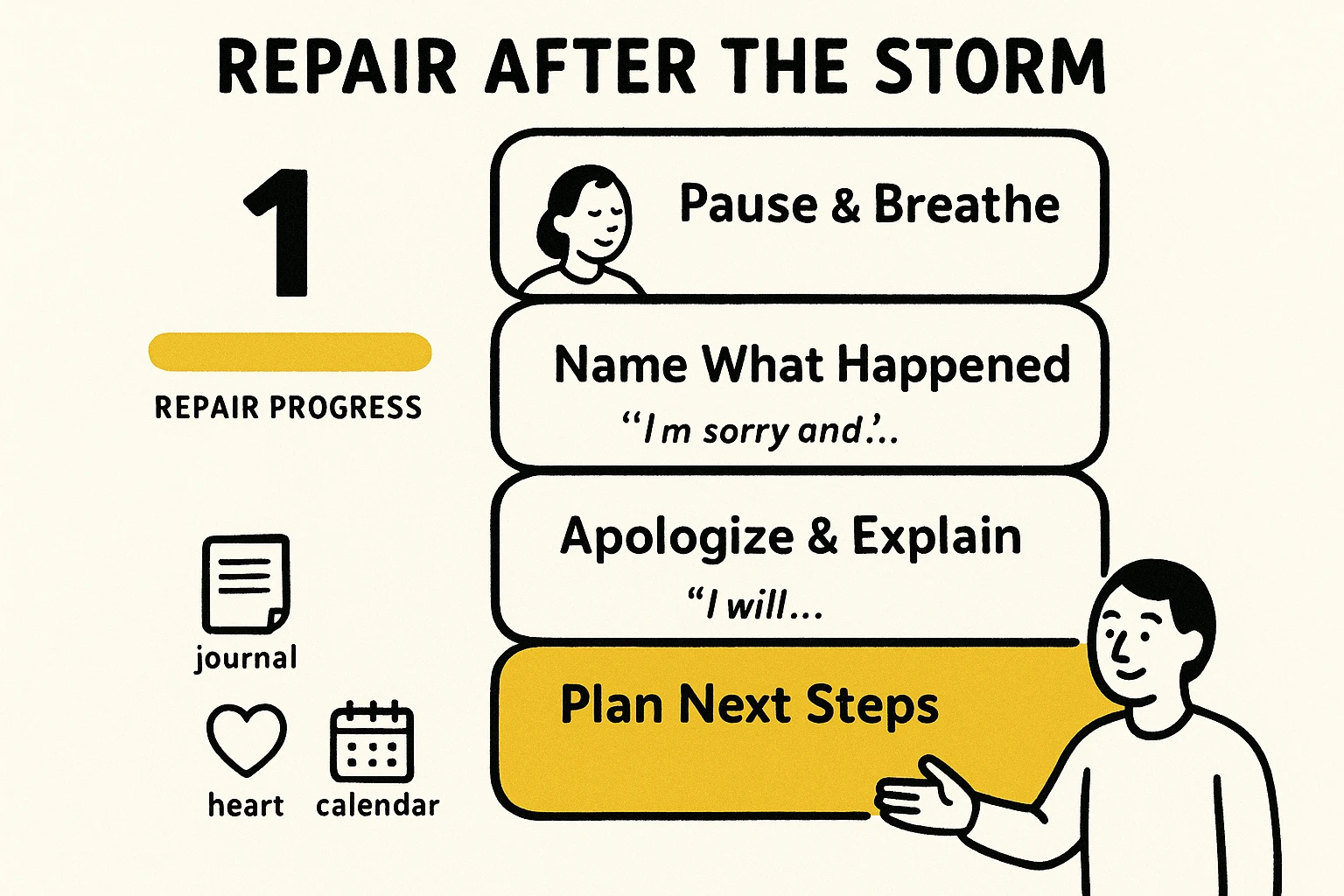
Practice Self-Compassion First: Before approaching anyone else, extend compassion to yourself. Remind yourself that emotional dysregulation is a symptom of ADHD, not a moral failing. You did not choose to dysregulate. Start by acknowledging the pain you also experienced.
Radical Self-Forgiveness: Dwelling on guilt keeps you stuck. Forgive yourself for moments where your ADHD got the better of you. This doesn't mean condoning harmful behavior, but acknowledging your neurotype's influence.
The Repair Conversation:
Rebuild Trust Through Action: Consistent effort over time, using your new self-advocacy skills, will naturally rebuild trust. Each successful pause, each clear boundary, each calm explanation, reinforces your commitment to managing your ADHD effectively.
You don't have to navigate this alone. Identifying and educating your allies is a powerful form of self-advocacy. This means proactively explaining your ADHD and its emotional impact to trusted individuals in your life.
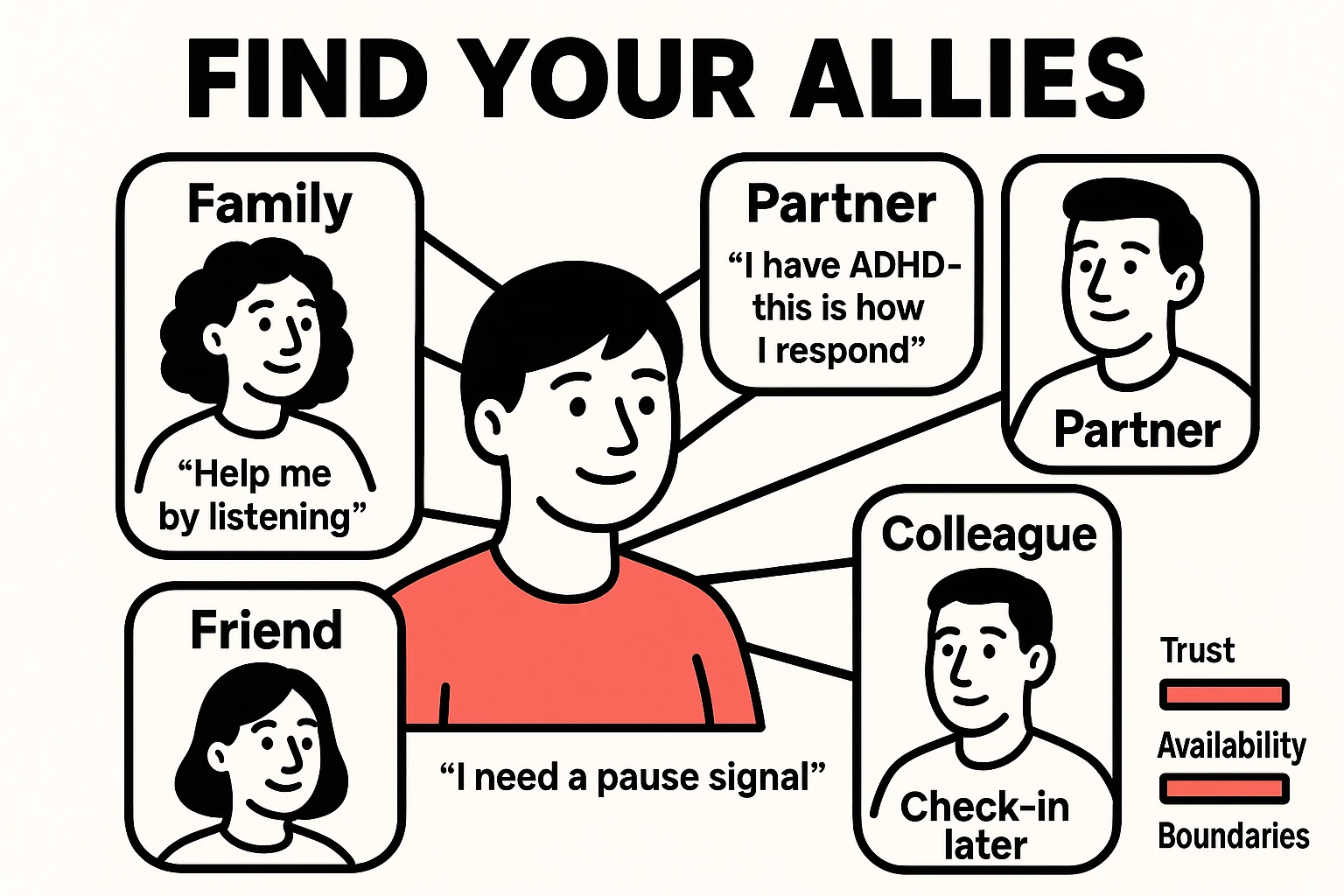
Think about the people in your life: partner, family members, close friends, maybe a trusted colleague. Who truly cares about you? Who has shown empathy in the past?
It's not about making them experts, but helping them understand your experience.
Finding allies isn't a one-time conversation. It's an ongoing dialogue of vulnerability, education, and practice.
Mastering emotional self-advocacy is a journey, not a destination. It requires consistent effort and a commitment to understanding your unique brain.
Navigating self-advocacy, especially in emotional moments, brings up a lot of questions. Let's tackle some common concerns.
A: This is a common and valid fear, often stemming from internalized shame about ADHD. There's a critical difference between explaining and excusing.
A: You cannot control how others react, but you can control how you present yourself and your needs. If someone is unwilling to understand after you've made a genuine effort to explain (using simple, relatable language and sharing resources), that reflects more on their capacity for empathy than on your validity. Focus your self-advocacy efforts on those who are receptive and supportive. Building your circle of allies means discerning who is willing to meet you halfway.
A: Guilt is a powerful, debilitating emotion. Our research shows this is a significant and often overlooked area (Content Gap Matrix).
A: Ideally, initial explanations and detailed conversations about your ADHD and emotional dysregulation are best had during a calm, low-stress time. This allows for open communication, questions, and a higher chance of information retention.
A: This is the executive function challenge of ADHD!
You've explored the landscape of emotional self-advocacy, equipped yourself with concrete strategies, and understood the critical importance of communicating your ADHD needs. This isn't just theory; it's a roadmap to empowered living.
Your journey to confident self-advocacy starts now. Embrace your beautifully chaotic mind, and learn to communicate its needs with clarity and courage.