ADHD Relationships Complete Guide to Emotional Intelligence
Learn how ADHD relationships reduce emotional dysregulation with regulation, communication, and boundary scripts. Try these steps to improve connection.
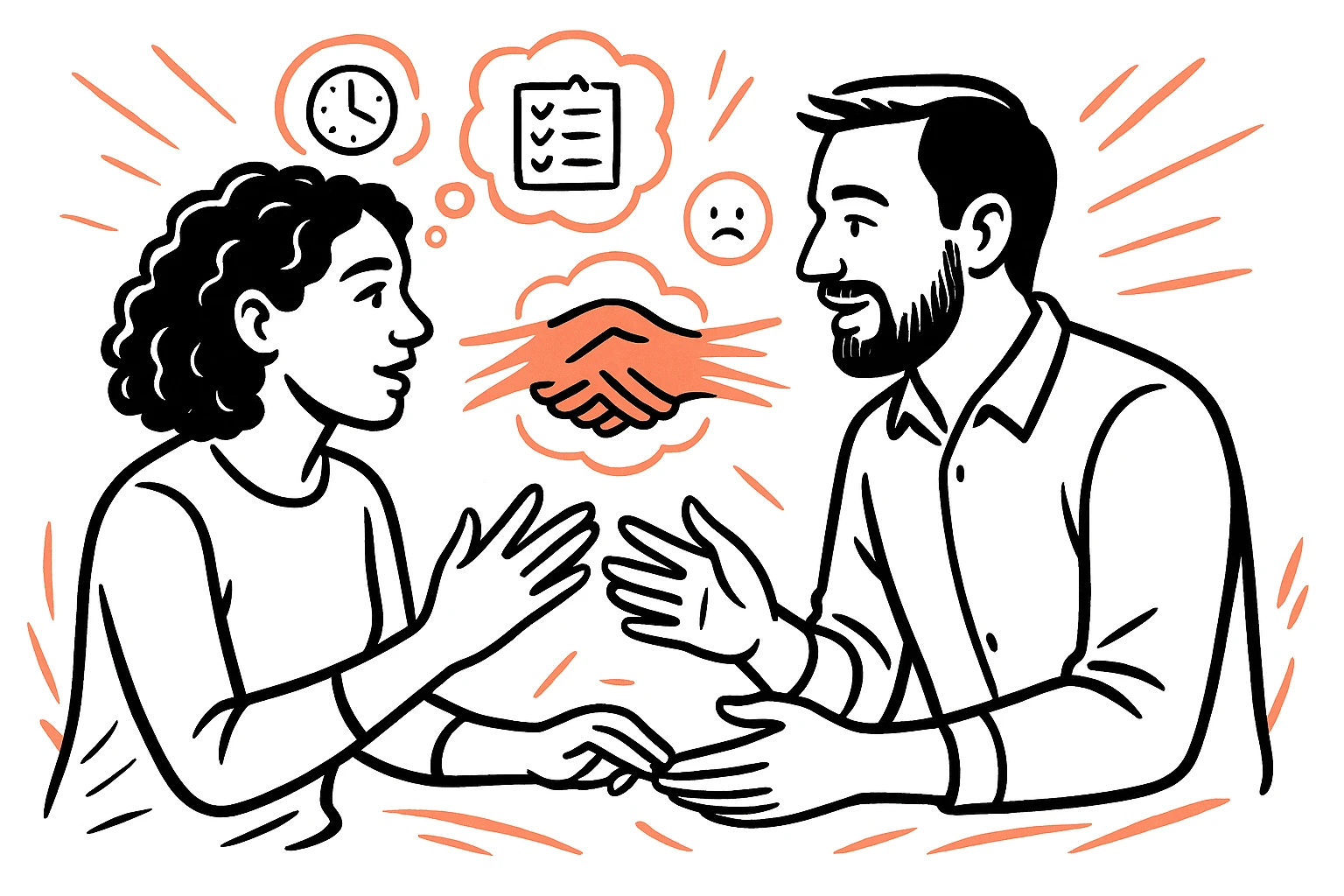
For couples facing the unique dynamics of ADHD, simply "trying harder" often isn't enough. You're past the initial search for what ADHD is and how it might impact relationships. Now, you're evaluating how to build genuinely emotionally intelligent connections, a path that requires understanding not just the symptoms, but the neurological underpinnings and practical strategies that work for both partners. This isn't about blaming; it's about building.
This guide is designed for individuals with ADHD and their partners who are actively seeking more than surface-level advice. It's for those ready to move beyond frustration and into a space of deeper connection, empathy, and mutual growth. We'll unpack the "why" behind challenging emotional interactions and equip you with a toolkit of evidence-based strategies to navigate conflict, communicate needs, and set boundaries effectively.
Relationships thrive on emotional connection, but for individuals with ADHD, emotional experiences can be uniquely intense and often misunderstood. This isn't a character flaw; it's a neurological reality. Roughly 34-70% of adults with ADHD experience significant emotional dysregulation (ED), making it a core, often overlooked, symptom. This heightened emotional reactivity is a leading cause of conflict and misunderstanding in relationships, often escalating to destructive patterns that mimic a "parent-child dynamic" if left unaddressed.
Emotional dysregulation in ADHD means experiencing emotions more intensely and having greater difficulty in managing those feelings once they arise. You might find yourselves on an emotional rollercoaster, where small triggers lead to disproportionately strong reactions. This can manifest as:
These patterns don't just impact the individual with ADHD. They ripple through the relationship, often leaving both partners feeling isolated and misunderstood.
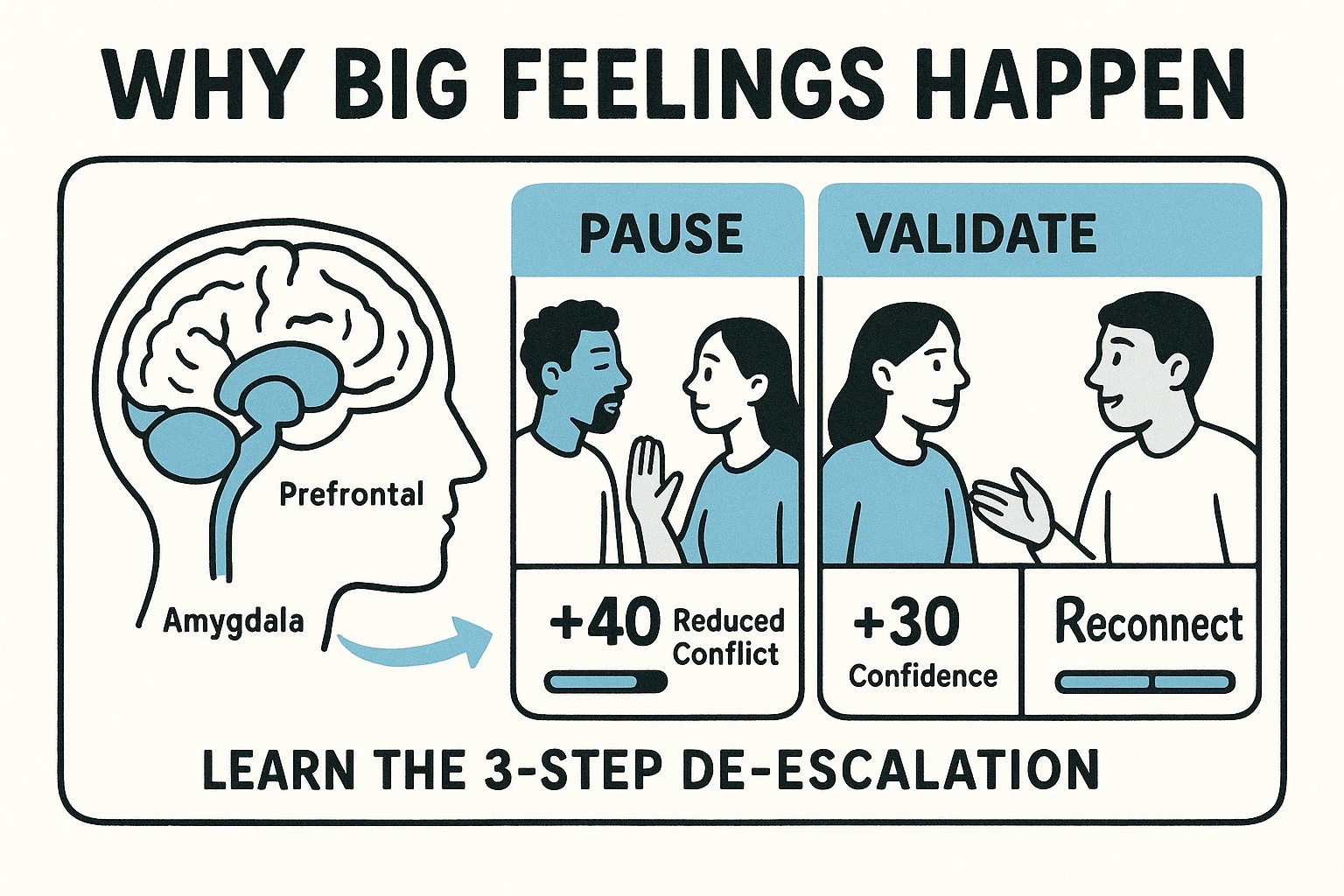
Understanding these patterns begins with the brain. Differences in specific brain regions explain much of this emotional intensity:
This neurological foundation means that "just calm down" isn't helpful advice. The brain of someone with ADHD is wired differently, making emotional regulation a more challenging, biologically-based task than for neurotypical individuals. However, this insight isn't an excuse; it's a roadmap for targeted strategies.
The impact of emotional dysregulation is rarely one-sided. Both partners experience distinct challenges:
Recognizing these intertwined experiences is the first step toward building empathy and breaking negative cycles. As the data shows, without effective interventions, these dynamics contribute to higher rates of relationship difficulties, including separation and divorce (up to 60%).
Emotional intelligence isn't a fixed trait; it's a set of skills that can be developed and refined, especially with strategies tailored for ADHD. This section provides actionable techniques for both partners to cultivate a more emotionally intelligent connection.
Before you can manage emotions, you need to recognize them.
Once emotions are identified, the next step is to manage them.
Empathy is the cornerstone of healthy relationships. It allows both partners to feel seen and heard.
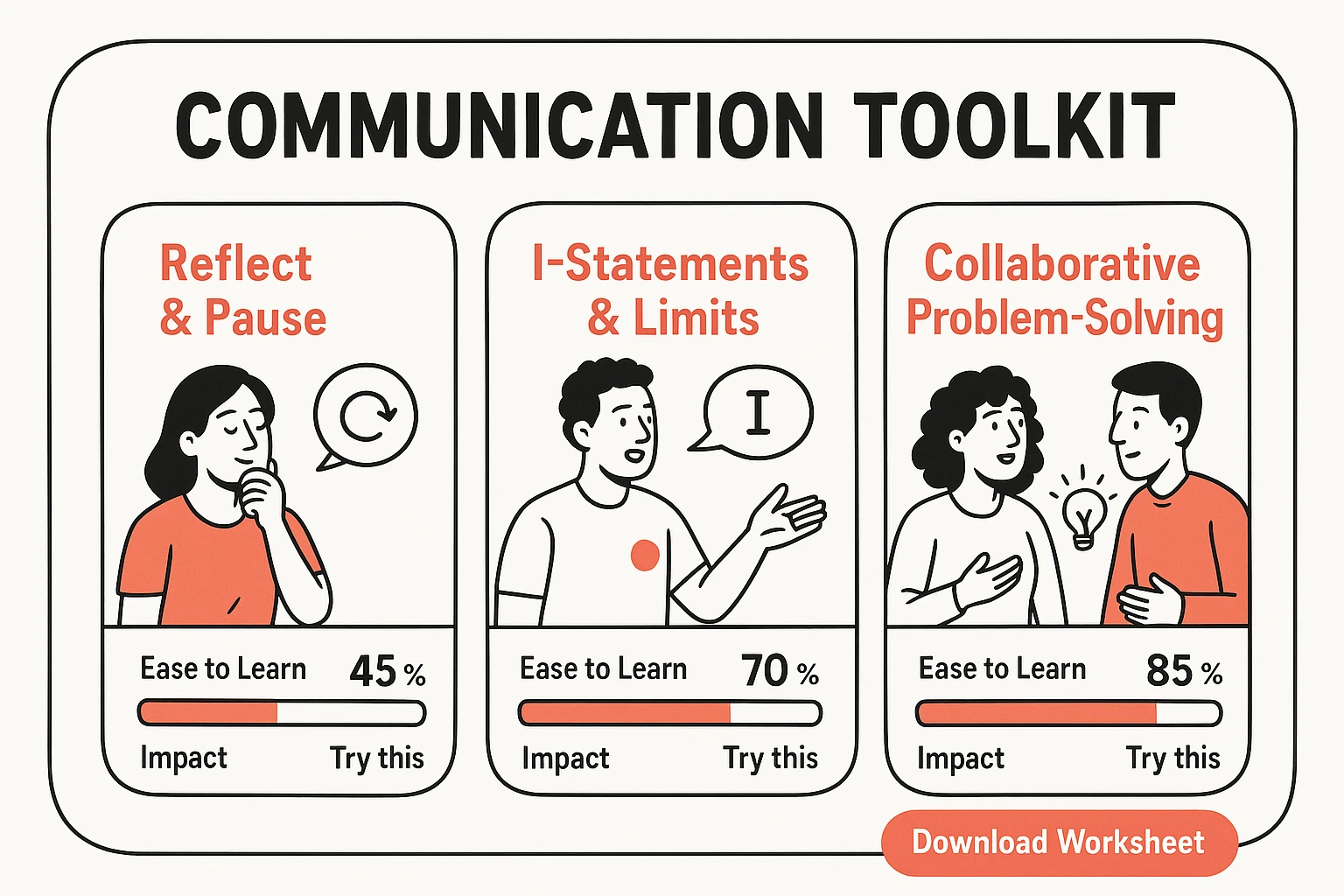
Effective communication is especially vital when one partner navigates ADHD.
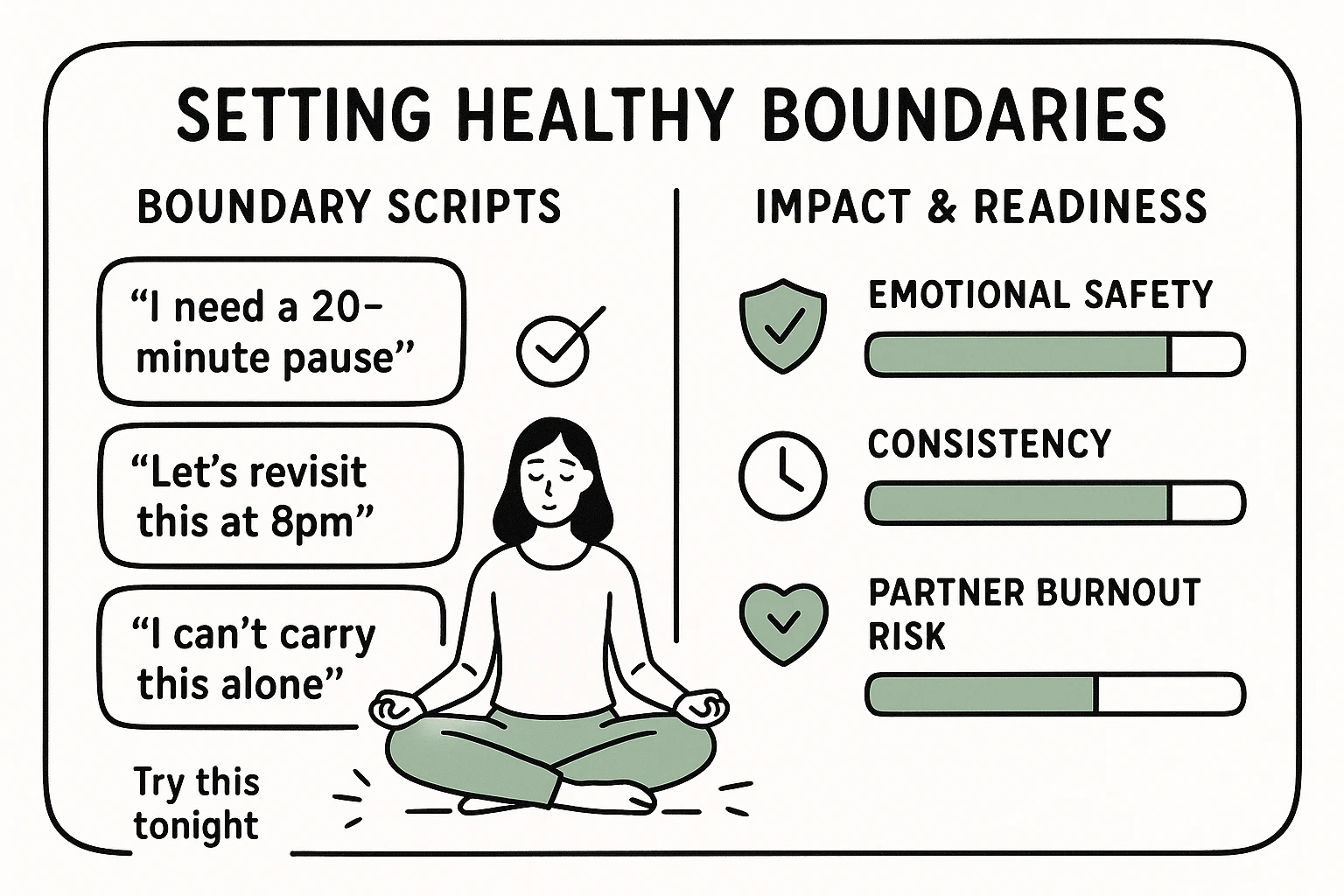
Boundaries are the invisible lines that protect individual well-being within a relationship. For ADHD couples, setting and respecting them can be particularly challenging, yet profoundly impactful.
Boundaries aren't just about physical space. They encompass:
To make boundaries stick and minimize conflict:
Practice makes perfect. Here are some scripts:
When boundaries are crossed, it's an opportunity for learning, not just conflict. For the partner whose boundary was violated, calmly reiterate the boundary and its importance. For the partner with ADHD, acknowledge the impact of the violation, and discuss proactive steps to prevent future occurrences, focusing on systems rather than just "trying harder."
Building emotionally intelligent connections in ADHD relationships is a Marathon, not a sprint. Both partners require support.
Couples therapy with an ADHD-informed therapist can be a game-changer. A skilled therapist can:
Therapy isn't a sign of failure; it's an investment in a stronger, healthier relationship.
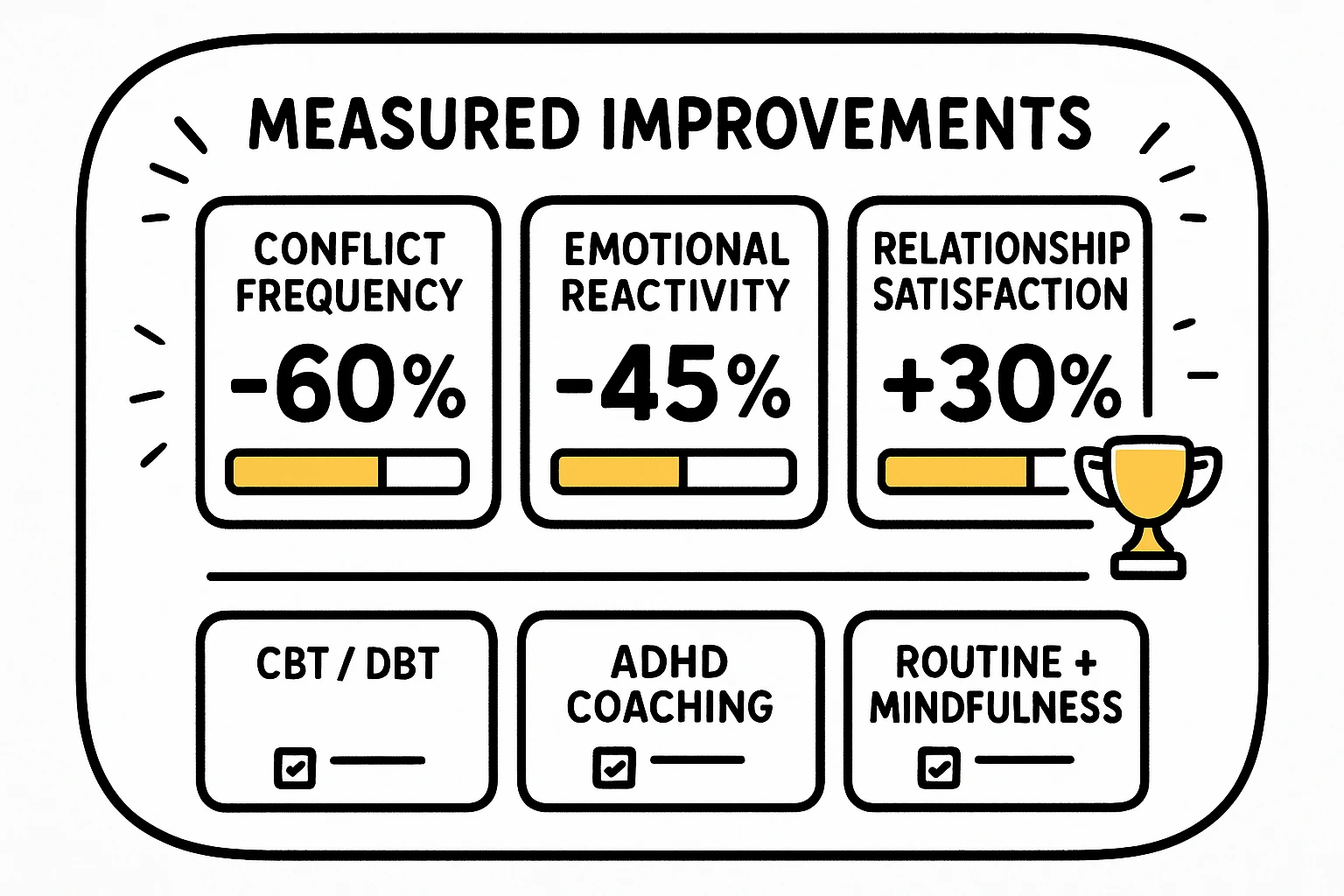
Navigating ADHD in relationships presents unique challenges, but it also offers a profound opportunity for growth, resilience, and deeper connection. By understanding the neurological "why" behind emotional dysregulation, equipping yourselves with targeted strategies for self-awareness and self-regulation, practicing empathy, and intentionally setting boundaries, you can transform chaotic moments into opportunities for connection.
This journey demands patience, persistent effort, and mutual commitment. It requires both partners to lean into discomfort, practice self-compassion, and remember that you are a team facing a shared challenge. The goal isn't to erase the impact of ADHD, but to build a relationship where emotional intelligence becomes the bedrock, allowing both individuals to thrive.
Take the insights from this guide and discuss them with your partner. Which strategies resonate most? Which ones feel most achievable to implement first? Consistency is more important than perfection. Start small, celebrate every win, and commit to continuous learning and growth together. For further exploration of managing ADHD together, you might find our resource on "Practical Strategies for ADHD Management at Home" useful.
A1: No, emotional dysregulation (ED) is not a separate diagnosis but is widely recognized as a core, often debilitating, aspect of ADHD for many individuals. While not explicitly listed in diagnostic criteria like the DSM-5, research strongly links ED to ADHD due to shared neurological underpinnings. It's often considered a primary symptom that contributes significantly to functional impairment.
A2: It can be challenging to differentiate, especially without a clinical background. However, if emotional intensity, rapid mood shifts, and difficulty calming down are chronic, disproportionate to the trigger, and have been present for much of their life (not just recently), ADHD-related emotional dysregulation is a strong possibility. These issues often co-occur with other ADHD symptoms like inattention, hyperactivity, and impulsivity. A professional ADHD evaluation can provide clarity.
A3: This can be a significant hurdle. Approaching the conversation with empathy and curiosity, rather than accusation, is crucial. Frame it around the impact on the relationship and your feelings, rather than a judgment of their character. You might say, "When communication gets very intense, I find myself pulling away, and I miss our connection. I'm wondering if we could explore ways to handle these moments more smoothly together?" Suggesting resources that explain the neurological basis of ADHD and ED can also help depersonalize the issue. Professional guidance through an ADHD-informed therapist can be invaluable here.
A4: Acknowledging and validating their burnout is paramount. For the ADHD partner, actively listen to their feelings without defensiveness. The first step should be for the non-ADHD partner to prioritize deliberate self-care activities and to seek external support (e.g., support groups, individual therapy) to process their feelings. For the ADHD partner, taking concrete, visible steps to reduce their partner's burden, even small ones, can make a huge difference. This often involves engaging more actively with their own ADHD management (e.g., medication, coaching) and taking ownership of household tasks or administrative responsibilities.
A5: Absolutely. While the baseline might be different, emotional intelligence is a set of skills that can be developed and strengthened. Your brain's neuroplasticity means it can form new connections and adapt. Strategies like mindfulness, practicing self-regulation techniques (e.g., R.A.I.N. Method), direct communication practice, and consistent feedback can significantly improve your ability to recognize, understand, and manage emotions—both your own and those of others. It requires intentional effort and often benefits greatly from ADHD coaching or therapy that provides structured skill-building.