ADHD Mental Internet Guide to Navigating Rabbit Holes
Explore the ADHD mental internet, how hyper-connections and rabbit holes drive overwhelm, and learn strategies to manage overload and harness creativity.
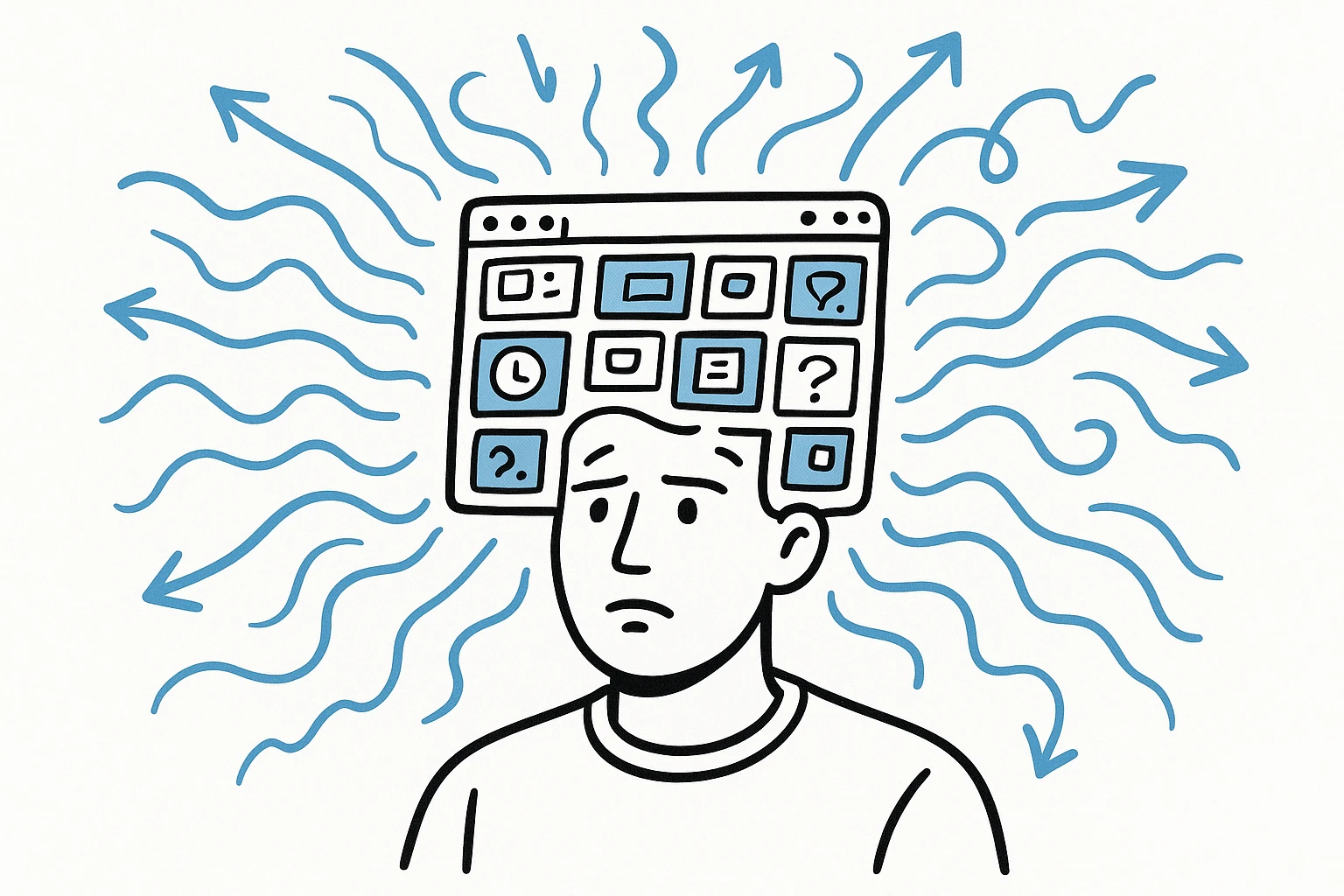
Ever feel like your brain runs on a network of a thousand interconnected thoughts, jumping from one idea to the next at lightning speed? For many with ADHD, this isn't just a fleeting feeling; it's the default operating system. Welcome to the ADHD 'Mental Internet' – a beautifully chaotic, endlessly fascinating, and sometimes overwhelming internal world where every thought is a new tab, every memory a link, and rabbit holes are just part of the navigation.
You're trying to make sense of your experiences, weighing up different perspectives on what it truly means to live with an ADHD brain. Is this frantic mental pace a hindrance to be managed, or a unique capacity to be understood and leveraged? This deep dive will offer you a trusted framework, blending the latest neuroscience with lived experience, to help you evaluate your own cognitive landscape. We'll explore the nuances of rapid associative thinking, constant information processing, and the "47 open tabs" phenomenon, helping you differentiate between common experiences and powerful strengths.
The metaphor of a "mental internet" isn't just poetic; it's rooted in the very architecture of the ADHD brain. Imagine a superhighway of thoughts, constantly in motion, where ideas, memories, and sensory inputs cross-pollinate with remarkable speed. This rapid associative thinking is a hallmark of ADHD cognition, but what drives it?
At its core, much of this experience can be traced to the Default Mode Network (DMN). In neurotypical brains, the DMN is active during rest and shifts activity when a focused task begins. However, research suggests that in ADHD, the DMN remains unusually active even during focused tasks. This persistent activity contributes to constant mind-wandering and those rapid, associative thought patterns that feel like an endless scroll of information (Perplexity, PMC: "Mind wandering perspective on attention-deficit/hyperactivity disorder"). It’s like an internal browser constantly refreshing pages in the background.
Then there's the role of dopamine dysregulation. Dopamine, a key neurotransmitter, influences how the brain processes information, particularly in areas related to reward and motivation. Deficits in the dopamine reward pathway can alter how the ADHD brain filters and prioritizes information. This contributes to a non-sequential processing style and a prolific generation of ideas (Perplexity, ADDitude). Think of it as a search engine that retrieves a vast, unfiltered array of results, rather than a curated list.
Furthermore, neuroimaging studies indicate that individuals with ADHD often exhibit stronger connectivity between subcortical areas—regions involved in learning, reward, and emotion—and frontal regions responsible for attention and impulse control (NIH). This altered connectivity makes spontaneous, associative thinking a persistent and often overwhelming feature of the ADHD experience. It’s this intricate neurological dance that gives rise to the unique 'mental internet' you're likely evaluating in yourself or someone you know.
If your brain feels like "47 tabs open at once," you're not alone. This phenomenon of constant cognitive pop-ups and the feeling of something always "running in the background" is a deeply familiar experience for many with ADHD. Studies show that cognitive overload, mental fatigue, and feelings of overwhelm are common, clinically significant features of ADHD, directly linked to executive dysfunction and sensory overload.
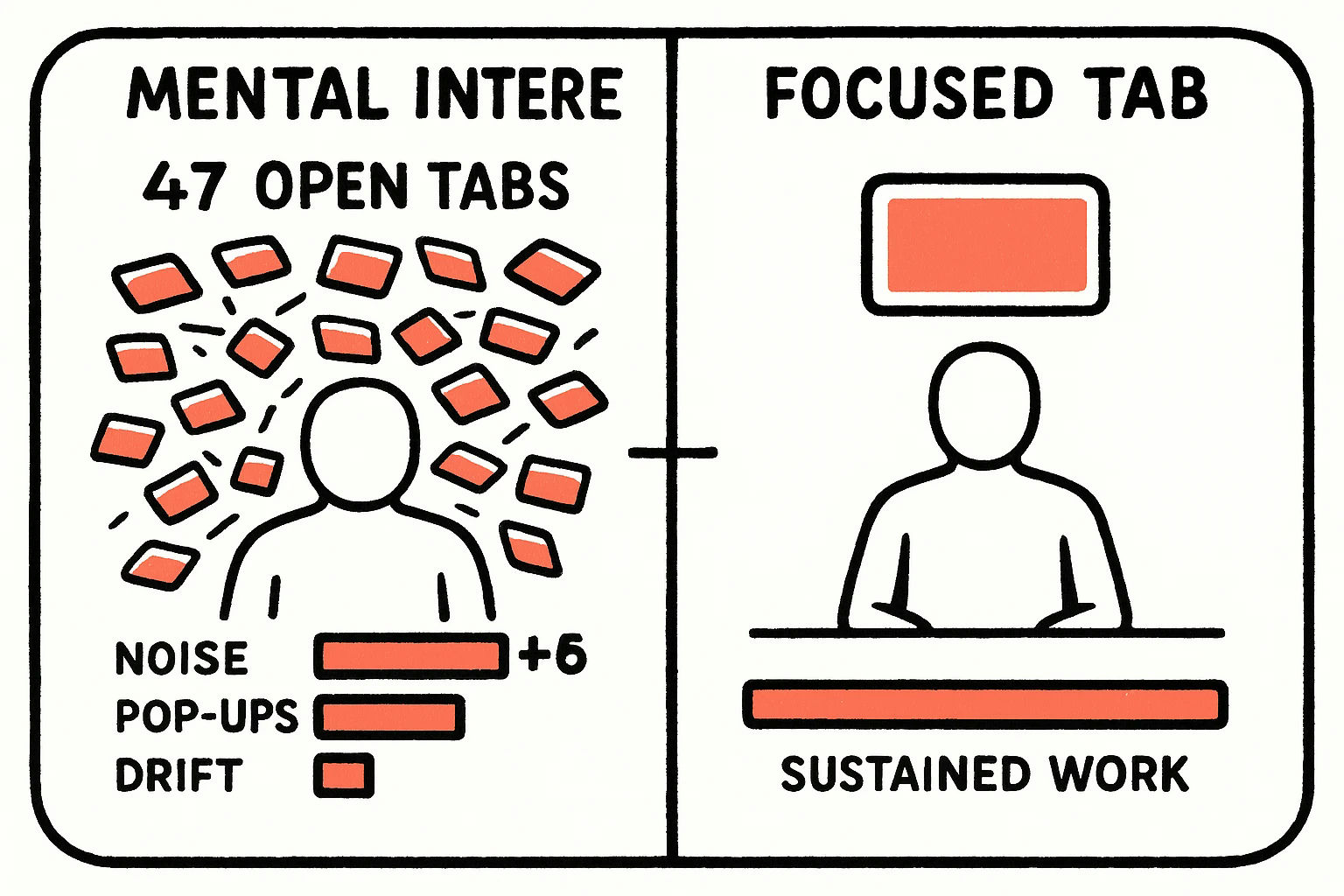
The "47 open tabs" feeling isn't merely about having many thoughts; it's about the processing cost and switching costs involved. Each 'tab' represents an unfinished thought, a pending task, a sensory input, or an idea taking up valuable cognitive RAM. Moving between these tabs drains mental energy, making it difficult to sustain focus on a single task. This constant internal chatter means your brain is always working overtime, even when you're trying to wind down. Racing thoughts, especially at night, are a common symptom as the mental internet continues its endless surfing without a clear "off" button (ADDitude).
This constant processing can also lead to:
Understanding these aspects of your "mental internet" is the first step toward better management. It’s not a character flaw; it’s a direct consequence of how your brain's network is wired.
Managing the constant stream of information and spontaneous "pop-ups" on your mental internet requires intentional strategies – your own internal firewall and intelligent ad blocker. While the sheer volume can feel overwhelming, there are research-informed methods to regain a sense of control without shutting down creativity.

Many of the strategies for managing cognitive pop-ups and intrusive thoughts focus on externalizing internal processes, effectively "closing" or "saving" those open tabs for later, rather than trying to force them shut while still in your head.
These strategies aren't about silencing your mental internet entirely, but rather about installing tools and protocols that help you navigate it more effectively, reducing overwhelm and creating space for focused work and rest.
While the "mental internet" can present challenges, it also houses a powerful, often underestimated superpower: non-linear problem-solving and boundless creativity. Individuals with ADHD are exceptionally good at divergent thinking – the ability to generate many new and original ideas from a single starting point, often overcoming conventional constraints (Scientific American, HealthyPlace, Numo ADHD App). This is precisely what your hyper-connected brain excels at.
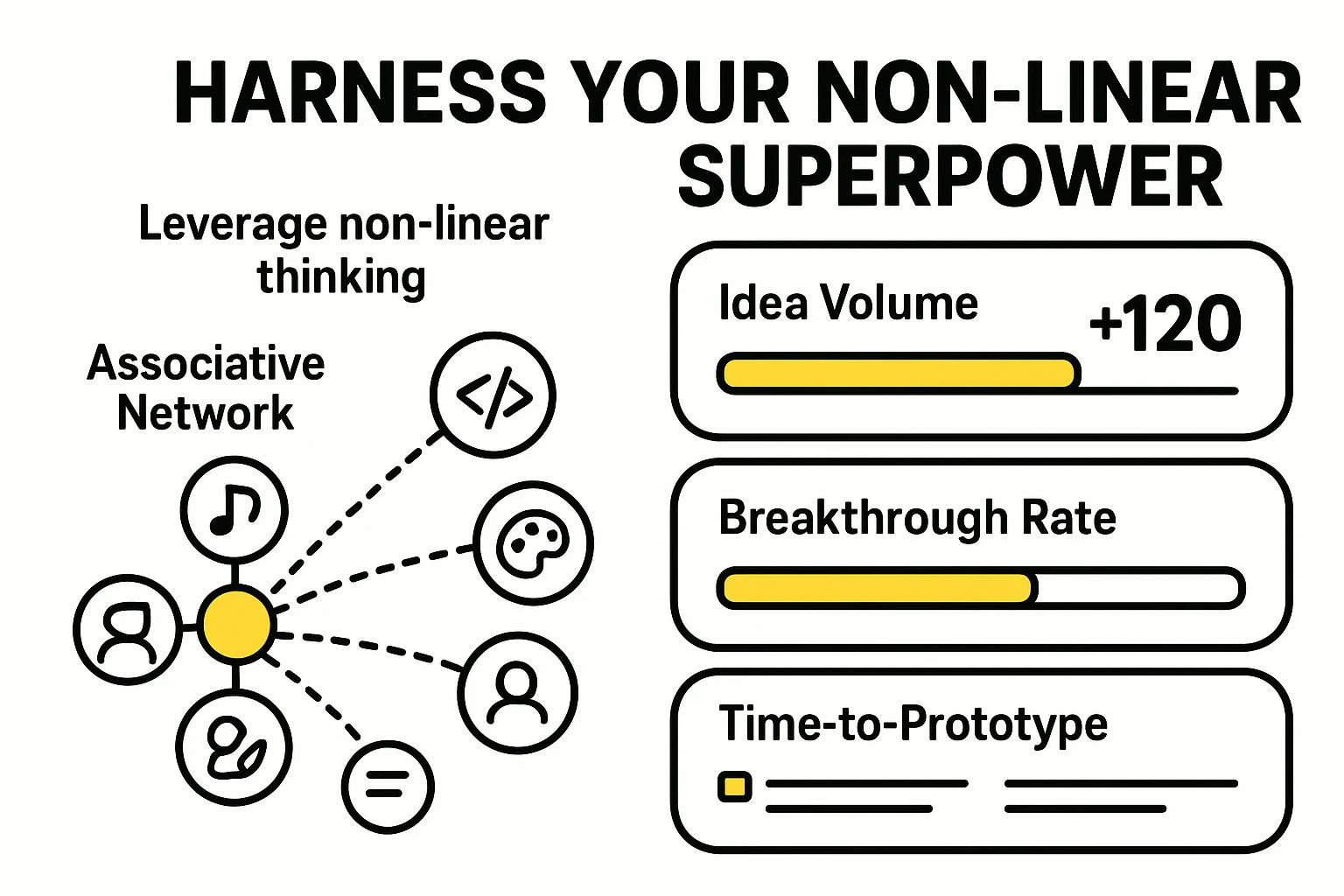
Think of it this way: a neurotypical brain might search for information in a linear path, similar to navigating a library by the Dewey Decimal System. An ADHD brain, however, instantly pulls up every loosely related article from anywhere on the internet, creating unexpected and novel connections.
Here’s how to harness this strength:
Acknowledging and nurturing this capacity for non-linear problem-solving moves beyond just coping with ADHD traits; it empowers you to leverage them as a distinct advantage.
The ADHD mental internet is a relentless idea generator. This can be exhilarating, a constant source of inspiration and innovation. But it can also be profoundly frustrating, leading to a landscape littered with unfinished projects and fleeting passions. Understanding this duality is key to harnessing the tsunami of thoughts your brain produces.
The joy comes from the sheer volume and originality. Your brain’s capacity for divergent thinking means you’re naturally good at seeing possibilities where others see limitations. This spark fuels creativity and entrepreneurship, pushing boundaries and challenging norms (Numo ADHD App, Scientific American).
The frustration stems from the sheer overwhelm and the challenge of execution. A constant influx of ideas, often accompanied by hyperfocus on the newest, most exciting one, can lead to:
To effectively manage this dichotomy, you need strategies for capturing and prioritizing your ideas:
By embracing both the prolific nature and the potential for overwhelm, you can transform your internal internet from a source of frustration into a powerful engine for innovation and progress. Your unique cognitive architecture is a force to be reckoned with, and with the right tools, it can be a wellspring of profound insight and creative output.
You've journeyed through the intricate landscape of the ADHD 'Mental Internet,' exploring its neurological underpinnings, its challenges, and its remarkable strengths. What you're evaluating isn't just a collection of symptoms or a set of deficits; it's a distinct operating system, a powerful and complex cognitive design that processes the world differently.
The '47 open tabs' phenomenon, the rapid associative leaps, the constant sensory and intellectual cross-pollination – these are not simply burdens. They are facets of a brain wired for divergent thinking, novel connections, and innovative problem-solving. While the potential for cognitive overwhelm is real and demands tailored strategies, the inherent capacity for creativity and deep insight is a profound advantage.
This journey of understanding is about more than just managing symptoms; it’s about self-acceptance and empowerment. It’s about learning to navigate your internal network with intention, installing effective "firewalls" against overwhelm, and strategically leveraging your "hyper-connections" to unlock unparalleled creativity. You're not broken; your brain simply operates with a unique, high-bandwidth connection to the world.
A: While "mental internet" is a distinctive metaphor, the underlying experiences it describes – rapid associative thinking, racing thoughts, and feeling like you have "too many tabs open" – are widely reported and validated by individuals with ADHD and recognized in clinical literature related to executive dysfunction and information overload (ADDA, ADDitude, Reddit discussions).
A: The struggle to filter information in ADHD is linked to dopamine dysregulation and differences in brain networks like the Default Mode Network. These neurological factors mean the brain has difficulty prioritizing stimuli, leading to every piece of incoming information (internal or external) feeling equally salient. It's not a lack of effort, but a difference in neurological processing (Perplexity, NIH).
A: While divergent, non-linear thinking is a strong, often innate trait in ADHD brains, particularly linked to their unique cognitive architecture, aspects of it can be cultivated and enhanced in anyone. However, individuals with ADHD often have a natural predisposition and an advantage in this area due to their brain's default operating mode (Scientific American, Numo ADHD App).
A: This is a key distinction. Creative non-linear thinking generates novel ideas and insights, often connecting disparate concepts in brilliant ways. Disorganization, on the other hand, is the impact of unmanaged non-linear thinking on productivity and daily functioning. The challenge is not the thinking itself, but the lack of systems to capture, prioritize, and execute those ideas effectively. Our strategies for managing the "tsunami of thoughts" aim to bridge this gap.
A: Absolutely. Fields that highly value innovation, problem-solving, and creative thinking are excellent fits. This includes entrepreneurship, research and development, design, the arts, technology, and any role requiring 'out-of-the-box' thinking or rapid ideation (Scientific American, HealthyPlace). Understanding and leveraging your non-linear thinking can be a major career asset.
A: There isn't a "cure" for the fundamental way an ADHD brain processes information, as it's a neurodevelopmental difference. However, effective strategies (like those discussed: brain dumping, active mindfulness, structured breaks) and, for some, medication, can significantly reduce the distress and overwhelm associated with the "47 open tabs" feeling. The goal is to manage, not eradicate, your unique cognitive style (ADDitude, Talkiatry).