ADHD Executive Functions Complete Guide to Impact Today
Learn how ADHD reshapes executive functions, from working memory to emotional regulation, and find practical strategies plus a self-assessment to boost focus.
You've probably felt it – that swirling chaos, the brilliant idea that slips away, the deadline that looms large but feels impossibly far. Is it just everyday forgetfulness, or something more fundamental about how your brain works? As you evaluate your experiences and seek to understand the deeper impact of ADHD, you're not just looking for a diagnosis; you're looking for answers to the "why" behind your daily challenges.
For many with ADHD, the core explanation lies in executive functions. These aren't just minor quirks; they're the brain's command center, orchestrating everything from planning your day to managing your emotions. While most resources might scratch the surface, we're diving deep into the fascinating, sometimes frustrating, world of how ADHD uniquely interacts with these critical cognitive processes. Our goal is to equip you with authoritative, research-backed insights and practical strategies, transforming confusion into confident clarity.
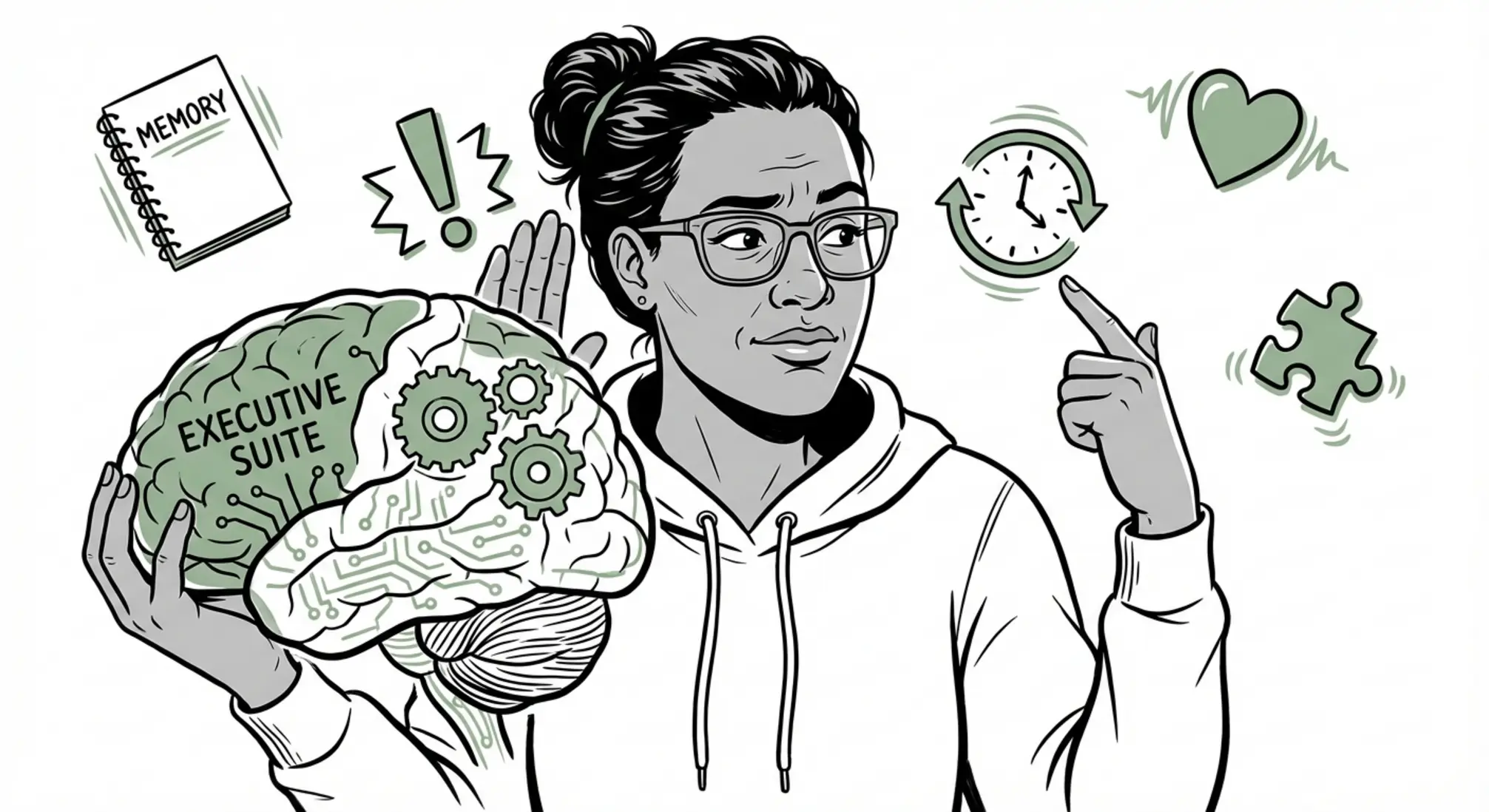
Executive functions are a set of mental skills that include working memory, flexible thinking, and self-control. They're what help us manage ourselves and our resources to achieve goals. In the ADHD brain, this "executive suite" often operates differently, leading to widespread impacts on daily life. About 40-60% of adults with ADHD experience substantial challenges in executive functions, profoundly influencing their personal and professional worlds. To truly understand, we need to break down each component.

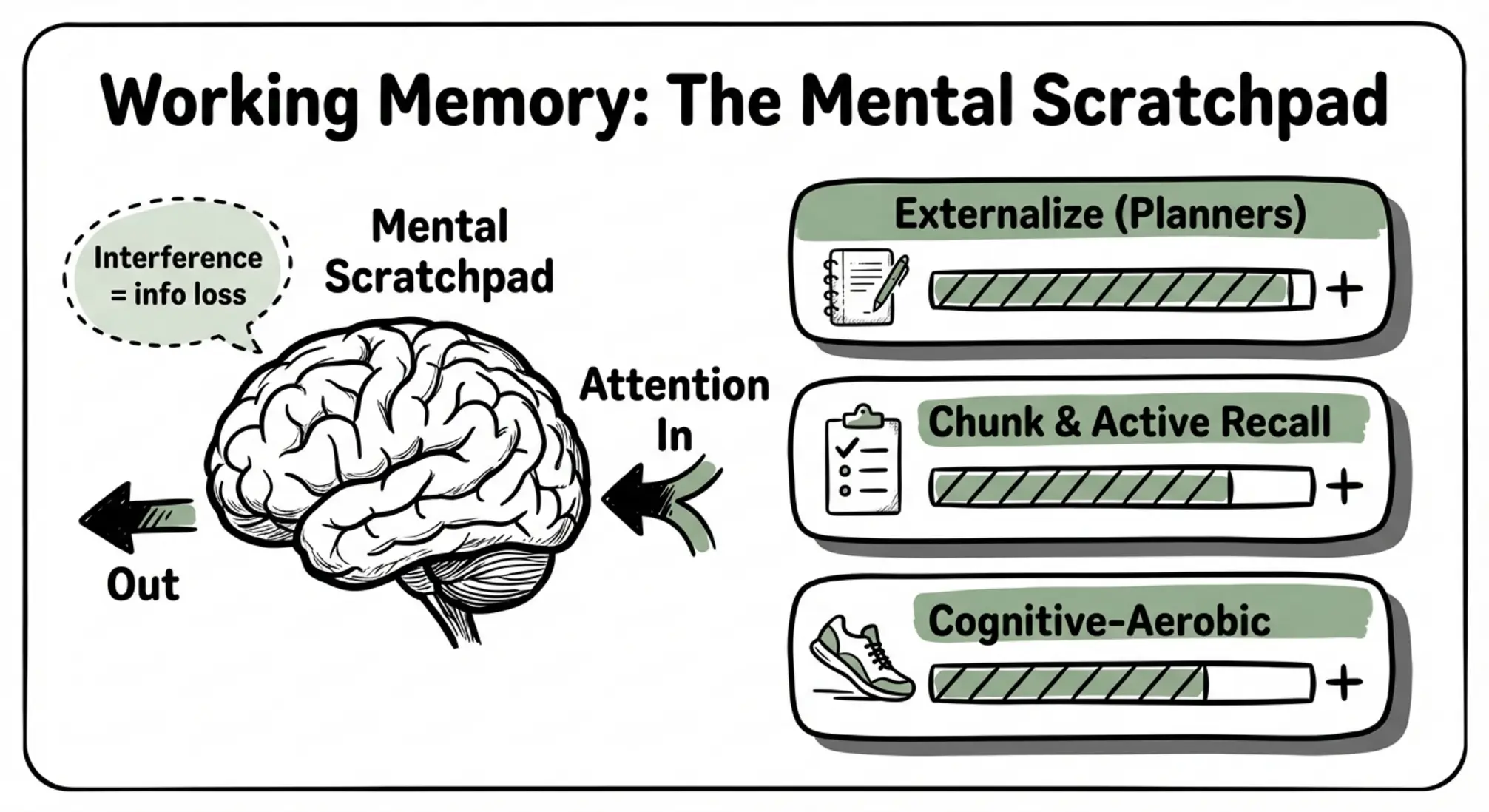
Think of working memory as your brain's temporary notepad, where you hold and manipulate information. It’s crucial for everything from remembering a phone number you just heard to following multi-step instructions. For many with ADHD, this mental scratchpad is notoriously unreliable. Why is my memory so bad with ADHD, you might wonder? It's not necessarily about long-term storage, but about information constantly getting "kicked out."
This isn't just about general forgetfulness. Research suggests that attention interference plays a significant role. If your attention shifts, even momentarily, the information in your working memory can be lost. This explains why you might forget what you were going to say mid-sentence, or lose your keys despite just holding them. Approximately 75-85% of youth with ADHD show deficits in working memory, a challenge that often persists into adulthood.
To manage memory recall issues with ADHD, externalization is key. Don't rely solely on your internal notepad. Utilize digital planners, physical notebooks, and voice memos. Chunking information into smaller, digestible parts can also aid retention, as can active recall techniques where you deliberately try to remember information. Emerging research also highlights the role of physical activity, especially cognitive-aerobic exercise, in improving working memory in children with ADHD, offering a promising avenue for adults as well.
Inhibition is the ability to stop an automatic response or an urge. It's what allows you to pause before speaking, resist distraction, or delay gratification. Impulsivity, often seen as a hallmark of ADHD, is a direct result of impaired inhibitory control. But it's far more nuanced than simply being "hyper." About 21-46% of individuals with ADHD struggle with inhibitory control.
Impulsivity can manifest as:
Psychologist Dr. Russell Barkley proposed the "30% executive function delay rule," suggesting that individuals with ADHD typically function at about 30% below their chronological age in terms of executive control. This isn't a deficit of intelligence but a developmental delay in the cognitive mechanisms that regulate behavior. This understanding fosters self-compassion, recognizing that overcoming planning issues with ADHD isn't a matter of willpower alone.
To "tame" impulsivity, strategies like the "24-hour rule" for major decisions, pre-commitment strategies (e.g., leaving credit cards at home for impulse purchases), and mindfulness practices to create a pause before reacting can be highly effective.
Planning is the ability to set goals and devise steps to achieve them. Organization involves arranging tasks and materials systematically. For many with ADHD, starting tasks and prioritizing can feel like navigating a dense fog. This is often linked to "time blindness," where the future feels distant and abstract, making long-term planning incredibly difficult. The "now" vs. "not now" brain struggles to connect current actions with future consequences.
One of the significant contributors to planning issues with ADHD is the "future self disconnect." When planning for tomorrow, it often feels like you're planning for a hypothetical person, not your actual self who will face those tasks. This makes it hard to allocate resources or anticipate obstacles.
Effective strategies for life planning with ADHD involve externalizing your plans, breaking down large tasks into smaller, manageable steps, and using visual cues. Backward planning (starting from the deadline and working backward) can make the future feel more concrete. The "just 10 minutes" rule (or 20 minutes for some), where you commit to working on a task for a short, finite period, can help overcome initiation paralysis. Body doubling—working alongside someone else, even virtually—can also provide an external push for task initiation and focus.
Emotional dysregulation (ED) refers to difficulty managing the intensity and duration of emotional responses. It's a significant, yet often overlooked, aspect of ADHD, affecting an estimated 34-70% of adults with ADHD and about half of children. This isn't just about moodiness; it stems from impaired top-down executive control, directly impacting the frontal-limbic circuit—the part of the brain responsible for processing emotions.
Adults with ADHD are more likely to use maladaptive emotion regulation strategies, such as avoidance or rumination. This can lead to increased irritability, quick temper, anxiety, and profound frustration. A specific and particularly painful manifestation is Rejection Sensitive Dysphoria (RSD), an extreme emotional sensitivity and pain triggered by the perception (real or imagined) of rejection, criticism, or failure. RSD can be debilitating, causing individuals to avoid situations where they might face criticism, leading to isolation.
The science behind this involves a nervous system that can be hyper-reactive, meaning minor annoyances can trigger an intense "fight or flight" response. Understanding these emotional dynamics is crucial for self-compassion and effective coping.

Strategies for navigating emotional storms include principles from Cognitive Behavioral Therapy (CBT) and Dialectical Behavior Therapy (DBT), which focus on identifying triggers, challenging unhelpful thought patterns, and developing distress tolerance skills. Breathwork, creating "decompression spaces," and the act of externalizing your feelings by journaling or talking to a trusted person can also be invaluable.
While working memory, inhibition, and planning get significant attention, there are other cognitive symptoms of ADHD that are frequently ignored, even though they represent the subtle, yet deeply impactful, internal experience of living with ADHD:
These internal experiences are rarely discussed in mainstream ADHD resources, yet they are profoundly validating for those who live them. Acknowledging these nuances can bridge the gap for those who feel their ADHD experience doesn't quite fit the typical descriptions of trouble focusing but not ADHD.
Understanding the "why" is the first step; the next is applying the "how." Here are practical, research-informed strategies to support your unique cognitive landscape:
Understanding the intricate ways ADHD impacts executive functions offers immense validation and empowerment. It shifts the blame from character flaws to neurological differences, paving the way for targeted strategies and self-compassion. This detailed breakdown of cognitive symptoms of ADHD, from working memory to emotional dysregulation, is designed to give you the clarity you need to move forward.
If you're seeking to understand the unique "mental internet" that is your ADHD brain more deeply, or explore which executive functions are most impacting your daily life, we're here to guide you.
Based on what we've discussed, which of these areas resonates most with your daily struggles? Pinpointing your primary challenge can help you prioritize where to focus your energy and what strategies to try first.
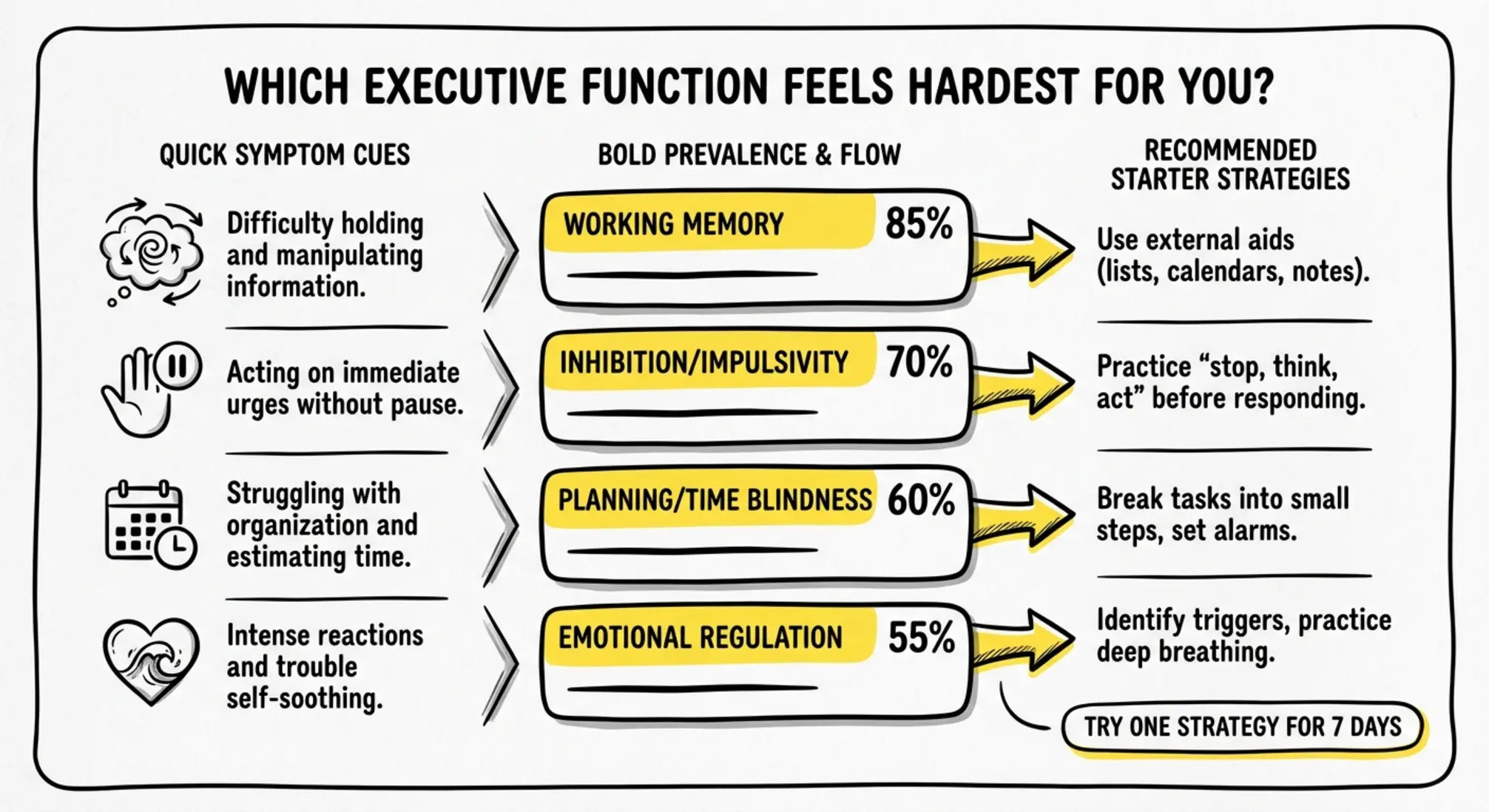
Acknowledge your challenge, pick one strategy from the relevant section, and commit to trying it for one week. Small, consistent steps build powerful momentum.
Executive dysfunction is a core component of ADHD, but they are not identical. ADHD is a neurodevelopmental disorder characterized by persistent patterns of inattention and/or hyperactivity-impulsivity. Executive dysfunction refers specifically to the difficulties with the brain's "managerial" functions, which are significantly impacted in ADHD. Approximately 89% of youth with ADHD show deficits in at least one executive function.
Yes, with targeted strategies, therapy, coaching, and sometimes medication, adults can significantly improve their executive function skills. While the underlying neurological differences remain, the brain is highly adaptable, and new pathways and coping mechanisms can be developed. Consistent application of strategies, much like building a muscle, strengthens these areas.
Emotional dysregulation (ED) in ADHD is characterized by intense, rapid emotional responses that are difficult to manage, often tied to challenges in the brain's frontal-limbic circuit. While it can mimic aspects of mood disorders like Bipolar Disorder or Borderline Personality Disorder, ED in ADHD is primarily linked to impaired executive control over emotional responses, rather than a primary mood disturbance. It's crucial to differentiate these for accurate treatment.
Time blindness is a pervasive issue for many with ADHD, where time feels ambiguous and often perceived as "now" or "not now." This is largely due to challenges in working memory and the brain's ability to accurately estimate and track the passage of time. Planning for a future event often feels like planning for a hypothetical "future self" rather than your present self, making it less motivating and harder to engage with. Externalizing time with visual timers and breaking tasks into very small, defined segments can help bridge this gap.
Beyond traditional medication and behavioral therapies, there's growing interest in interventions like cognitive training (though results can be mixed), mindfulness practices, and lifestyle modifications. For instance, meta-analyses suggest that physical activity, particularly cognitive-aerobic exercise, shows promise in improving working memory in those with ADHD. Researchers are also exploring novel neurofeedback techniques and the use of technology to support executive function externally. These are not cures, but complementary approaches to improve the life planning of those with ADHD.