Complete ADHD Emotional Regulation Guide for Inner Peace
Manage ADHD emotional dysregulation and RSD with science-backed, practical tools. Learn ADHD-friendly mindfulness, sensory regulation, and authentic coping.
You're navigating the complex world of ADHD, seeking not just management but a life that feels genuinely yours. You’ve likely encountered countless articles offering surface-level tips or clinical definitions. But what about the emotional turmoil that often accompanies ADHD—the intense highs, the crushing lows, the gnawing anxiety, and the sting of perceived rejection? How do you find calm and authenticity without feeling like you have to mask your true self?
This isn’t about fitting a neurotypical mold. It’s about building a robust emotional toolkit specifically designed for your unique brain, allowing you to not just survive, but thrive, in your authentic ADHD life. We’ve meticulously gathered insights and strategies, blending scientific understanding with the profound wisdom of lived experience, to help you make informed decisions about your emotional well-being.
For many adults with ADHD, emotional intensity isn't a side effect; it's a central feature. While not officially part of the diagnostic criteria until recently discussed in research, emotional dysregulation (ED) affects a staggering 30-70% of adults with ADHD, according to research cited in PLOS ONE and Nature. This isn't a character flaw; it's a neurological reality, rooted in differences in dopamine regulation and executive function in the prefrontal cortex.
This dysregulation manifests in various ways: sudden mood shifts, difficulty unwinding, and an often-overwhelming response to triggers. One of the most common, and acutely painful, manifestations is Rejection Sensitive Dysphoria (RSD). If you’ve experienced an "unbearable pain" from perceived criticism, teasing, or a withdrawal of approval, you're not alone. Approximately 99% of adults with ADHD report experiencing symptoms of RSD, as highlighted by Neurodivergent Insights and ADDitude Magazine. It's a profound, physiological reaction that goes far beyond typical emotional responses. Distinguishing RSD from general anxiety or depression lies in its sudden onset, its intense, disproportionate reaction to perceived rejection, and its rapid dissipation once reassurance is received.
The interplay between ADHD, anxiety, and intrusive thoughts further complicates this emotional landscape. These conditions often co-occur, creating a stressful feedback loop. The constant internal chatter, the overthinking, and the difficulty managing daily tasks can fuel anxiety, which in turn intensifies emotional reactions. Finding a path to inner peace means addressing this interconnected web of experiences, not just individual symptoms.
When faced with intense emotions like those brought on by RSD, many of us develop coping mechanisms, often without even realizing it. "Masking"—hiding your ADHD traits to conform to neurotypical expectations—can feel like a short-term solution to avoid judgment or rejection. However, this approach comes at a significant cost to your long-term emotional well-being and sense of self.
Consider the trade-offs when evaluating strategies for managing RSD and other emotional challenges:

The image above illustrates a critical decision point. While masking might offer immediate, albeit fleeting, relief from perceived threats, it consistently underperforms in fostering genuine self-acceptance and long-term emotional sustainability. Authentic strategies, though they might require more initial effort, build lasting inner peace by honoring your true self. Our focus is on empowering you to choose strategies that lead to higher emotional relief, deep self-acceptance, and sustainable well-being, paving a path away from the exhaustion of masking.
Finding inner calm as an ADHD adult isn't about suppressing your emotions, but about developing robust, ADHD-friendly strategies to navigate them. This requires building a personalized toolkit that resonates with your unique neurobiology.
Traditional mindfulness can feel daunting, even impossible, for an ADHD brain that constantly seeks stimulation. However, adapted mindfulness practices can be incredibly effective. Research cited by ADDitude Magazine and Kutestkids.com indicates that mindfulness meditation can significantly improve attention, emotional regulation, and impulse control, leading to reduced hyperactivity (up to 50%) and increased attention (up to 60%).
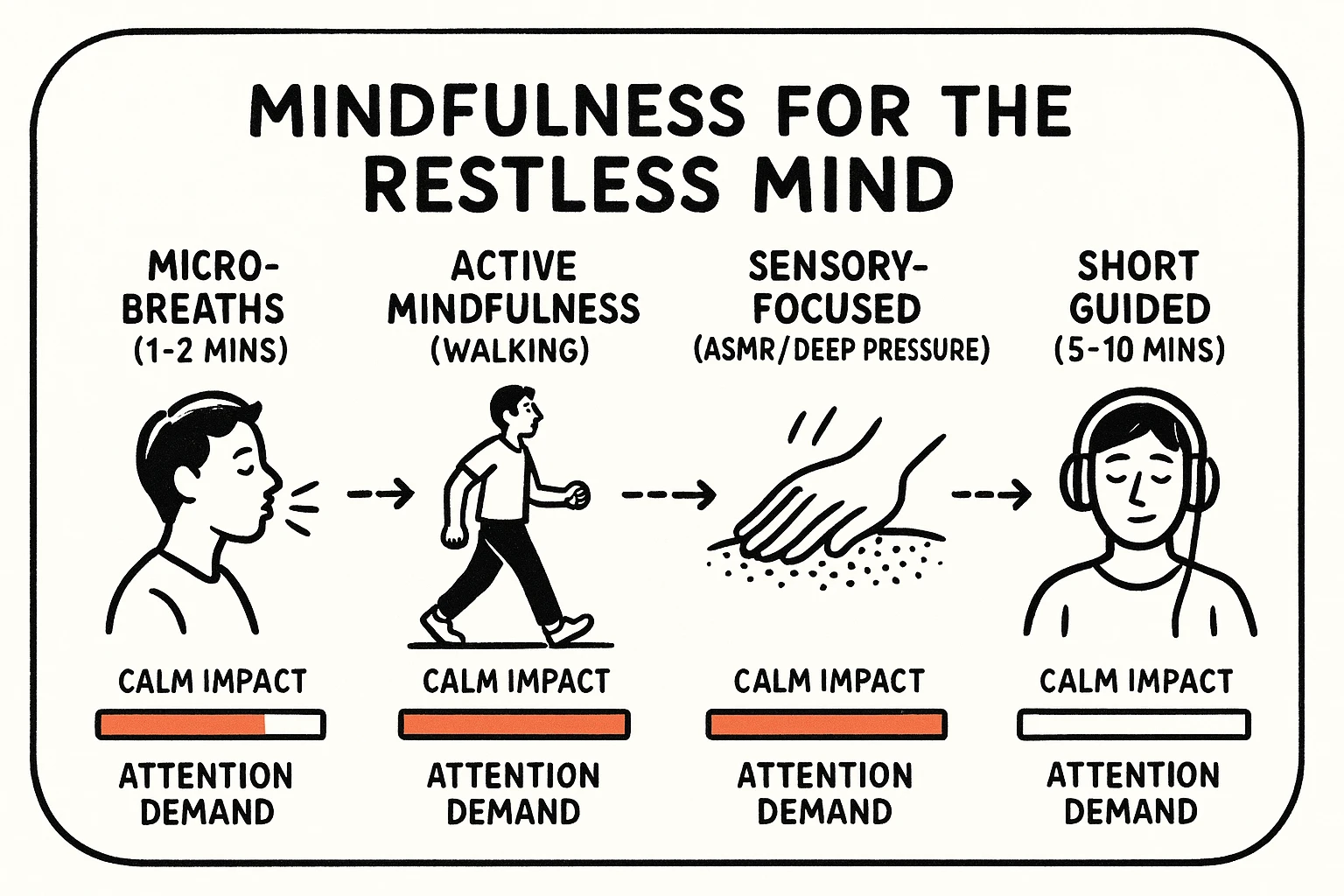
The key is to adapt. Forget long, silent meditations. Think short, active, and sensory-focused:
The above comparison shows how different ADHD-friendly mindfulness practices balance calming impact with demand for attention. For example, a "Body Scan" is excellent for deep calming but requires higher attention, while "Mindful Movement" offers moderate calming with lower attention demands, making it accessible even when your mind is racing. Choose the practice that aligns with your current energy and focus level.
Your ADHD brain might be extra sensitive to sensory input, making the world seem overwhelming at times. Sensory regulation techniques offer powerful ways to soothe your nervous system.
Emotional dysregulation can significantly impact your professional life. WebMD's advice on "ADHD at Work" touches on practical strategies, but integrating authenticity means more than just coping; it's about leveraging your unique brain. Strategies like structured routines, breaking down tasks, and strategic communication can help, but embracing your ADHD strengths—creativity, hyperfocus—as Psychology Today suggests, can enable you to thrive. Rather than masking, find ways to use your ADHD traits to your advantage in roles that value innovation and dynamic thinking. You can also explore options for ADHD coaching and accommodations.
Living authentically with ADHD means accepting your emotional landscape for what it is and learning to navigate it with self-compassion, rather than shame. This involves developing robust emotional resilience strategies.
One powerful approach is "radical acceptance"—an ADHD-friendly interpretation means acknowledging that intense emotions exist, without judgment, and understanding their neurobiological roots. This reduces the crushing self-blame that often accompanies emotional outbursts or meltdowns. Start by developing emotional literacy, giving names to your feelings beyond just "overwhelmed" or "frustrated." This practice of identifying and understanding emotions is foundational.
When intense emotions strike, proactive strategies can help. Emotional journaling provides an outlet and opportunity for reflection. Implementing a "24-hour rule"—delaying impulsive reactions or important decisions for a day—can be especially effective for the ADHD tendency towards impulsivity, giving your emotional brain time to catch up.
Authenticity also extends to your relationships. Strategies for discussing emotional dysregulation with partners, friends, and family without shame are vital. Setting clear boundaries that honor your neurodivergent needs, and seeking support within communities like those found on Reddit, where shared experiences bring validation, are crucial steps. This reduces isolation and allows for genuine connection.
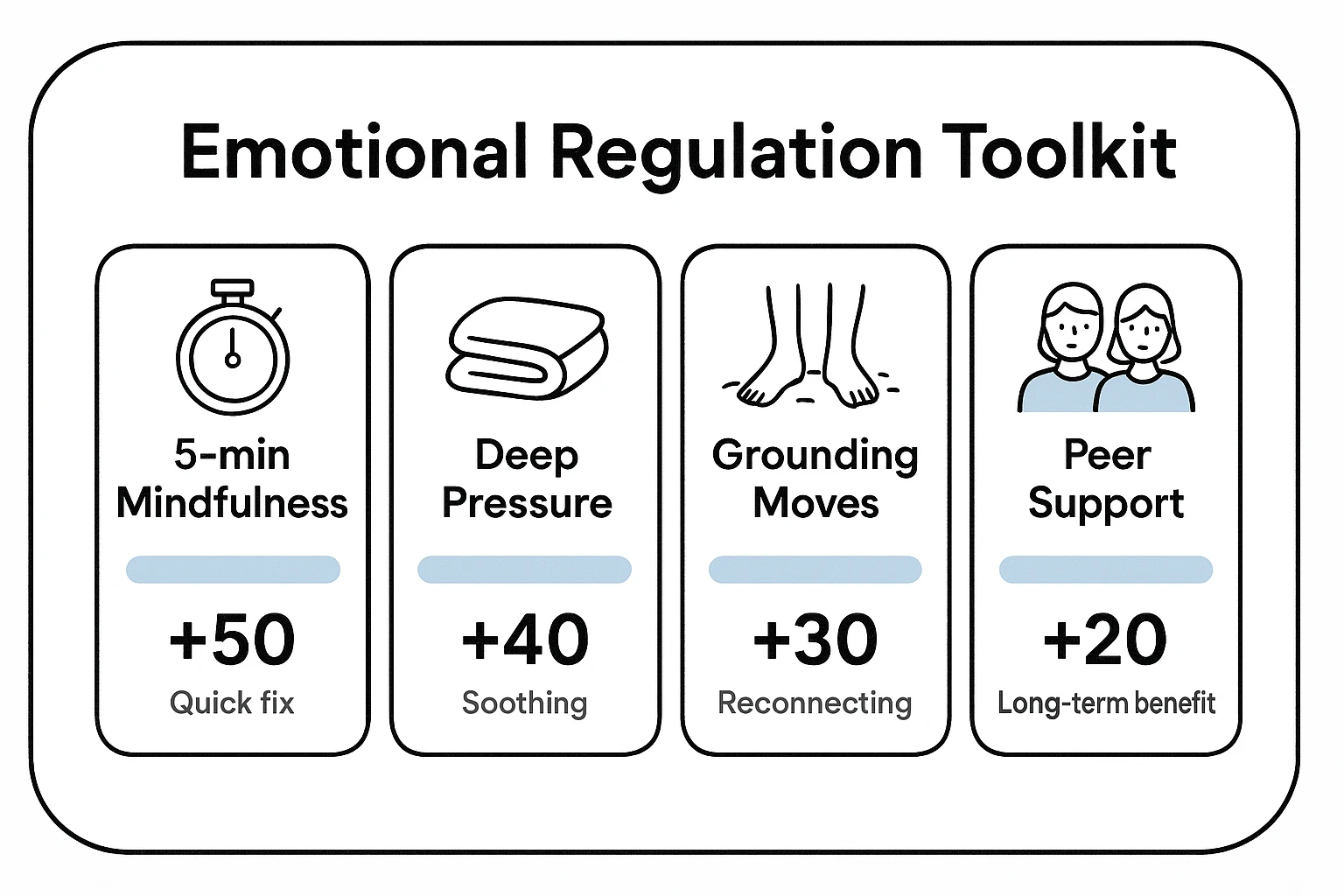
Here's an overview of some core interventions you might consider integrating into your daily life:
The toolkit above summarizes vital interventions. Notice how each offers a distinct benefit, from the immediate nervous system regulation offered by Deep Pressure Therapy to the foundational rewiring potential of Adapted Mindfulness. These are not "fixes" but tools to empower you.
Integrating these varied coping mechanisms into a personalized "toolkit" is an ongoing process. It emphasizes self-compassion, transforming perceived "failures" into learning opportunities. The role of professional support, such as ADHD-informed therapy or coaching, is invaluable in cementing these practices and continually fostering authenticity and emotional balance. With ADHD affecting over 404 million adults globally by 2025 (Jill Johnson Coaching) and more than half of US adults receiving their diagnosis later in life (Psychiatry.org), the need for effective, authentic strategies has never been greater.
Choosing the right emotional regulation strategies depends on your immediate needs and long-term goals. Do you prioritize quick calm, or are you focused on building deeper, authentic self-expression?

This decision matrix can guide your next steps. For immediate, rapid relief, Deep Pressure Therapy might be your first choice. If your priority is long-term self-acceptance and less masking, then therapy, coaching, and adapted mindfulness will serve you better. Understanding your priorities allows you to select the intervention that aligns best with your personal journey. Remember, a combination of approaches often yields the best results.
Understanding emotional regulation and authenticity with ADHD can raise many questions. Here are some of the most common concerns:
Emotional dysregulation is a very real and distinct aspect of ADHD, even if it's not always listed in formal diagnostic criteria. As cited in Frontiers in Psychiatry and CHADD, it affects a significant percentage of adults with ADHD (30-70%). It’s rooted in neurological differences, particularly in how your brain processes and regulates emotions. It’s not about being "overly sensitive"; it’s about your brain being wired differently, making emotional control more challenging than for neurotypical individuals. Acknowledging this is the first step toward self-compassion and effective management.
Explaining RSD can be tough because its intensity is hard for others to grasp. Focus on analogies that highlight the physical pain of emotional rejection. You could say, "Imagine someone punching you in the gut, but instead of physical pain, it's an intense emotional pain that feels just as real and debilitating." Emphasize that it's an involuntary, disproportionate reaction, not a choice, and that reassurance is often the fastest way to alleviate it. Resources like those on ADDitude Mag's RSD section can also provide helpful language and validate your experience.
Absolutely. Traditional silent meditation can indeed be a challenge for the restless ADHD mind. As discussed, ADHD-friendly mindfulness is all about adaptation. Try active mindfulness like mindful walking or cleaning. Sensory-focused practices, like intensely listening to a specific song or focusing on a specific scent, can also be effective. Even micro-meditations—just 30 seconds of intentional breathing or awareness—can build your capacity for presence without demanding prolonged stillness. The goal isn't perfect stillness, but rather increased awareness and emotional regulation.
No, quite the opposite. Authenticity in the context of ADHD means embracing your neurodivergent brain and finding strategies that work with it, not against it. Masking, or suppressing your ADHD traits, is far more exhausting and can lead to burnout, anxiety, and a diminished sense of self. When you strive for authenticity, you reduce the invisible labor of constantly pretending. This frees up mental energy, provides a solid foundation for emotional regulation, and leads to greater self-acceptance and inner peace. By choosing to live authentically, you’re paving the way for more sustainable well-being and genuine self-expression, as research from CascadeCounselingUtah and ADDitude Mag attests.
Yes, there is scientific backing for deep pressure therapy (DPT). DPT works by stimulating the parasympathetic nervous system, which is responsible for the body's 'rest and digest' response. For individuals with ADHD, who often experience an overactive sympathetic ('fight or flight') nervous system, DPT can induce a calming effect. Resources like Harkla.co, ScienceDaily, and TruHugs explain how this process can reduce hyperactivity, improve focus, and aid in sensory regulation. Weighted blankets are a popular application, but compression vests and even firm hugs fall under this category. It's a physiological response that helps soothe an often overstimulated system.