ADHD Creativity Guide for Art Innovation and Flow States
Discover how ADHD fuels creativity and hyperfocus to power art, innovation, and careers. Learn practical ways to channel neurodivergent flow and compare tools.
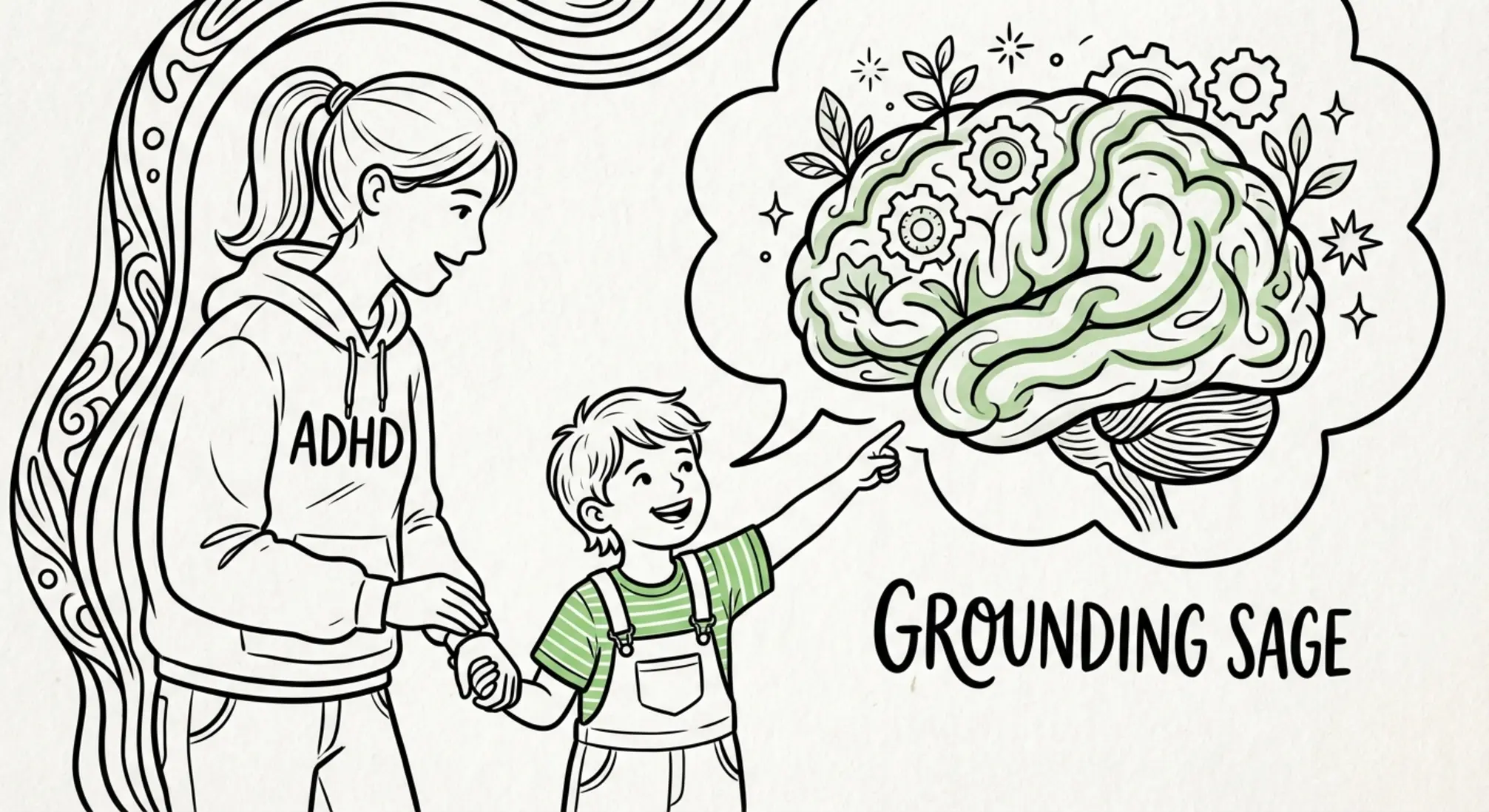
For anyone actively navigating the landscape of ADHD, the internal dialogue often oscillates between understanding its challenges and recognizing its unique strengths. You’re not just looking for information; you're seeking clarity, validation, and a path forward that celebrates your neurodivergence. You're comparing different perspectives, trying to decipher how ADHD truly influences not just your daily life, but your potential for creative expression and groundbreaking innovation.
The prevailing narrative around ADHD has historically focused on deficits—inattention, impulsivity, hyperactivity. But what if we told you that these very traits, when understood and channeled, are often the bedrock of profound creativity and entrepreneurial drive? This isn’t about spin; it's about shifting the lens to recognize a powerful truth: your neurodivergent brain is inherently wired for innovative thinking and artistic excellence.
For too long, the unique ways neurodivergent brains operate have been viewed through a narrow, deficit-oriented perspective. But a growing body of research and real-world success stories is painting a different picture. Adults with ADHD, for instance, report higher real-world creative achievements, particularly when they are motivated by incentives or engaged in competitive settings (Ashinoff & Abu-Akel, 2021; Hupfeld et al., 2018). This isn't a coincidence; it's a testament to a brain that thrives on novel connections and intense focus when piqued by genuine interest.
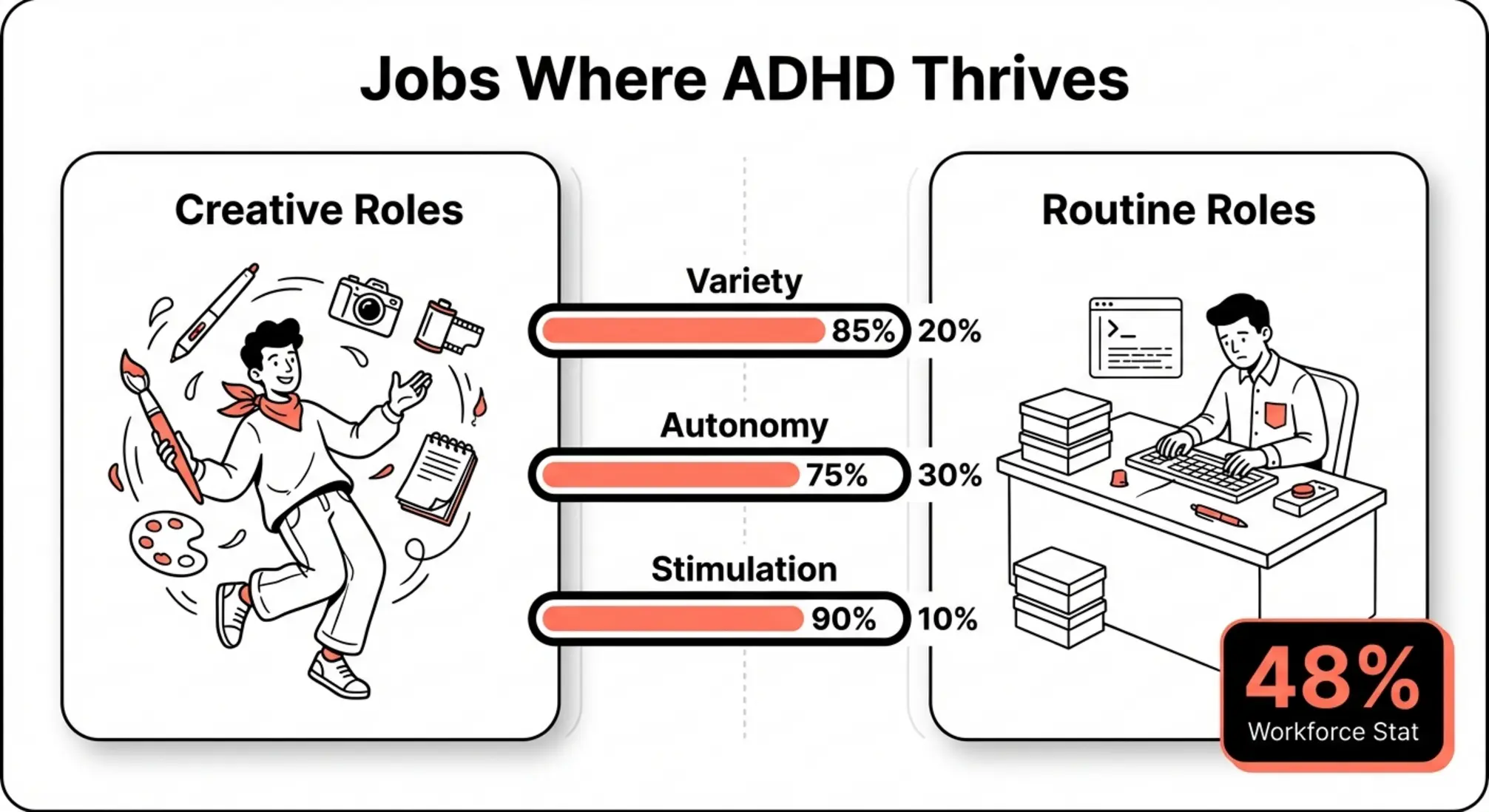
This distinct cognitive style is why nearly half (48%) of the U.S. creative industry workforce identifies as neurodivergent. In fact, an astonishing 77% of marketing professionals show four or more ADHD symptoms, underscoring the natural alignment of ADHD traits with dynamic, creative fields (Understood.org, 2025; Workplace Wellbeing Pro, 2025). This isn't about fitting a square peg into a round hole; it's about recognizing that some pegs are designed for entirely different, more intricate, and often more impactful, structures.
Here, we celebrate that inherent creativity. We'll explore how neurodivergent minds excel in various artistic and creative fields, and how these outlets foster deep self-expression and a robust sense of identity. This is a journey to understand how your brain, with its "beautifully chaotic, endlessly fascinating, mildly exhausting mental internet," can become your most potent creative asset.
One of the most misunderstood, yet powerful, traits of the ADHD brain is hyperfocus. Often described as a “superpower” by those who experience it, hyperfocus isn't merely intense concentration; it's an immersive state where one's attention becomes singularly fixed on an activity or topic of intense interest, to the exclusion of almost everything else. Unlike a neurotypical "flow state," ADHD hyperfocus often feels involuntary and can be difficult to disengage from, driven by the unique dopamine regulation pathways in the ADHD brain (Ashinoff & Abu-Akel, 2021).
When directed intentionally—or when an interest is so compelling it commands your full attention—hyperfocus becomes an unparalleled tool for creative work. It allows for deep dives into complex projects, meticulous detail work, and the sustained effort required to bring ambitious artistic visions to life. Individuals with combined-type ADHD, in particular, demonstrate more original ideas and higher self-rated creativity (Groen et al., 2020). This isn't just focusing for long periods; it's focusing with an intensity that can lead to breakthrough insights and innovative solutions. It's about channeling that intense attention into areas of interest, allowing goal-directed motivation to amplify your creative output (Ashinoff & Abu-Akel, 2021).
Recognizing your hyperfocus patterns is the first step toward harnessing this power. What subjects or activities naturally draw you in and hold your attention for hours without effort? Once identified, you can intentionally curate your creative environment to trigger and sustain these states. This might involve minimizing distractions, creating a dedicated workspace, or setting clear, engaging project goals.
When you're in that deep state of concentrated effort, interruptions can feel jarring, even enraging. This often happens because your brain is expending significant cognitive resources to maintain that focus. Strategies like "do not disturb" signs, noise-canceling headphones, and scheduled break times can help protect these precious creative windows. Understanding this reaction is crucial for managing your emotional response and for communicating your needs to others.
It’s often during these periods of intense interest, where your mental internet is buzzing with interconnected ideas and a specific "hyperfixation" takes hold, that the most innovative concepts are born.
Instead of seeing this intensity as a flaw, embrace it as your unique processing engine. Your brain isn't struggling to focus; it's simply wired to focus differently, with an intensity that neurotypical brains often can't replicate.

Hands-on approach with tools and design materials for creation
The connection between neurodivergence and artistic talent is not merely anecdotal; it's increasingly supported by research and evident in the lives of countless creators. From visual arts to music, writing, and performance, ADHD traits can provide distinct advantages.
One way this manifests is through divergent thinking, which is a hallmark of ADHD. The natural tendency for "mind wandering" and lower inhibitory control, often cited as challenges, actually fosters novel associations and the ability to "think outside the box" (Han Fang et al., 2025; The Wave Clinic, 2025). This capacity for non-linear thought is a goldmine for artists seeking to break traditional molds.
Consider the visual arts: The rapid idea generation characteristic of ADHD can lead to an explosion of concepts. A painter might quickly sketch multiple compositions, or a sculptor might envision countless forms from a single block of material. The energetic drive means they might jump from one idea to the next, continuously experimenting and innovating. The "chaotic good" aspect of the ADHD mind is perfectly suited for capturing raw emotion and dynamic movement on canvas or through sculpture. [Start Your Creative Journey] with exercises tailored for ADHD traits to discover your preferred artistic outlet.
For writers with ADHD, the constant flow of thoughts and the ability to make unexpected connections can fuel imaginative storytelling and vivid prose. Hyperfocus, when applied to a compelling narrative, can lead to intense periods of writing where entire worlds are built or complex characters are fleshed out with remarkable speed. The challenge often lies in organizing these abundant ideas, but with the right structure and tools, the output can be uniquely powerful.
In music, neurodivergence offers a distinct advantage. Many prominent [music artists with ADHD] have openly discussed how their condition influences their creative process. The capacity for pattern recognition, the drive for novelty, and the ability to find complex rhythms in unexpected places can lead to innovative compositions and electrifying performances. Hyperfixation on learning an instrument or mastering a specific musical style can result in extraordinary technical proficiency.
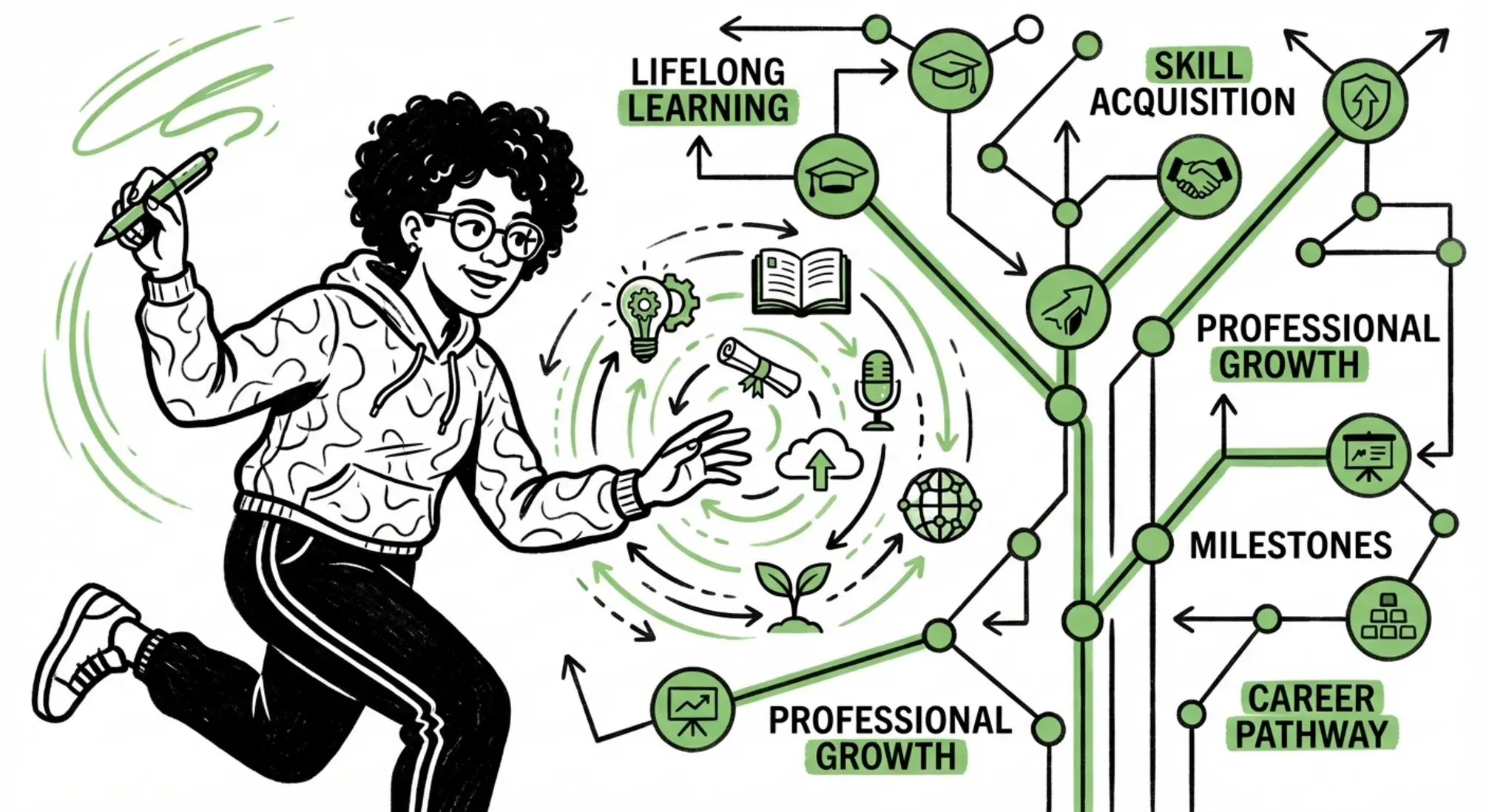
A simple, actionable four-step flow map to trigger and channel hyperfocus into creative output—perfect for hands-on exercises and repeatable practice.
The act of creating itself can be incredibly therapeutic for individuals with ADHD. It offers a structured yet flexible outlet for restless energy, a tangible way to process complex thoughts, and a powerful means of self-expression. It can provide a sense of control and accomplishment, counteracting common frustrations.
For those considering [creative jobs for people with ADHD], understanding how your neurodivergence aligns with specific roles is crucial. Roles that demand high levels of innovation, variety, problem-solving, and allow for autonomous work often prove to be the best fit.

Compare job fits quickly: side-by-side cards and horizontal bars highlight where ADHD traits align with creative work—useful for career decisions and next steps.
Beyond the traditional arts, the very traits that characterize ADHD can be powerful drivers of innovation and entrepreneurial success. The world of business thrives on new ideas, rapid adaptation, and problem-solving, areas where the neurodivergent mind often excels.
Consider the ADHD hallmarks: divergent thinking, a willingness to take risks, a passion for new projects, and the unique ability to problem-solve under pressure. These are not liabilities in the entrepreneurial landscape; they are competitive advantages. When a standard approach seems unworkable, the ADHD brain is already exploring ten alternative routes, often leading to truly novel solutions. This propensity for novel associations and connecting seemingly unrelated concepts is a direct result of the less constrained thought processes characteristic of ADHD.
Case studies abound of neurodivergent entrepreneurs and innovators who leveraged their specific cognitive strengths to build thriving businesses and create disruptive technologies. They thrive in environments where they can pursue their hyperfixations and where the fast pace of innovation keeps them engaged. They often possess a remarkable resilience, a byproduct of constantly navigating a world not built for them, which serves them well in the volatile world of startups.
However, recognizing this strength also means acknowledging the unique challenges of executive dysfunction in a business context. Managing administrative tasks, maintaining long-term focus on less stimulating aspects, and dealing with organizational details can be daunting. The key lies in developing strategies that outsource or automate these areas, allowing the entrepreneur to dedicate their energy to what they do best: innovating, creating, and leading with passion. This might involve building a supportive team who complements their strengths, utilizing robust project management tools, or structuring their work in bursts around their natural energy cycles. For those grappling with these challenges, our [Neurodivergent Entrepreneur Toolkit] offers templates for idea generation and project breakdown to help you get started.
The evolving understanding of neurodiversity in the workplace emphasizes creating flexible, empathetic environments. Companies worldwide are beginning to recognize that neurodivergent employees, including those with ADHD, can increase productivity by up to 30% and improve retention by 90% when accommodated and valued (City & Guilds Foundation et al., 2025). This isn't just about inclusion; it's about smart strategy.
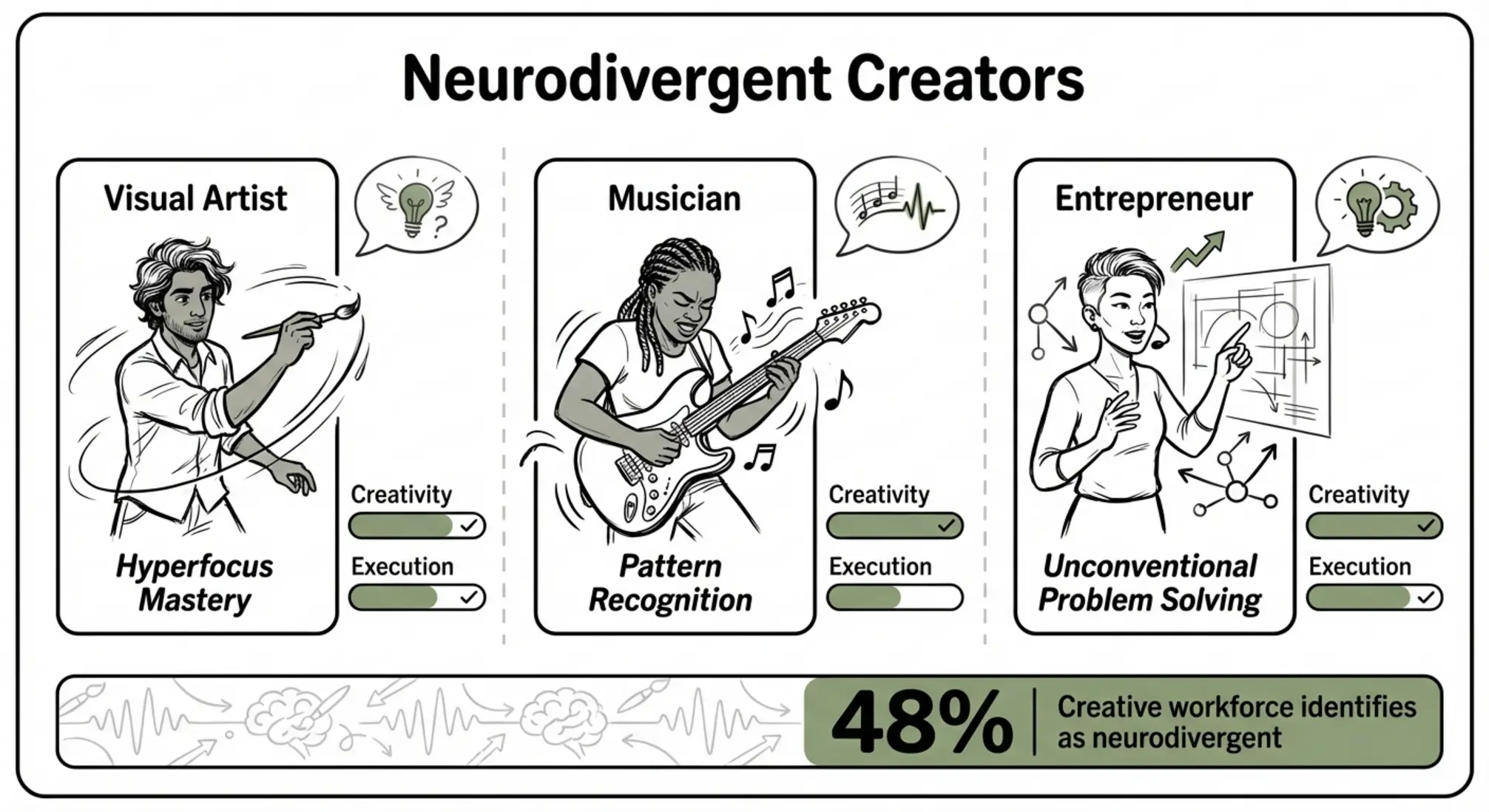
Realistic creator cards and a workforce stat build credibility—showcases diverse neurodivergent talents and validates ADHD as a creative asset.
Navigating the world as a neurodivergent creative or innovator often comes with a unique set of challenges—from battling imposter syndrome to struggling against the pressure to "mask" your true self to fit in. This is where community and targeted support become invaluable assets.
While ADHD hyperfocus can feel like an uncontrollable plunge into a rabbit hole, a "neurodivergent flow state" is about intentionally harnessing that intensity for productive and fulfilling creative output. It’s cultivating the productive aspects of hyperfocus while developing strategies to manage its disorienting side. This involves understanding your triggers for focus, setting boundaries, and celebrating your unique process.
Connecting with others who share similar experiences provides a sense of validation and belonging that clinical definitions or generic advice can't fully offer. This validation is critical for overcoming the internalized negative narratives around ADHD and embracing it as a part of your identity that contributes to your creative strengths. Platforms like Reddit, for all their unstructured nature, testify to this deep human need for shared experiences and peer support.
Finding neurodivergent-friendly mentors, coaches, or support groups offers practical strategies and emotional reinforcement. These communities can provide a safe space to discuss the specific struggles of a neurodivergent creative process—like [ADHD hyperfocus interruption] or managing multiple simultaneous projects—without judgment. They also offer a vital network for collaboration, feedback, and encouragement.
Embrace the chaotic beauty of your mental landscape and find your tribe. It’s in these connections that you can truly thrive and realize the full potential of your neurodivergent flow state.
It's time to retire the outdated notion that ADHD is solely a disorder of deficits. While it presents undeniable challenges, the scientific community is increasingly recognizing ADHD as a neurodevelopmental difference with distinct evolutionary advantages, particularly in the realms of creativity and innovation.
The very neurobiological underpinnings of ADHD, such as differences in dopamine pathways and executive function, contribute directly to creative strengths. Lower inhibitory control allows for broader associative thinking, enabling the brain to make novel connections that neurotypical brains might filter out (Han Fang et al., 2025). This leads to increased divergent thinking—the ability to generate multiple, varied solutions to a problem—which is a cornerstone of creativity.
Moreover, the drive for novelty and intense engagement, often leading to hyperfocus, is closely tied to the dopamine reward system. When a task is genuinely interesting, the ADHD brain can achieve levels of sustained, immersive attention that are difficult for others to replicate. This isn't a flaw; it's a finely tuned mechanism for deep engagement in pursuits that genuinely resonate.
Understanding these scientific realities counters common misconceptions about ADHD as purely a lack of attention or an inability to control impulses. Instead, it frames ADHD as a powerful, albeit sometimes challenging, operating system tailored for a world that increasingly values adaptability, out-of-the-box thinking, and creative problem-solving. Embracing these insights allows individuals with ADHD to reframe their self-perception, moving from a deficit-based mindset to one that celebrates their unique cognitive architecture as a source of strength and innovation.
A neurodivergent flow state is similar to a "normal" flow state in that it's a deeply immersive and enjoyable experience where one loses track of time. However, for individuals with ADHD, this state often involves hyperfocus—an intense, sometimes involuntary, concentration on a task of high interest, driven by unique brain chemistry (specifically dopamine regulation). It can feel more difficult to intentionally initiate or disengage from than a neurotypical flow state, but when harnessed, it leads to exceptional creative output.
The key is intentionality and balance. Identify your interests that trigger hyperfocus, then create structured environments to support it (e.g., dedicated workspace, "do not disturb" cues). Set timers for creative sprints, schedule breaks (even if you don't feel like taking them), and ensure you're incorporating non-hyperfocus activities for recovery. Think of it as a powerful engine: you need to provide the right fuel and maintenance to prevent overheating.
Research suggests there's a strong correlation. Studies show adults with ADHD report higher real-world creative achievements, especially in motivating contexts. Traits like divergent thinking (generating many ideas), mind wandering, and lower inhibitory control, which are common in ADHD, are all significant contributors to creative potential. It's not just a stereotype; it's supported by scientific understanding of cognitive processes.
Roles that offer variety, autonomy, require innovative problem-solving, and allow for intense, focused work on engaging tasks often suit individuals with ADHD best. This includes fields like graphic design, writing, coding, marketing, entrepreneurship, music composition, film editing, and certain types of research. The crucial element is often the fit with a stimulating environment and the ability to leverage hyperfocus on interesting challenges.
Embrace the "jumping" as part of the creative process. Instead of seeing it as a block, view it as divergent idea generation. Capture all ideas in a "brain dump." Then, use structured techniques to organize them. Sometimes, a "creative block" is actually your brain's way of needing novel stimulation. Switch to a different creative project, try a new medium, or engage in a completely unrelated activity to reset your focus. The goal isn't to stop the jumping, but to guide it.
You've explored the profound connection between ADHD and creative expression, debunked common myths, and seen how your neurodivergent brain is a wellspring of innovation. The next step is to act on this understanding.
We invite you to delve deeper into our resources, which are specifically designed to empower you:
This isn't about managing symptoms; it's about amplifying strengths. Let's unlock your full creative potential together.