ADHD Affirming Communities Guide for Belonging and Support
Discover how ADHD affirming communities create belonging and practical mutual support to help you thrive. Learn to evaluate online and local groups and connect.
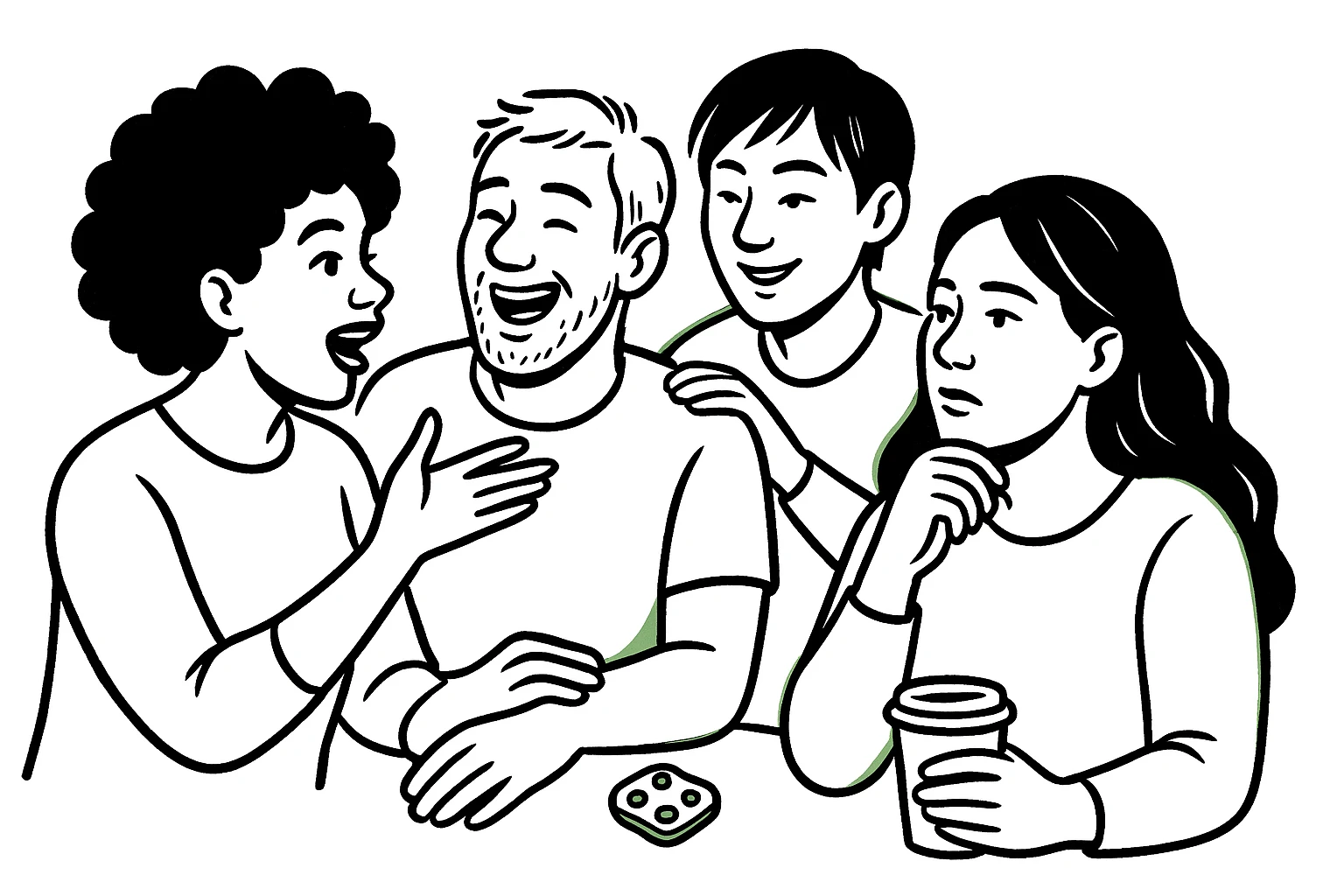
The journey with ADHD can often feel like navigating a complex, ever-shifting landscape entirely on your own. You're constantly evaluating strategies, searching for understanding, and perhaps, more than anything, looking for a place where your unique way of thinking isn't just accommodated, but celebrated. It's a critical point in your evaluation process: moving beyond simply managing ADHD to actively thriving with it. The key, as countless individuals have discovered, lies in finding and fostering ADHD-affirming communities.
No longer is simply "coping" the benchmark. The goal now is positive identity development—to acknowledge and leverage your neurodivergent strengths. But how do you find those spaces that genuinely get it? How do you discern between generic support groups and those truly dedicated to fostering belonging and mutual upliftment? This guide walks you through building your unique support system, one that feels like coming home.
The isolation often experienced by individuals with ADHD isn't just anecdotal—it's deeply rooted in common social challenges. Research indicates that 50-60% of children with ADHD experience peer rejection, a pattern that, without intervention, can continue into adulthood, impeding crucial social skill development. This isn't a personal failing; it's a systemic challenge that neurodiversity-affirming communities directly address.
Human connection isn't just nice to have; it's a powerful psychological anchor, particularly for the ADHD brain. Feeling misunderstood or constantly needing to mask your authentic self is exhausting. This is where community steps in, offering validation that your experiences are real and not personal shortcomings. When you hear others articulate the very "mental clutter" or "ADHD mental wall" you've grappled with, it reduces internalized shame and fosters a sense of shared reality. This process is crucial for positive ADHD diagnostic identity development, helping shift perception from a deficit to a strength.
Moreover, communities offer protective factors. Higher social integration and the reassurance of worth are directly linked to positive mental health outcomes for youth with ADHD. In community settings, you find practical peer support—social learning, emotional validation, and accountability that can be profoundly impactful. For instance, collective strength can help overcome feelings of task paralysis, transforming abstract plans into actionable steps, as seen in collaborative "making plans ADHD" initiatives within support groups. It's about collective problem-solving and mutual upliftment against shared challenges, like navigating "mental math ADHD" or budgeting.
The digital age has revolutionized how we connect, offering a vast array of online ADHD communities. From dedicated forums to lively Discord servers and specialized Reddit groups, these platforms provide immediate access to diverse perspectives and support. But with so many options, how do you choose the right fit?
The appeal of online forums is undeniable. Users are actively seeking connection, understanding, and practical coping strategies from others with similar experiences. This includes both virtual and physical spaces. Platforms like Reddit, for example, demonstrate a strong user preference for peer-to-peer interaction, offering organic, unfiltered support, humor, and practical "life hacks." However, this accessibility can also lead to challenges, particularly with moderation quality and the potential for misinformation.
To help you decide, consider the unique aspects of different online community types:

Online Communities (Forums, Social Media Groups, Discord): These are easily accessible and often international, providing a broad range of perspectives. Platforms like the HealthUnlocked forums linked by CHADD provide structured, moderated environments, while Discord servers or Reddit's r/ADHD offer more informal, dynamic interactions. The key is to find spaces with clear community guidelines that promote affirming language and proactive moderation, countering issues of information overload or unverified advice seen in less structured spaces.
Key considerations for online communities:
Our commitment is to guide you towards curated, professionally moderated online spaces that actively foster unique connection methods, moving beyond the vulnerabilities of traditional, less regulated platforms.
While online communities offer convenience, there's a unique power in face-to-face interaction. Local ADHD support groups and meetups provide a tangible sense of community, fostering deeper connections and a shared physical space. Organizations like CHADD offer local chapter locators, helping you find established groups in your area. ADDA, focusing specifically on adults with ADHD, also provides virtual peer support groups (VPSGs) that bridge the gap between online and in-person by offering structured, real-time interaction.
The challenge with local groups can be consistency and ensuring they adhere to neurodiversity-affirming principles. Generic Meetup.com groups, while accessible, can vary widely in quality and leadership. However, when done well, local groups can be incredibly potent for building genuine friendships and establishing accountability partners for tasks like "making plans ADHD."
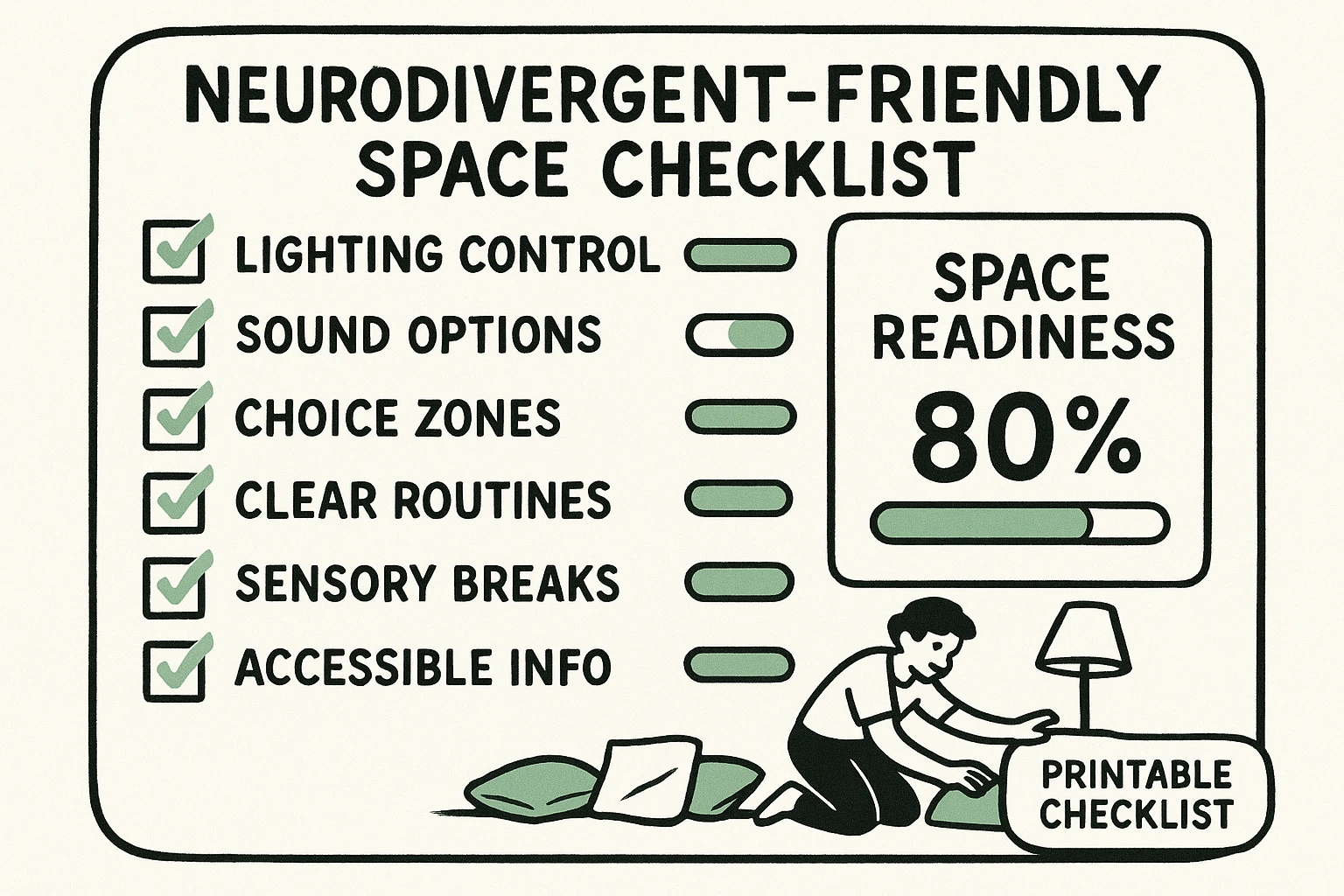
An ADHD-affirming community isn't just about the people in it; it's about the environment itself. Whether it's a virtual meeting room or a physical space, designing for difference is paramount. Neuro-affirming design focuses on creating spaces that respect individual sensory needs and cognitive processing styles, making them more comfortable and productive for everyone. This is a critical evaluation point when considering any community or environment.
For example, consider the impact lighting and sound can have on someone with sensory sensitivities, or how a chaotic visual layout can exacerbate "mental clutter ADHD." Principles of neuro-affirming design advocate for elements like varied lighting options, noise-reducing measures, clear visual organization, and choice-rich spaces that allow individuals to adapt their environment to their needs. It's about translating theoretical concepts into actionable, practical blueprints for home, work, and social settings.

This proactive approach moves beyond simply accommodating differences to celebrating them, ensuring that spaces are not just accessible but genuinely supportive.
One of the most powerful and uniquely neurodivergent-friendly strategies emerging within ADHD communities is "support swapping." This is a practical, collaborative approach to tackling challenges where individuals exchange support based on their unique strengths and weaknesses. Think of it as an ADHD-affirming "love language" for task management and mutual accountability. Instead of struggling alone with a dreaded task, you "swap" it with someone who finds it less arduous, while helping them with something you excel at.
This concept isn't just theoretical; platforms like Shimmer.care and Stimpunks.org highlight its effectiveness within neurodivergent communities. It directly addresses practical pain points like executive dysfunction, task initiation, and "mental walls," transforming tasks that feel insurmountable into manageable, cooperative efforts.
Our approach provides practical guidance, templates, and community tools for implementing support swapping effectively, moving beyond generic advice to tangible, actionable frameworks. It's about intentionally harnessing peer support benefits through guided, interactive community frameworks.
A truly affirming ADHD community must be inclusive. It means recognizing that ADHD intersects with various other identities—gender, race, sexual orientation, socioeconomic status—and actively creating spaces where all voices are heard and valued. The absence of explicit attention to intersectionality can lead to groups that, while well-intentioned, inadvertently exclude or marginalize.
This requires careful consideration of community guidelines. Generic rules often fall short; truly effective guidelines for neurodiversity-affirming communities promote affirming language, provide clear conflict resolution pathways specific to ADHD communication styles, and have zero tolerance for gatekeeping or shaming. The goal is to move beyond broad statements of inclusivity to tangible examples of anti-racist, queer-affirming, and diverse community practices.
Before committing to a community, use this scorecard to assess its commitment to inclusivity and safe interactions:

By actively promoting marginalized voices, ensuring transparent and proactive moderation, and fostering an environment of psychological safety, communities can become powerful forces for positive change and identity affirmation. As research highlights, community engagement helps combat self-stigma and external stigma, removing barriers to treatment and fostering a renewed sense of self-acceptance.
The impact of ADHD-affirming communities is best told through the voices of those who've experienced them. These aren't just testimonials; they're echoes of shared experience, offering potent emotional resonance and building trust. On platforms like Reddit, you'll find countless stories of individuals feeling profoundly seen and understood, often after years of isolation.
Consider Sarah, who struggled with "ADHD money support," feeling overwhelmed by budgeting. Through a peer support group, she connected with David, who thrived on creating spreadsheets. In exchange, Sarah helped David initiate a daunting home renovation project he'd been avoiding due to task paralysis. Their "support swapping" not only solved immediate problems but created a lasting friendship and a new sense of capability.
These are the stories that underscore the data: 88% of caregivers in one pilot study found community interventions helpful, and 94% felt more confident seeking treatment. This collective wisdom, shared experiences, and mutual support move individuals from merely coping to actively thriving.
It means the community recognizes ADHD as a neurodivergence—a difference in brain wiring—rather than solely as a disorder or deficit. It focuses on validating experiences, celebrating unique strengths, and fostering a positive self-identity, rather than shaming or continuously seeking "fixes." It embraces differing communication styles and sensory needs.
Look for clear, explicit community guidelines that outline acceptable behavior, communication standards, and consequences for breaches. Transparency about moderation practices is key. Check if moderators are present and engaged, and whether they actively address issues of gatekeeping, shaming, or misinformation. An inclusive community should also have rules that specifically protect diverse members (e.g., LGBTQIA+, POC).
Absolutely. While therapies provide clinical strategies, ADHD-affirming communities excel at offering lived experience "hacks" and mutual accountability. Via "support swapping" or shared problem-solving discussions (like those found on Reddit or specific Discord channels), members can share effective strategies for organizing "mental clutter," breaking down tasks for "making plans," or even managing "ADHD money support" through peer strategies.
Yes. Newly diagnosed adults with ADHD often feel isolated and confused. Communities provide validation, reducing feelings of "being different" and offering relatable stories that go beyond clinical definitions. Connecting with others can help integrate your diagnosis into a positive self-identity, as social inclusion within a community significantly predicts positive ADHD diagnostic identity development.
Support swapping involves two or more individuals exchanging assistance based on their individual strengths and challenges. For example, one person might help another proofread a document (a task they enjoy and excel at) in exchange for help organizing a physical space (a task the other person finds less draining). It can extend beyond practical tasks to include emotional support or "body doubling" for focus. Our comprehensive guide offers templates and examples for effective implementation.
The journey to building an ADHD-affirming life isn't meant to be walked alone. As you evaluate the options for support and connection, remember the transformative power of genuine community. It's in these spaces—whether digital or in-person, structured or organic—that isolation gives way to belonging, and individual struggles are transformed into collective strengths.
Ready to find your tribe? Explore our curated resources for online communities, discover ways to connect locally, and learn how to implement powerful strategies like support swapping. Your empowered ADHD journey begins with connection.